Bookstore

A retail business built on curation, community, and physical browsing, but pressured by thin margins, inventory risk, online retail, ebooks, audiobooks, and a broader reading environment that is no longer naturally favorable to small physical stores. A bookstore can still work, but I would not describe the bookstore market as favorable for a new operator unless the concept is unusually strong and locally well placed. In plain terms, the average bookstore now starts from a weaker market position than many founders assume.

OnlineOnlineRepeat Demand

This page is here to help you see the structure of the business, not make the decision for you. If you are asking how to open a bookstore, the first useful answer is that the bookstore business now depends on stronger curation, community, and retail discipline than it did when print retail had fewer substitutes. In most markets, I would treat a new bookstore as a difficult idea rather than an obviously attractive one, because modern bookstore economics are harder than the cultural image suggests.

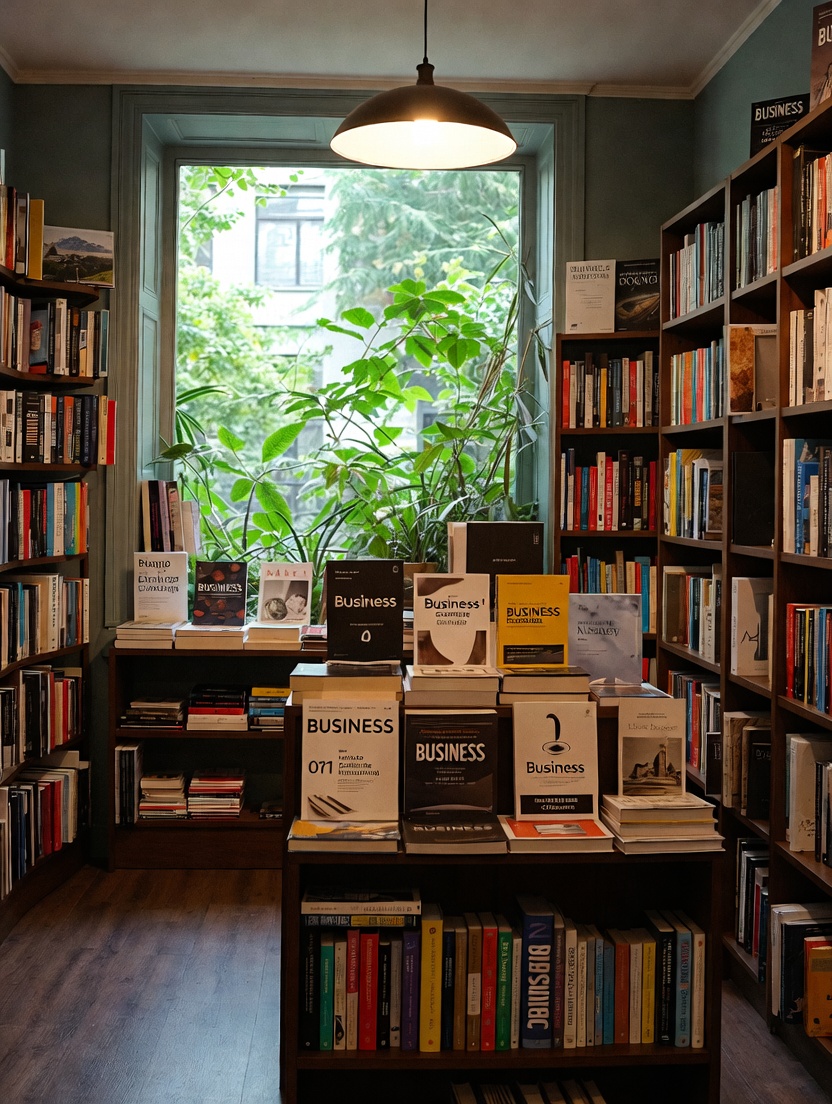
A welcoming independent bookstore with curated shelves, front-table displays.

Quick Business Snapshot

Fast facts to help you grasp core traits quickly.

1

Startup Cost

Medium to High

A small store can start with a tight assortment and modest space, but rent, fixtures, opening inventory, POS systems, and working capital raise the real entry cost quickly.

The room may look simple. The inventory and cash-flow demands are not.

2

Skill Barrier

High

This is not only about loving books. You need buying judgment, merchandising, local community sense, event programming, and tight retail discipline.

Customers come for books, but they return for curation and atmosphere.

3

Time to First Revenue

Moderate

A store can make sales as soon as it opens, but reaching stable foot traffic and healthy repeat purchasing usually takes longer.

Opening brings attention. Consistent sales are the harder milestone.

4

Repeat Potential

Medium to High

Repeat purchases can be strong among active readers, parents, gift buyers, and local regulars, especially when events and recommendations deepen loyalty.

The strongest bookstores sell habit and belonging, not only inventory.

5

Local Dependency

Very High

Walkability, neighborhood culture, rent level, nearby competition, and local reading demand all shape whether the store works.

A beautiful bookstore in a weak location can still struggle badly.

6

Scalability

Low to Medium

A single store can become healthy, but scaling usually means more retail complexity, more inventory risk, and stronger management systems rather than easy replication.

This business scales more like specialty retail than software.

7

Competition

High

You compete with Amazon, big chains, ebooks, audiobooks, discount retail, AI-assisted discovery and summaries, and every other use of a customer's leisure budget.

The product is loved. The market environment is still difficult.

8

Operational Intensity

High

Inventory selection, cash tied up in stock, staffing, displays, events, returns, and seasonal swings all make this a more demanding retail business than it first appears.

A calm store floor can hide a very active operating system.

Market & Demand Signals

This section helps show where demand usually comes from and what signals are worth noticing.

Demand Type

Reading demand + gift buying + discovery + community retail

Customer Pattern

Readers, parents, students, gift buyers, neighborhood regulars, and event-driven visitors

Service Format

Curated retail + events + special orders + gifts and sidelines + online or in-store pickup

Market

This is still a large retail category, even after years of pressure

IBISWorld says U.S. book-store industry revenue reached about $37.1 billion in 2025, showing that this is still a meaningful retail category rather than a tiny nostalgia niche. That said, a real bookstore still faces a structurally difficult environment because so much book discovery and purchasing now happens online or digitally. That is why I would not read market size alone as a reason to open a bookstore or assume the average bookstore is well positioned just because the category remains large.

The category is real. The harder question is whether your specific bookstore can win locally.

Structure

Independent bookstores have real momentum, but not easy economics

ABA says it supports more than 3,200 independent bookstores and reported 323 new brick-and-mortar, pop-up, and mobile store openings in 2024. That supports the idea that new bookstores are still opening, but it does not remove the realities of rent, labor, inventory pressure, and category-wide substitution. A new bookstore still has to survive in a harder market than the store's cultural image suggests, and many bookstore owners are effectively building community retail businesses rather than simple inventory shops.

Momentum helps. Unit economics still decide survival.

Print Demand

Print demand has stabilized better than many people assume

Publishers Weekly reported that print-book sales rose 0.3% in 2025 to 762.4 million units after a small increase in 2024 as well. That does not guarantee local bookstore success, but it does show print buying has not disappeared. The challenge is that print demand now coexists with ebooks, audiobooks, online delivery, AI-assisted discovery, and digital recommendation systems.

People still buy print books. That does not automatically make every bookstore location viable.

Community

The strongest stores usually sell more than shelves

Independent bookstores increasingly lean on events, recommendations, children's programming, subscriptions, gifts, and community identity to create reasons to visit that online retail cannot match well. That is one reason how to open a bookstore now usually means opening a community retail space, not just a room full of inventory. A bookstore that is only shelves is usually too weak today, and a bookstore without repeat local behavior is weaker still.

A bookstore that only stocks books is usually weaker than one that creates a reason to return.
Quick Reality Check

Before you take this idea seriously, check these real-world signals first.

01

Are you building a bookstore, or a community retail space that happens to sell books?

The strongest modern independents often rely on events, gifts, curation, children's programming, or a café-like atmosphere rather than shelves alone.

A pure inventory model is harder to defend now than it once was.

02

Can you manage cash tied up in inventory without overbuying?

Books are emotionally attractive to buy as a founder, but retail cash flow punishes weak purchasing discipline.

A full-looking bookstore is not always a healthy bookstore. A crowded-looking bookstore can still be a cash-starved bookstore.

03

Do you have a location where browsing, gifting, and repeat local traffic can actually happen?

This is one of the most location-sensitive retail categories because the product is widely available elsewhere.

Foot traffic and neighborhood fit matter as much as the book selection.

04

Can you handle the fact that great taste does not automatically equal great retail judgment?

A beloved literary vision can still fail if pricing, merchandising, scheduling, and events are weak.

This business rewards operators who combine curation with very practical retail execution.

05

Can you accept that the market backdrop is worse than it feels culturally?

Ebooks, audiobooks, online retail, and AI-assisted reading shortcuts all make a small physical bookstore harder to justify on convenience alone.

If the idea only works when customers behave romantically instead of realistically, the bookstore is probably too weak.

What People Often Underestimate

Parts of this idea may look simple at first but become heavy in daily delivery.

Inventory Drag

Books feel culturally rich, but they still behave like inventory

Too much stock, slow-moving titles, and poor category balance can quietly trap cash.

Space Economics

A cozy bookstore atmosphere can be expensive to maintain

Rent, fixtures, staffing, and underproductive square footage can make a charming store financially fragile.

Event Dependence

Community programming helps, but it also creates labor and scheduling pressure

Author events, children's activities, book clubs, and seasonal campaigns can drive traffic, but they are not free to run well.

Digital Pressure

A bookstore now competes with more than other bookstores

A physical bookstore competes with Amazon, ebooks, audiobooks, instant digital recommendations, and now AI-generated summaries that reduce some casual discovery behavior. This is one reason I do not consider the average bookstore an easy retail idea right now, even if the idea of a bookstore still feels culturally attractive.

Startup Cost

What you may need to spend before this idea becomes real.

Cost Pressure

Medium to High

Testability

Possible to test small

Cost Structure

Rent + fixtures + opening inventory + staff + POS + working capital

Lean Start

The lightest workable bookstore usually begins with a tight niche and smaller footprint

A children's bookstore, used-book focus, genre-specialty concept, or bookstore-plus-gifts model is often easier to test than trying to open a broad general-interest store immediately. For anyone asking how to open a bookstore, a narrower bookstore is usually the less dangerous answer.

A narrower store usually makes early buying and positioning easier.

Inventory Cost

One of the real startup costs is not décor, but stock discipline

Opening inventory, reorder timing, display decisions, and seasonal buying all affect how much cash stays trapped on the shelves.

In bookstores, what you buy is part of the business model.

Ongoing Cost

Recurring costs often matter more than the opening excitement

Rent, payroll, returns, markdowns, shrink, event labor, and slow-moving titles shape whether the bookstore becomes stable or stressful.

A strong opening does not solve weak store economics.

What This Idea Really Asks of You

Done matters more than perfect in early stage execution.

A bookstore can become a meaningful local business, but it asks you to combine cultural taste, retail discipline, and community building rather than simply open a room full of books. In most markets, I would not call a new bookstore an easy or naturally favorable business to start. A bookstore now has to earn the visit, the purchase, and the habit more actively than before.
1

You need to accept that love of books is not enough

Passion helps, but the store still has to earn through curation, layout, events, merchandising, and disciplined buying.

Taste matters. Retail judgment matters more than most founders expect.

2

You need to build repeat local behavior before chasing scale

The healthiest stores often become neighborhood habits, gift destinations, or trusted discovery spaces rather than relying on occasional tourist-like traffic.

Routine local buying is usually more valuable than sporadic admiration.

3

You need to create something people cannot get from a marketplace listing

That may be staff recommendations, author events, children's programming, strong genre identity, or a more intimate community feel.

A bookstore usually wins through experience and curation, not price.

4

You need to treat operations as part of the culture

Displays, ordering, cash flow, staffing, and event execution all affect whether the store feels alive and stays solvent.

The atmosphere customers love depends on systems they never see.

5

You need to accept that the market is not naturally on your side

Ebooks, audiobooks, online retail, and AI-assisted content discovery make it easier for readers to buy or skim without ever walking into a bookstore.

The bookstore has to earn the visit now.

How This Idea Usually Grows

Many ideas do not start at scale; they stabilize first.

1

Move from opening buzz to repeat local traffic

Early growth usually comes from turning first-time visitors into returning customers through curation, events, memberships, or trusted recommendations.

Reminder: Admiration is not the same thing as repeat sales.

2

Move from broad inventory ambition to clearer category strength

The strongest stores usually become known for something: children's books, literary fiction, used books, giftable titles, local authors, or a strong event calendar.

Reminder: Clarity usually beats trying to be everything at once.

3

Move from founder-driven energy to retail systems and community rhythm

As the bookstore matures, growth usually comes from stronger buying systems, event cadence, customer data, staff recommendations, and better use of square footage. Even then, the bookstore still sits in a structurally hard retail environment.

Reminder: More traffic without better systems usually creates strain, not health.

AI / Automation Angle

Where AI can assist and where human delivery still matters.

Can Be Assisted

Event planning, customer emails, category notes, inventory descriptions, and marketing copy

Still Needs Human

Curation, buying judgment, community building, in-store atmosphere, and retail execution

Overall Role

An efficiency layer around bookstore operations and communication

Admin

AI can reduce repetitive communication and planning work

Event blurbs, newsletter drafts, staff-pick summaries, school-outreach messages, and seasonal campaign copy can be created faster through structured templates.

It saves time, but it does not replace taste or local relationships.

Merchandising

AI can help organize category and recommendation content

Shelf-talker drafts, genre descriptions, reading guides, and themed display notes can be prepared more quickly for staff use.

That helps presentation, but buying judgment still decides what belongs in the store.

Operations

AI becomes more useful when the store already has clear rhythms

Event calendars, reorder notes, campaign planning, and customer-segment messaging can be structured more consistently once the store has recurring systems. At the same time, AI also makes some casual discovery and summary behavior more digital, which is another small headwind for a physical bookstore.

The more deliberate the operation becomes, the more useful this support gets.

Sources & Verification

This page combines public industry data, bookstore trade reporting, labor context, and editorial judgment. U.S. book-store revenue and business-count context mainly draw from IBISWorld; independent bookstore momentum mainly draws from the American Booksellers Association; print-sales context mainly draws from Publishers Weekly; retail wage context mainly draws from the U.S. Bureau of Labor Statistics. The negative view in this profile is editorial, and is based on the combination of inventory-heavy bookstore economics plus strong competition from Amazon, ebooks, audiobooks, and digital alternatives. In other words, the caution here is not anti-bookstore sentiment; it is a sober read of bookstore operating conditions.

Data Sources

Industry data + trade reporting + labor-market sources

Case Inputs

Independent bookstore operating patterns + specialty retail observations

Nature of Judgment

Editorial synthesis, not a single-source quotation

industry size

IBISWorld

Supports: U.S. book-store industry revenue

Key point: IBISWorld says U.S. book-store industry revenue was about $37.1 billion in 2025.

View source →
business count

IBISWorld

Supports: U.S. book-store business count

Key point: IBISWorld lists about 54,045 U.S. book-store businesses in 2025.

View source →
independent bookstore context

American Booksellers Association

Supports: Independent bookstore scale and recent openings

Key point: ABA says it supports more than 3,200 independent bookstores, and its 2024 annual report said 323 new brick-and-mortar, pop-up, and mobile stores opened in 2024.

View source →
sales survey

American Booksellers Association

Supports: Recent independent bookstore sales direction

Key point: ABA's 2025 sales survey said 73.3% of respondents reported 2025 sales were up from 2024.

View source →
print sales context

Publishers Weekly

Supports: Recent print-book sales direction

Key point: Publishers Weekly reported that print-book sales rose 0.3% in 2025 to 762.4 million units.

View source →
retail wage context

BLS Occupational Outlook Handbook

Supports: Retail wage context relevant to bookstore staffing

Key point: Retail salespersons had a median hourly wage of $16.62 in May 2024.

View source →
The parts of this page covering U.S. industry revenue, business count, independent bookstore momentum, recent print-sales direction, and retail wage context are grounded in public sources. The parts covering inventory drag, event dependence, location sensitivity, ebooks and AI-era pressure, cash-flow pressure, category strategy, and growth structure are editorial conclusions built from those sources rather than direct single-source claims.
A bookstore can still work, but I would not describe it as a favorable default retail business in today's market. To judge whether it is worth doing, you still need to look at location rent, local reading culture, foot traffic, inventory discipline, event capability, and whether your store gives people a reason to visit that is stronger than convenience alone.

Keep exploring at your own pace

You do not need to decide now. Save it, note it, and compare more ideas.

Explore more ideas

Share this idea