1
Startup Cost
Medium to High
A real butcher shop usually needs cold storage, display cases, cutting equipment, permits, and working inventory from the start.
Read As
The counter may look simple, but the equipment and compliance burden are not.
A local food-retail business built on product quality, cutting skill, inventory discipline, and customer trust.
This page is here to help you see the structure of the business, not romanticize the storefront.
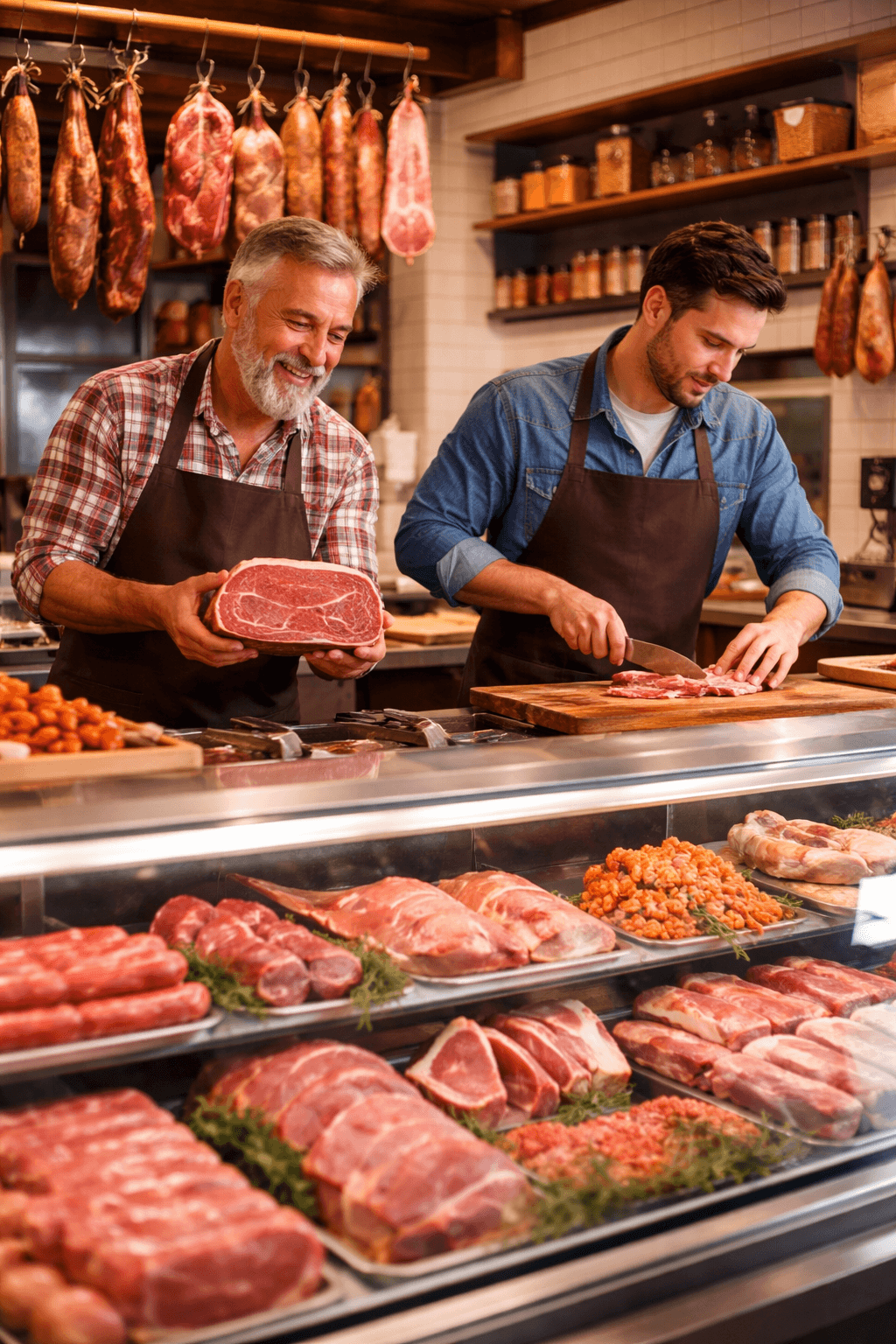
Fast facts to help you grasp core traits quickly.
Startup Cost
A real butcher shop usually needs cold storage, display cases, cutting equipment, permits, and working inventory from the start.
Read As
The counter may look simple, but the equipment and compliance burden are not.
Skill Barrier
This is not just about selling meat. You need cutting skill, food-safety discipline, yield control, and customer trust.
Read As
Customers come back because they trust your standards, not just your prices.
Time to First Revenue
Sales can begin as soon as the shop opens, but building reliable daily traffic and profitable repeat buying takes longer.
Read As
The first sales can come fast. Stable demand is the harder part.
Repeat Potential
Meat is a recurring household purchase, so trust and routine can create strong repeat demand.
Read As
Habit and trust matter more here than one-time promotion.
Local Dependency
This is strongly tied to neighborhood traffic, local buying habits, nearby competition, and access to supply.
Read As
A butcher shop is not just a product business. It is a local routine business.
Scalability
It can grow through stronger purchasing, prepared products, catering, wholesale relationships, or multiple locations, but daily operations stay intensive.
Read As
Growth usually comes from better systems and product mix, not just more cuts.
Competition
Independent meat markets compete with supermarkets, warehouse clubs, specialty grocers, and ethnic food retailers selling overlapping products.
Read As
You are rarely competing against only other butcher shops.
Operational Intensity
Purchasing, trimming, display management, sanitation, spoilage control, staffing, and customer service all happen in a tight daily rhythm.
Read As
Perishability makes small mistakes expensive.
This section helps show where demand usually comes from and what signals are worth noticing.
Demand Type
Customer Pattern
Service Format
IBISWorld places the U.S. meat markets industry at about $13.9 billion in 2026, with more than 10,000 businesses in the category, which shows this is a durable local retail model rather than a fringe idea.
The category is proven. The harder question is whether your location and operating model can compete locally.
A butcher shop sells into repeat food consumption, which gives it stronger return-purchase logic than many discretionary retail categories.
What matters is not just whether people eat meat, but whether they choose your store as part of their routine.
USDA FSIS guidance makes clear that meat sold commercially must fit within federal inspection and retail-exemption rules, and retail stores face specific limits and requirements depending on what they prepare and sell.
This is not a casual food business. Compliance affects what you can sell and how you can operate.
BLS reports a median annual wage of $38,960 for butchers in May 2024, showing that meat cutting remains a recognized skilled occupation.
The labor is specialized, but margin still depends on waste control, pricing, and local volume.
Before you take this idea seriously, check these real-world signals first.
This business is not only about having good meat. It is about handling perishable inventory with discipline every day.
Check: A good butcher shop usually wins through standards and control, not only through product variety.
Spoilage, uneven demand, and overbuying can quietly damage profit even when customer interest looks healthy.
Check: You need a purchasing rhythm that matches local demand instead of guessing from day to day.
Meat businesses face sanitation, storage, labeling, inspection, and operational rules that are more demanding than many simple retail concepts.
Check: Confirm federal, state, and local requirements before treating this like an ordinary small storefront.
If your shop offers the same experience as a grocery meat case, price pressure becomes hard to escape.
Check: Your edge often comes from trust, specialty cuts, service, preparation, or local identity.
Parts of this idea may look simple at first but become heavy in daily delivery.
Waste, trimming loss, slow-moving items, and forecasting mistakes can turn strong sales days into weak real profit.
Storage temperatures, sanitation, cleaning routines, display handling, and product rotation all matter every single day.
Independent shops usually need a clearer product or service advantage because supermarkets compete aggressively on convenience and price.
What you may need to spend before this idea becomes real.
Cost Pressure
Medium to High
Testability
Harder to test small
Cost Structure
Refrigeration + fixtures + tools + permits + inventory + labor
A smaller shop with a focused product mix, limited prepared items, and disciplined purchasing is often easier to control than trying to launch a broad premium meat market immediately.
The first goal is operational control, not looking fully built out.
Inventory loss, trim loss, utilities, staffing, packaging, sanitation, and unsold product all keep affecting real margin after opening.
Recurring waste usually matters more than one-time equipment purchases.
Equipment, storage systems, labeling processes, cleaning routines, supplier relationships, and pricing discipline all need to be in place before the business feels stable.
Customers only see the counter, but much of the real business sits behind it.
Done matters more than perfect in early stage execution.
Store image matters, but customers usually stay because the product is consistently good and safely handled.
Reminder: Trust in food retail is built through repetition, not slogans.
A broad range of cuts and products can look impressive, but it also increases waste, complexity, and purchasing mistakes.
Reminder: A tighter range with stronger turns is often healthier than trying to stock everything.
The business works best when product yield, display quality, and customer experience support each other rather than operating separately.
Reminder: A lot of margin is lost between the back room and the counter.
Without a clear reason to choose you, customers drift toward convenience and supermarket pricing.
Reminder: Independent retail usually wins through trust, expertise, specialty, and habit.
Many ideas do not start at scale; they stabilize first.
Early growth usually comes from becoming part of local purchase routines rather than depending on novelty or opening-week interest.
Reminder: Stable food retail usually grows through repeat customers, not constant first-time traffic.
Stronger growth often comes from better product mix, bundles, prepared items, seasonal offers, and clearer high-margin categories.
Reminder: Not every sale contributes equally to a healthy shop.
Growth becomes healthier when ordering, cutting standards, cleaning routines, staff training, and inventory tracking are repeatable beyond one person's judgment.
Reminder: More volume without tighter systems usually creates more waste, not more profit.
Where AI can assist and where human delivery still matters.
Inventory notes, reorder reminders, pricing drafts, promotions, and admin communication
Food-safety control, cutting skill, purchasing judgment, customer trust, and daily shop execution
An efficiency layer around the retail operation
Promo messages, product descriptions, weekly specials, order confirmations, and customer FAQs can be drafted faster and more consistently.
It saves time around the shop, not the core handling work inside it.
Inventory logs, cleaning checklists, prep notes, supplier reminders, and merchandising plans can be structured more consistently.
This becomes more useful as product variety and team size increase.
Local SEO pages, recipe content, cut guides, email drafts, and social posts can be created faster to help the store stay visible and useful.
This is especially helpful when growth depends on repeat local attention.
This page combines public industry data, official food-safety and inspection context, labor-market wage data, and editorial judgment. U.S. meat market size mainly draws from IBISWorld; retail-exemption and inspection framing mainly draws from USDA FSIS; wage context mainly draws from the BLS.
Data Sources
Public market data + official compliance guidance + labor data
Case Inputs
Retail meat-shop operating patterns + perishability and merchandising observations
Nature of Judgment
Editorial synthesis, not a single-source quotation
Supports: U.S. meat markets industry size and structure
Key point: The U.S. meat markets industry is about $13.9 billion in 2026, with 10,227 businesses in 2025.
View source →Supports: Retail exemption and operating-limit context for meat retailers
Key point: FSIS sets annual dollar limitations for how much meat and poultry a retail store may sell to hotels, restaurants, and similar institutions without losing its retail exemption. For calendar year 2025, the meat and meat-products limit is $103,600.
View source →Supports: Federal inspection framing for commercially sold meat products
Key point: FSIS explains that meat and meat products prepared for commerce fall under a federal inspection framework, while retail operations only stay outside full inspection requirements when they remain within specific retail conditions.
View source →Supports: Wage context for butcher work
Key point: Butchers had a median annual wage of $38,960 in May 2024.
View source →Explore nearby directions with different workload and demand shape.

A trust-based professional service business built on recurring client relationships, technical accuracy, and deadline-driven financial work.
Explore idea →
Auto repair is one of the most dependable local service businesses because the demand is not optional. Cars age, parts wear out, warning lights show up at inconvenient times, and most owners would rather pay someone they trust than guess wrong. The good version of an auto repair business is not just a shop that fixes cars. It is an auto repair shop that diagnoses accurately, explains clearly, and becomes the place customers stop shopping around on.
Explore idea →
This business usually looks simpler than it is. On one side, it is a fleet business built on utilization, maintenance, storage, downtime control, and bike rental business software that keeps bookings and fleet status from turning messy. On the other, it is a tour and local-experience business built on route quality, safety, trust, and local discovery.
Explore idea →You do not need to decide now. Save it, note it, and compare more ideas.