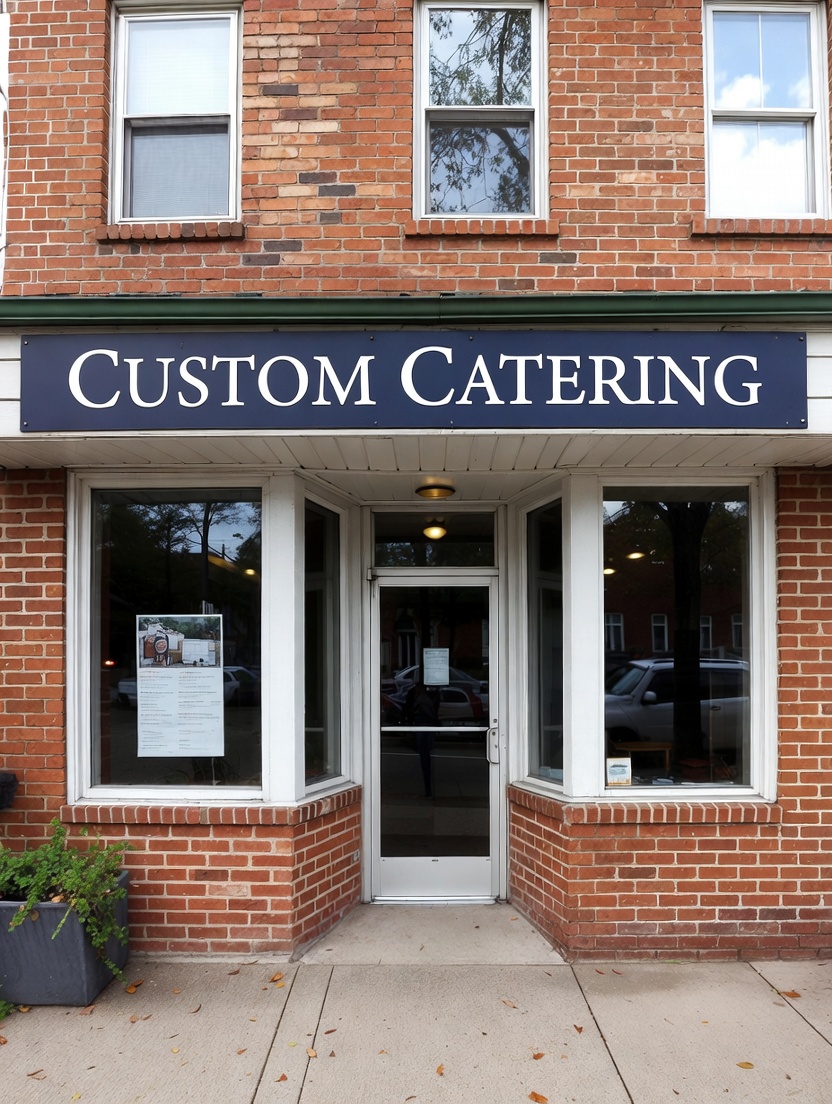
Custom Catering

A local food-service business built on event execution, menu control, and client trust. A strong catering business is not only about making good food. It is about turning menus, labor, timing, transport, and client expectations into something reliable enough that people trust you with important events.

CreativeTrust-BasedRepeat Demand

This page is here to help you see the structure of the business, not make the decision for you. If you are asking how to start a catering business, the real answer is not only menus and bookings. It is whether you can run a catering business that stays profitable under event pressure, compliance pressure, and staffing pressure at the same time.

A Custom Catering house

Quick Business Snapshot

Fast facts to help you grasp core traits quickly.

1

Startup Cost

Medium to High

You can start with a shared kitchen, limited menus, and smaller delivery jobs, but costs rise quickly once vehicles, equipment, staff, and on-site service are added.

Drop-off catering is usually a much lighter entry point than full-service events.

2

Skill Barrier

High

This is not just about cooking well. You also need to control prep flow, portions, timing, and event delivery.

Clients are buying reliability, not just flavor.

3

Time to First Revenue

Moderate

Office lunches, small private events, and intimate dinners can bring in an early first order, but building a steady calendar usually takes longer.

The first booking is easier than building a repeatable profit rhythm.

4

Repeat Potential

Medium to High

Weddings and celebrations are often one-off, but corporate clients, venues, and planners are more likely to create repeat business.

What stabilizes this business is usually recurring accounts, not single large events.

5

Local Dependency

High

Travel time, venue access, staffing, and food condition all make this a highly local business.

Distance is a cost, not just a delivery detail.

6

Scalability

Medium

It can grow, but usually through better systems, clearer packages, and stronger team support rather than simply taking more bookings.

As the business grows, coordination complexity grows with it.

7

Competition

High

Most cities already have wedding caterers, restaurant offshoots, private chefs, and lower-priced buffet operators competing for the same demand.

The market is not short on vendors. It is short on vendors people trust.

8

Operational Intensity

Very High

Menu confirmation, shopping, prep, loading, service, and cleanup all get compressed into a time window where mistakes are very visible.

A few event hours usually sit on top of several days of work.

Market & Demand Signals

This section helps show where demand usually comes from and what signals are worth noticing.

Demand Type

Event food service + convenience + stress outsourcing

Customer Pattern

Weddings, corporate clients, private parties, venues, and planners

Service Format

Drop-off + buffet + staffed on-site service

Market

This is not a fringe idea. It is a proven service category

The U.S. caterers industry is estimated at about $15.7 billion in 2026, which shows that outsourced food service is not occasional demand but a real operating category. A catering business is not a fringe side service. It is already a recognized operating market with enough scale to support different entry points.

Look first at whether people already pay steadily for this service in your area, not just whether the big market is large.

Weddings

Weddings are still a strong demand source, but not the only entry point

The U.S. wedding services market was about $64.93 billion in 2024 and about $68.63 billion in 2025. Weddings can create high-ticket opportunities, but they are usually not the most stable source of repeat revenue. A catering business built only around weddings can look exciting without becoming stable.

Weddings are good for portfolio and branding. Corporate accounts are better for steadier cash flow.

Pricing

Clients do pay real money for catering execution, not just ingredients

Recent Knot coverage puts average wedding catering around $80 per person, which shows that buyers are paying for execution, presentation, and reliability as much as for the food itself. That is why a catering business can charge real money, but only if execution quality holds up.

The price point can look attractive, but labor, transport, and on-site execution eat margin quickly.

Budget

Catering is often one of the core budget categories in an event

In current wedding budget breakdowns, catering, cake, and beverages together account for about 24% of the average wedding budget. That makes catering a central part of the event, not a side detail. In practical terms, that means a catering business is often trusted with one of the largest budget lines in the room.

The more budget it takes up, the more clients care about reliability and execution risk.
Quick Reality Check

Before you take this idea seriously, check these real-world signals first.

01

Can you control food quality, timing, and event execution at the same time?

Custom catering is not just about making good food. It requires you to stay in control while several moving parts collide.

A good caterer usually acts as both kitchen lead and event coordinator. This is one of the first hard truths behind how to start a catering business.

02

Do you have a realistic setup for compliance and production?

In many places, catering cannot be run as a casual 'cook at home and deliver' operation.

Confirm your kitchen, permits, transport process, food-safety setup, and catering business insurance before expanding marketing. In practical terms, insurance for catering business work is part of the operating setup, not an afterthought.

03

Do you have a defined lane instead of saying yes to every type of event?

The broader your promise sounds, the harder it usually becomes to quote, execute, and earn referrals.

A narrower service scope usually makes pricing, operations, and positioning easier. A catering business plan that promises every type of event often becomes messy fast.

04

Can you actually sustain this pressure-based delivery rhythm over time?

Catering often compresses a large amount of work into a short, fixed event window.

Count the shopping, prep, loading, service, cleanup, and client communication before deciding whether it fits you. A catering business often looks simpler from the dining room than it does from the kitchen and loading area.

What People Often Underestimate

Parts of this idea may look simple at first but become heavy in daily delivery.

Labor Compression

Clients see a few event hours. They do not see the preparation load behind them

Shopping, prep, cooking, packing, loading, and cleanup are usually underestimated by beginners. A catering business often hides most of its labor before the guest even sees the buffet.

Menu Complexity

Customization sounds premium, but it can quietly destroy margin

Every dietary request, menu change, and last-minute adjustment adds friction to execution. This is why a catering business plan needs boundaries, not only creativity.

Venue Friction

Not every event space is easy to serve efficiently

Parking, stairs, elevators, kitchen access, and venue rules all affect timing and labor. A catering business can lose margin through venue friction even when the menu price looks good.

Startup Cost

What you may need to spend before this idea becomes real.

Cost Pressure

Medium to High

Testability

Possible to test small

Cost Structure

Kitchen + equipment + transport + labor + food

Lean Start

The earliest workable version usually comes from borrowed capacity, not a fully owned setup

Shared kitchens, limited menus, and delivery-style service can reduce early fixed costs and lower testing risk. For many people asking how to start a catering business, this is the more realistic first version than full-service event staffing.

Validate demand first, then decide whether heavier fixed overhead is justified.

Ongoing Cost

The costs that hurt profit most are often not the first purchases, but the ones that keep repeating

Food waste, labor, transport, packaging, venue access friction, and last-minute changes all keep affecting real margin. Catering business insurance also belongs in the recurring-cost picture once the operation becomes real.

Repeated small operating costs often matter more than one-time equipment purchases.

Execution Readiness

Being truly event-ready has a cost before the first big booking arrives

Standardized menus, proposal templates, service flow, holding equipment, transport plans, and a real catering business plan all create upfront preparation cost.

Clients only see the event result, but much of the real cost happens before the event begins.

What This Idea Really Asks of You

Done matters more than perfect in early stage execution.

Custom catering can become a strong local business, but it asks you to accept high-pressure delivery, detail control, and heavy coordination as part of the real work. A catering business works best when it is built around repeatable operating discipline, not only menu talent.
1

You need to accept that this is a deadline-driven business

Once an event time is fixed, the delivery window usually cannot move. That means multiple problems can surface at once. A catering business is deadline-driven by design.

This is not a business you complete slowly. It is often one you complete against the clock.

2

You need to build reliability before chasing higher ticket sizes

Clients do not pay only because the food tastes good. They pay because they trust you not to ruin the event. That is why a catering business can look expensive and still be worth buying when the client trusts the operator.

In catering, trust is not an add-on. It is part of the product.

3

You need to compress complexity into something repeatable

If every order feels like starting the business over again, the model will be hard to grow in a healthy way. A real catering business plan usually has to reduce chaos before it increases menu breadth.

Good packages, clear boundaries, and repeatable systems are often worth more than endless customization.

4

You need to treat coordination as part of the business itself

Quotes, guest counts, dietary limits, venue coordination, and cleanup all create a second layer of work around the food. A catering business often wins or loses in that coordination layer.

A lot of margin is lost in coordination, not in cooking.

How This Idea Usually Grows

Many ideas do not start at scale; they stabilize first.

1

Move from first clients to repeatable orders

Early growth usually comes from becoming a reliable choice for a small group of clients, not from trying to look big immediately. A catering business gets healthier when it earns repeat trust before chasing size.

Reminder: Stable orders usually come before scale.

2

Move from one-off quoting to clearer packages and boundaries

Clear guest tiers, service types, and menu structures make the business easier to price, sell, and execute. This is where a catering business plan becomes either useful or decorative.

Reminder: The easier a service is to understand and buy, the easier it usually is to grow.

3

Move from founder-only effort to process and team support

Once demand is steadier, growth usually comes from better scheduling, stronger SOPs, backup labor, and clearer role separation. That is usually how a catering business stops feeling founder-fragile.

Reminder: More clients without better systems usually creates chaos, not growth.

AI / Automation Angle

Where AI can assist and where human delivery still matters.

Can Be Assisted

Quotes, checklists, scheduling, and follow-up

Still Needs Human

Food quality, judgment, execution, and live event control

Overall Role

An efficiency layer around the business

Admin

AI can reduce repetitive proposal and admin work

Event proposals, menu explanations, client FAQs, and standard follow-up messages can be produced faster through templates and automation. That helps a catering business reduce quote friction and stay more consistent.

It reduces admin time, but it does not replace live delivery.

Communication

Basic client communication can become more consistent

Headcount reminders, dietary-preference checks, process explanations, and pre-event confirmations can be standardized more clearly. That matters in a catering business where miscommunication gets expensive fast.

Consistency lowers mistakes, but clients still judge whether you are genuinely reliable.

Operations

AI can help organize repeated event operations

Client notes, event checklists, staffing plans, and post-event reviews can be summarized and reused more efficiently. The busier the catering business gets, the more valuable this structure becomes.

The busier the service rhythm becomes, the more valuable this kind of support gets.

Sources & Verification

This page combines public industry data, wedding-market research, food-business regulatory context, and editorial judgment. U.S. catering industry size and structure mainly draw from IBISWorld; wedding-market size mainly draws from Grand View Research; wedding catering price and budget share mainly draw from The Knot; food-business compliance framing mainly draws from the FDA; wage context draws from the BLS. Search intent here often clusters around catering business, how to start a catering business, catering business plan, catering business insurance, and insurance for catering business work.

Data Sources

Public market data + industry research

Case Inputs

Event service formats + operating pattern observations

Nature of Judgment

Editorial synthesis, not a single-source quotation

industry size

IBISWorld

Supports: U.S. caterers industry size and structure

Key point: The U.S. caterers industry is about $15.7 billion in 2026, with around 13,644 businesses.

View source →
wedding market size

Grand View Research

Supports: U.S. wedding services market size

Key point: The U.S. wedding services market was about $64.93 billion in 2024 and about $68.63 billion in 2025.

View source →
wedding catering cost

The Knot

Supports: Wedding catering pricing and budget structure

Key point: Recent Knot coverage places average wedding catering at about $80 per person, with catering, cake, and beverages making up about 24% of the average wedding budget.

View source →
budget breakdown

The Knot

Supports: Wedding budget share of catering-related spending

Key point: Catering, cake, and beverages remain major budget categories in current wedding spending breakdowns.

View source →
regulatory context

FDA

Supports: Federal, state, and local compliance framework for food businesses

Key point: Food businesses can be subject to layered federal, state, and local requirements depending on the product and operating facility.

View source →
income context

BLS

Supports: Wage context for food-service management work

Key point: Food service managers in the U.S. had a median annual wage of about $65,310 in May 2024.

View source →
The parts of this page covering U.S. catering industry size, wedding-market scale, wedding catering cost, and food-business regulation are grounded in public sources. The parts covering repeat logic, service boundaries, menu complexity, venue friction, delivery pressure, growth structure, and the importance of catering business insurance are editorial conclusions built from those sources rather than direct single-source claims.
Local pricing, event formats, and client structure vary a lot by city, venue type, and business model. To judge whether this business is worth doing, you still need to look at your local event density, business-client mix, venue ecosystem, food-production setup, insurance requirements, and your own ability to execute under pressure.

Keep exploring at your own pace

You do not need to decide now. Save it, note it, and compare more ideas.

Explore more ideas

Share this idea