1
Startup Cost
Low-High (model-dependent)
If the farm already exists, adding CSA delivery is manageable; starting both production and delivery from zero is much heavier.
Read As
Adding delivery is far easier than building farm and delivery together.
A farm box business is not just about moving produce. It is a crop-planning, packing, route, and retention business built around fresh food, local trust, and weekly convenience. The strongest farm box operators understand where a convenience-first farm box differs from a traditional CSA farm and price the promise accordingly.
A farm box can look similar to a CSA from the outside, but the business model is often different. A traditional CSA farm leans on advance payment, shared seasonality, and member commitment. A farm box business usually leans harder on convenience, flexibility, and a more retailer-like delivery promise.
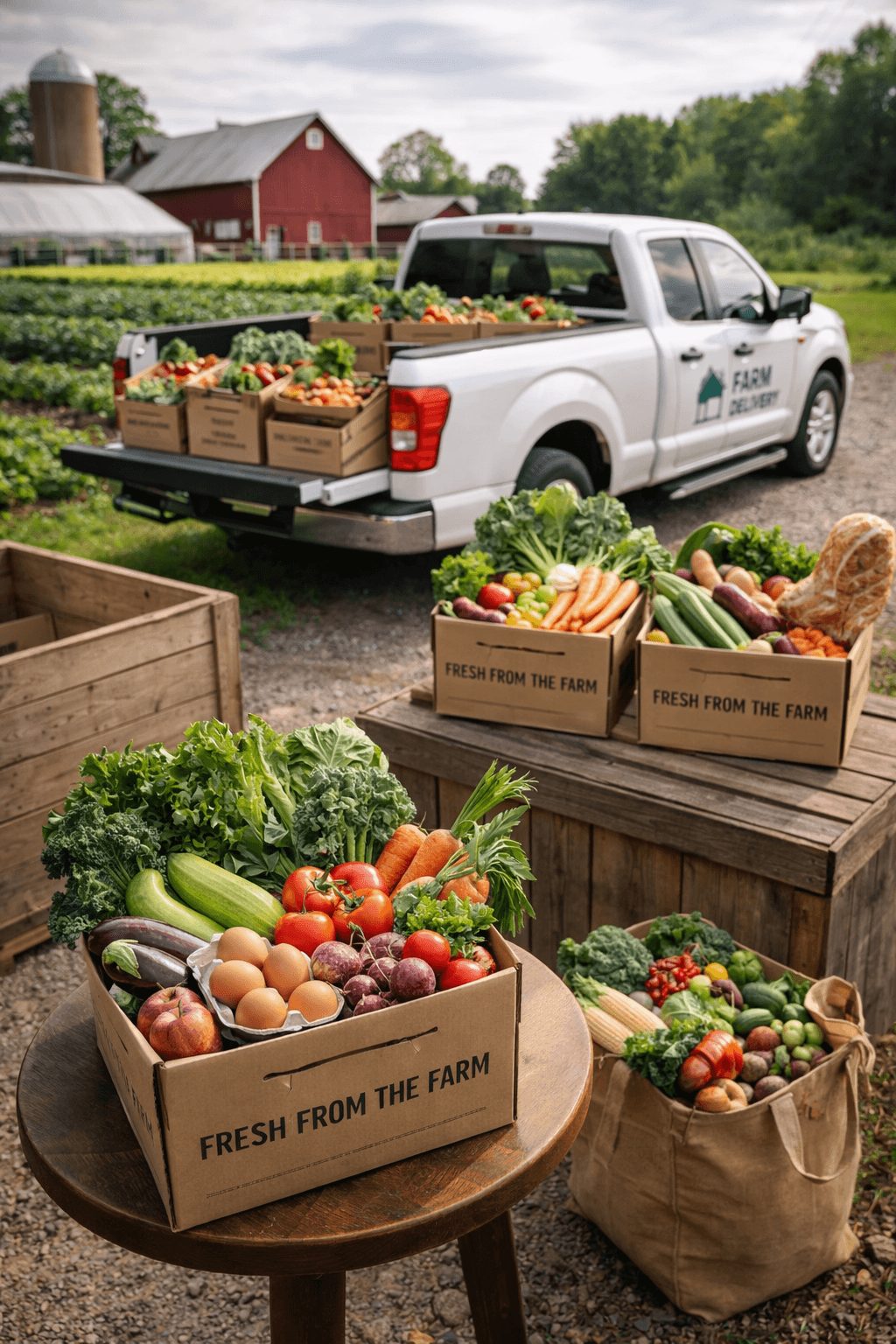
Fast facts to help you grasp core traits quickly.
Startup Cost
If the farm already exists, adding CSA delivery is manageable; starting both production and delivery from zero is much heavier.
Read As
Adding delivery is far easier than building farm and delivery together.
Skill Barrier
This is not just farming. It also requires crop planning, packing, delivery discipline, member communication, and retention management.
Read As
The weak version grows food. The strong version runs a system.
Time to First Revenue
CSA can collect cash before harvest, but only when the farm has trust, a clear offer, and enough production confidence.
Read As
Cash can arrive early. Trust must arrive earlier.
Repeat Potential
This is one of farming's clearest subscription models, but renewals depend on weekly experience and member communication.
Read As
The best operators sell renewals, not just boxes.
Local Dependency
Route density, pickup sites, perishability, and community trust make this a deeply local business even with delivery.
Read As
It may be sold online, but it is still won locally.
Scalability
Growth comes through tighter routes, more members, add-ons, and multi-farm supply, but physical delivery always limits scale.
Read As
This scales through systems, not pure demand.
Competition
The competition includes other CSAs, farmers markets, produce boxes, premium grocers, and convenience-first delivery services.
Read As
You compete against easier habits, not just other farms.
Operational Intensity
Harvest, packing, substitutions, routing, weather risk, and member support all hit the operator at the same time every week.
Read As
The brand feels calm. The weekly engine rarely is.
This section helps show where demand usually comes from and what signals are worth noticing.
Demand Type
Core Client Profile
Service Model
USDA's 2022 Census of Agriculture reported that 116,617 U.S. farms sold directly to consumers, generating $3.3 billion in sales. Separately, USDA's Economic Research Service reported $17.5 billion in food sold through all direct marketing channels in 2022. That matters because a farm box business sits inside a broader direct-sales habit that already exists, rather than trying to invent produce delivery behavior from scratch.
Farm box is not the whole direct-sales economy, but it is one of the clearest recurring-delivery lanes inside it.
USDA's National Agricultural Library reports that 7,244 U.S. farms sold through a CSA arrangement in 2020, generating about $225 million. USDA also notes this represented roughly 7.75% of direct-to-consumer farm sales. That matters because a farm box business may borrow from CSA logic, but it should not assume the customer is automatically buying a full shared-risk CSA farm model.
This is not a mass-market channel. It is a serious specialty model inside local food.
IMARC says the global organic food market reached $230.1 billion in 2024 and projects $587.0 billion by 2033. Fortune Business Insights says the broader food subscription market reached $6.19 billion in 2025 and projects $14.42 billion by 2032. A farm box business is not the same thing as meal kits or generic subscription food, but those figures help confirm that consumers are already comfortable paying repeatedly for food positioned around health, trust, and convenience.
Farm box works best when it combines real-farm credibility with clear convenience logic.
If someone asks what is CSA, the practical answer is that USDA defines it around regular seasonal deliveries sold on a subscription or membership basis with partial or total advance payment. A farm box business can borrow some of that structure while still offering more flexibility, easier skips, and less explicit shared-season risk.
The clearer the promise, the easier the renewals.
Before you take this idea seriously, check these real-world signals first.
Those are close, but they are not identical. A traditional CSA farm leans on seasonality and shared risk. A modern farm box subscription often leans harder on customization, predictability, and convenience. Both can work. The problem starts when the farm promises one model and delivers the other.
Check: Write down the actual promise you are making: shared-season membership, flexible produce subscription, or curated local food box. The operating system should match that promise.
A mid-summer farm box full of tomatoes, cucumbers, herbs, and fruit is easy to love. A shoulder-season box is where renewals are really won or lost. If the weak weeks feel repetitive or confusing, members start to emotionally detach long before they formally cancel.
Check: Review your crop plan across the whole season, not just the peak harvest window. If May and October feel thin, solve that before sales open.
Farm box home delivery sounds attractive, but it quietly adds fuel, labor, missed handoffs, route inefficiency, and cold-chain stress. Many farms discover too late that delivery grew revenue and shrank margin at the same time.
Check: Run the economics separately for farm pickup, hub pickup, and door-to-door delivery. Do not assume convenience is automatically profitable.
Parts of this idea may look simple at first but become heavy in daily delivery.
If the farm box feels repetitive, too unfamiliar, too hard to cook through, or too inconsistent in perceived value, the farm starts losing renewals even when the food itself is good.
Packing windows, cold-hold stress, route density, failed handoffs, and customer timing problems can quietly become the hardest part of the whole farm box business.
CSA improves working capital early, but the money arrives with a deadline. The farm still has to survive weather, crop variability, and member expectations for the full season. A farm box business with more flexible billing may have less upfront cash but also less rigid member pressure.
What you may need to spend before this idea becomes real.
Cost Pressure
Moderate if layered onto an existing farm; high if building both farm and delivery from scratch
Testability
Medium-High
Cost Structure
Production inputs + wash/pack flow + delivery/logistics + software/payments + cold storage/vehicle support
USDA's CSA directory explicitly defines the model around regular deliveries on a subscription or membership basis with partial or total advance payment. That means a true CSA farm can fund seed, labor, and early-season operating needs before the heaviest harvest weeks begin. A farm box business may lean more on rolling weekly revenue, which is more flexible for the customer but less powerful for early-season cash flow.
The more the model behaves like CSA, the earlier the cash tends to arrive.
Current consumer-facing references put small CSA shares around $10-$25 per week, medium shares around $25-$40, and large shares around $40-$60+ per week, with many full-season memberships in the $300-$1,000 range. Real 2025 farm listings also show 22-week shares around $575 and $750. That means a farm box business is not priced like a casual grocery extra once trust exists.
The harder part is not charging real money. It is delivering enough weekly value that renewal feels obvious.
Done matters more than perfect in early stage execution.
You need enough production diversity and timing control to make weekly farm box deliveries feel balanced, abundant, and usable instead of random. The crop plan is not only a growing plan. It is a fulfillment plan.
Reminder:
This business is full of recurring work: harvest, wash, sort, pack, route, update customers, repeat. People who dislike routine often like the idea of a farm box or farm CSA more than the reality of it.
Reminder:
Members stay calmer and renew more often when the farm explains the season well. Weekly notes, recipes, storage tips, crop updates, and honest explanations of hard weeks all do real retention work, especially when the business is selling a more convenience-led farm box and needs to justify renewal every week.
Reminder:
Many ideas do not start at scale; they stabilize first.
Do not start with too many box sizes, skip rules, add-ons, and delivery patterns. Begin with one clear farm box offer, one manageable operating radius, and one dependable weekly rhythm.
Reminder:
Customization, workplace drops, eggs, flowers, pantry items, and flexible pause rules can all strengthen the farm box offer, but they work best after the core harvest-pack-deliver system is stable.
Reminder:
The healthiest farm box businesses usually become stronger by keeping members, not by rebuilding the whole sales engine from zero every season. A CSA farm can sometimes survive on stronger upfront commitment. A convenience-led farm box usually has to earn the next renewal more actively.
Reminder:
Where AI can assist and where human delivery still matters.
Crop-to-box planning, route optimization, member email drafting, recipe suggestions, demand forecasting, renewal reminders, and simple churn-risk flagging
Growing decisions, substitution judgment, quality control, community trust, field reality, and the farm's voice
An operations helper and communication amplifier, not the farm itself
AI can help map likely farm box composition against harvest forecasts, pickup windows, and route density. That matters because weak planning is one of the fastest ways to make farm box delivery feel stressful and inconsistent.
AI can help turn weekly harvest notes into member emails, storage tips, recipes, and renewal reminders. That matters because farm box businesses often keep members through education and steady communication as much as through produce alone.
This page combines USDA direct-farm-sales and CSA data with broader subscription-food and organic-demand context. It also distinguishes between the classic CSA farm model and the more convenience-first farm box model. Search intent here often overlaps with farm box, csa farm, farm csa, and what is csa.
Core Sources
USDA + USDA NAL + USDA AMS + direct farm pricing examples
Best Use
model definition, direct sales scale, CSA share economics, and renewal logic
Main Reminder
Farm box and CSA overlap, but they are not always the same promise.
Supports: 116,617 farms sold directly to consumers in 2022, with sales of $3.3 billion.
Key point: In 2022, 116,617 U.S. farms sold directly to consumers, generating about $3.3 billion in sales.
View source →Supports: $17.5 billion in food sold through direct marketing channels in 2022.
Key point: U.S. farms sold about $17.5 billion in food through direct marketing channels in 2022.
View source →Supports: 7,244 U.S. farms in CSA arrangements in 2020; about $225 million in CSA revenue; about 7.75% of direct-to-consumer farm sales.
Key point: In 2020, about 7,244 U.S. farms were in CSA arrangements, producing roughly $225 million in revenue, or about 7.75% of direct-to-consumer farm sales.
View source →Supports: CSA as regular, usually weekly deliveries during one or more harvest seasons on a subscription or membership basis with partial or total advance payment.
Key point: CSA is typically structured as regular, usually weekly seasonal deliveries sold through a subscription or membership model with partial or full advance payment.
View source →Supports: Median total farm household income forecast at $110,014 in 2025; median farm income forecast at -$1,498 for 2025.
Key point: For 2025, USDA forecasts median total farm household income at about $110,014, while median farm income itself is projected at about -$1,498.
View source →Supports: Global organic food market at $230.1 billion in 2024, projected to reach $587.0 billion by 2033.
Key point: The global organic food market was valued at about $230.1 billion in 2024 and is projected to reach about $587.0 billion by 2033.
View source →Supports: Global food subscription market at $6.19 billion in 2025, projected to $14.42 billion by 2032.
Key point: The global food subscription market is estimated at about $6.19 billion in 2025 and projected to grow to about $14.42 billion by 2032.
View source →Supports: Typical weekly share ranges of $10-$25 for small shares, $25-$40 for medium shares, and $40-$60+ for large shares; many full-season memberships ranging $300-$1,000.
Key point: Consumer-facing CSA pricing often ranges from about $10-$25 per week for small shares, $25-$40 for medium shares, and $40-$60+ for large shares, with many season memberships around $300-$1,000.
View source →Supports: Example 22-week share pricing of $575 for a small share and $750 for a large share.
Key point: One current farm example shows 22-week CSA pricing at $575 for a small share and $750 for a large share.
View source →Explore nearby directions with different workload and demand shape.

A trust-based professional service business built on recurring client relationships, technical accuracy, and deadline-driven financial work.
Explore idea →
Auto repair is one of the most dependable local service businesses because the demand is not optional. Cars age, parts wear out, warning lights show up at inconvenient times, and most owners would rather pay someone they trust than guess wrong. The good version of an auto repair business is not just a shop that fixes cars. It is an auto repair shop that diagnoses accurately, explains clearly, and becomes the place customers stop shopping around on.
Explore idea →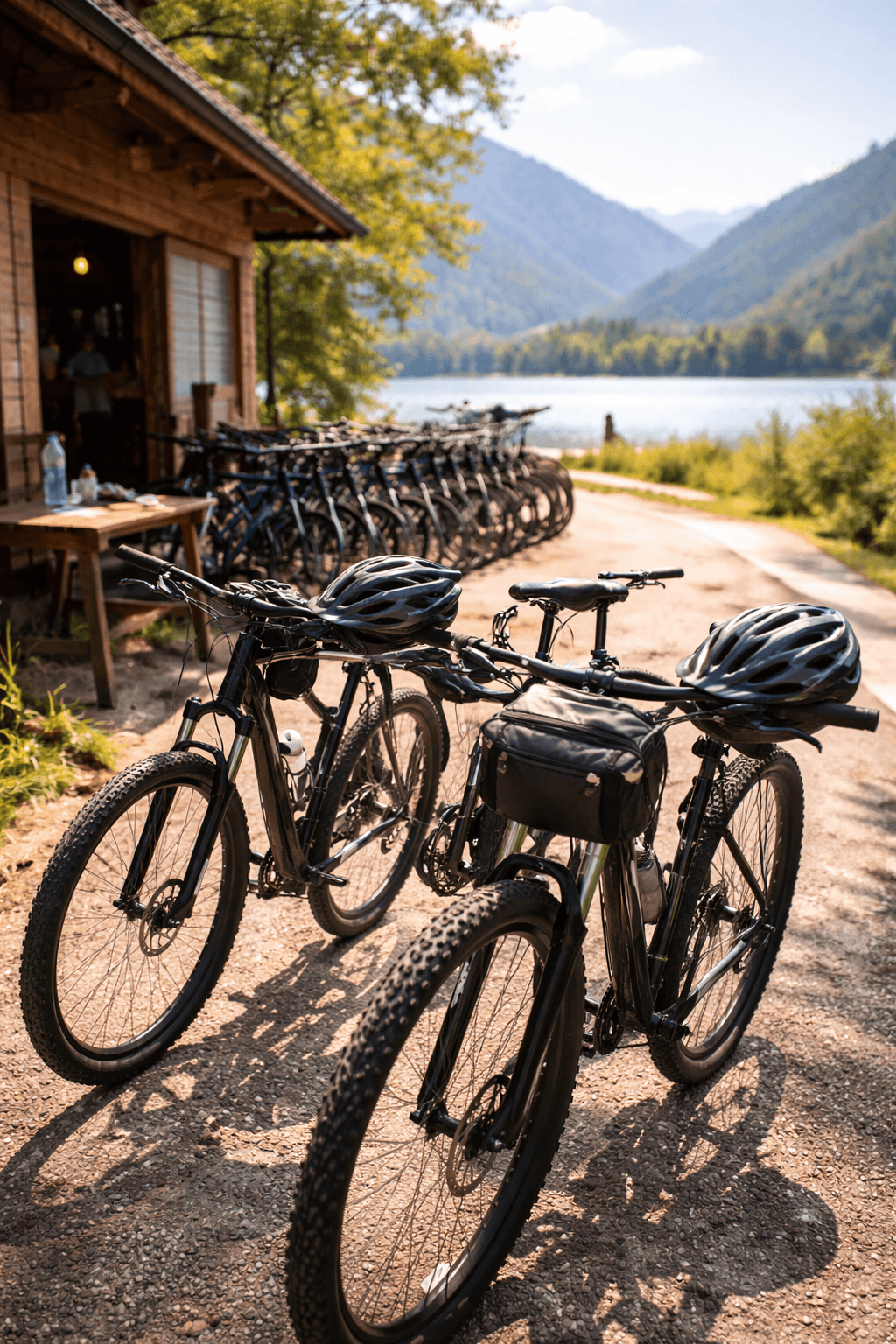
This business usually looks simpler than it is. On one side, it is a fleet business built on utilization, maintenance, storage, downtime control, and bike rental business software that keeps bookings and fleet status from turning messy. On the other, it is a tour and local-experience business built on route quality, safety, trust, and local discovery.
Explore idea →You do not need to decide now. Save it, note it, and compare more ideas.