Gift Shop

A gift shop is a specialty retail business built on curation, occasion-driven buying, and the ability to turn ordinary shopping into gift ideas people actually remember. The strongest version is not a random shelf of nice objects. It is a gift shop with a clear point of view, a better mix of unique gifts, strong gift wrap execution, and product categories like gift boxes that make the purchase feel easy.

Local ServiceLocal ServiceRepeat Demand

This page is here to help you see the structure of the business, not make the decision for you. A gift shop may look calm and creative from the outside, but the real work sits inside buying discipline, display rhythm, category clarity, gift wrap operations, and whether your gift shop gives customers better gift ideas than they can find elsewhere.

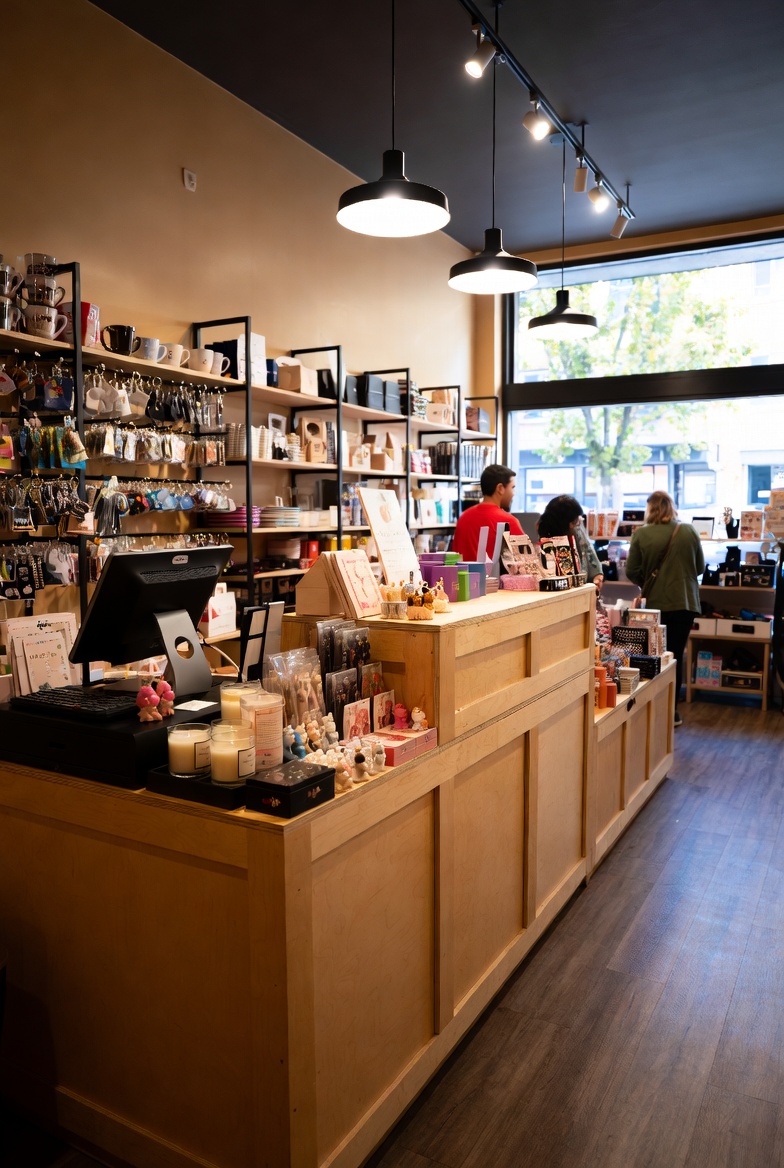
A curated gift store with greeting cards, candles, wrapped gifts, and seasonal displays

Quick Business Snapshot

Fast facts to help you grasp core traits quickly.

1

Startup Cost

Medium

A small gift shop can start with a narrower assortment, but rent, fixtures, packaging, opening inventory, and working capital rise faster than many first-time owners expect.

The shop can feel simple to open. The buying risk is not.

2

Skill Barrier

Medium to High

You need product selection judgment, pricing discipline, visual merchandising, and a clear sense of who the gift shop is actually for.

Taste attracts traffic. Retail discipline keeps the doors open.

3

Time to First Revenue

Moderate

A gift shop can generate sales quickly after opening, especially around holidays, but dependable year-round sell-through takes longer to prove.

Curiosity can create early sales. Stable repeat buying is the harder milestone.

4

Repeat Potential

Medium

Repeat demand often comes from birthdays, holidays, local gift habits, and corporate gifting rather than from weekly routines.

The goal is to become the gift shop people remember when they need a gift quickly.

5

Local Dependency

High

A physical gift shop depends heavily on foot traffic, neighborhood fit, tourism, nearby competition, and local spending patterns.

A good concept in the wrong location can still struggle.

6

Scalability

Low to Medium

It can grow through e-commerce, gift boxes, subscriptions, corporate gifting, or multiple stores, but each path adds more inventory complexity.

Growth often increases buying risk before it improves stability.

7

Competition

High

A gift shop competes with Amazon, Etsy sellers, bookstore add-on sections, florists, local boutiques, and larger specialty retail chains.

The market is full of gift options. It is not full of memorable curation.

8

Operational Intensity

Medium to High

Display upkeep, inventory rotation, shrink, packaging, gift wrap, and seasonal resets make this a more active specialty retail business than it first appears.

A calm sales floor can hide a lot of operational work.

Market & Demand Signals

This section helps show where demand usually comes from and what signals are worth noticing.

Demand Type

Occasion buying + emotional gifting + discovery-led specialty retail

Customer Pattern

Gift buyers, holiday shoppers, tourists, local regulars, and corporate clients

Service Format

Gift shop retail + gift wrap + seasonal collections + gift boxes

Market

This is still a real specialty retail category, but not an easy-growth one

The U.S. gift shops and card stores category is about $23.9 billion in 2026, which confirms that a gift shop is still part of a real spending category. The harder issue is that it is a mature market where many operators are selling similar products, so the question becomes whether your gift shop gives people a better reason to buy.

A large category helps prove demand, but it does not make a small gift shop easy to operate.

Gift Ideas

People often buy from a gift shop because it shortens the search for gift ideas

A good gift shop is not only selling objects. It is reducing decision fatigue. Many customers are really paying for better gift ideas, better presentation, and the feeling that the item has already been filtered with taste.

The better your gift ideas feel, the less your customer behaves like a price-comparison shopper.

Occasions

The strongest gift shop is tied to recurring occasions, not random browsing alone

Holidays, birthdays, thank-you moments, hostess gifts, baby events, and corporate gifting all create demand windows. A gift shop that becomes associated with those moments usually performs better than one that simply hopes customers wander in for inspiration.

A gift shop becomes stronger when it is remembered at the right moment, not just admired once.

Format

A gift boutique works best when the assortment feels chosen, not generic

The closer a gift shop gets to looking like a general store with random decor, the easier it is to replace. A better gift boutique usually wins through unique gifts, tighter categories, gift wrap quality, and clearer specialty retail identity.

The sharper the point of view, the easier it is for the customer to understand why this gift shop exists.

Add-ons

Gift boxes and gift wrap can increase perceived value more than many retailers expect

Gift boxes, bundling, and clean gift wrap are not small extras. They make the purchase easier, raise ticket size, and reinforce the reason to choose a gift shop instead of buying a basic item elsewhere.

Convenience and presentation often matter as much as the product itself.
Quick Reality Check

Before you take this idea seriously, check these real-world signals first.

01

Are you opening a gift shop, or are you building a clear point of view through merchandise?

Generic gifts are easy to replace. A sharper identity is much harder to replace.

A clear lane such as premium paper goods, home fragrance, baby gifting, local artisan products, or seasonal gift boxes usually makes a gift shop easier to remember and buy from.

02

Can you manage inventory without overbuying what only looks appealing in the moment?

Many gift products are easy to say yes to and hard to sell through quickly.

A healthy gift shop needs buying discipline. Beautiful shelves do not automatically mean healthy inventory turns.

03

Do you know whether your gift shop works outside peak occasions?

Holiday spikes can make a weak specialty retail model look stronger than it is.

You need to know whether your gift shop still moves products during ordinary weeks, not only when gift urgency is already high.

04

Can customers explain why they would choose your gift shop instead of buying online or adding a gift somewhere else?

You compete with many stores that can also sell candles, cards, decor, and wrapped items.

A gift shop usually wins through unique gifts, better gift ideas, better gift wrap, and a point of view that feels more useful than a generic retail shelf.

What People Often Underestimate

Parts of this idea may look simple at first but become heavy in daily delivery.

Inventory Drift

A gift shop can drift into too many categories very quickly

Candles, cards, decor, stationery, novelty products, and seasonal items can create atmosphere, but they can also create a loose buying strategy that traps cash.

Seasonality

Holiday peaks can hide weak year-round specialty retail economics

A strong holiday season does not automatically mean a gift shop is healthy across normal months when urgency is lower and browsing is less predictable.

Replaceability

Many gift products feel attractive but remain easy to substitute

If the assortment feels generic, customers can find similar items online, in bookstores, in florists, or in larger gift boutique chains without much friction.

Startup Cost

What you may need to spend before this idea becomes real.

Cost Pressure

Medium

Testability

Possible to test small

Cost Structure

Rent + fixtures + opening inventory + gift wrap supplies + staff + working capital

Lean Start

The lightest workable version usually begins with a narrower gift shop concept

A gift shop focused on local products, paper goods, home fragrance, seasonal gifting, or gift boxes is usually easier to test than a broad general concept. Narrower specialty retail makes the first buying decisions cleaner.

Clarity usually makes the first stage cheaper and easier to manage.

Inventory Cost

The real startup cost is not just décor, but merchandise judgment

Opening inventory, reorder timing, gift wrap supplies, display allocation, and seasonal planning decide how much cash stays trapped in products. In a gift shop, what you choose to carry becomes part of the business model itself.

Buying errors usually hurt longer than decoration expenses.

Ongoing Cost

Recurring costs matter more than the first impression of the shop

Payroll, shrink, markdowns, stale seasonal inventory, packaging, gift wrap labor, and slow-moving unique gifts all shape whether the gift shop becomes stable or stressful.

A charming atmosphere does not solve weak merchandise economics.

What This Idea Really Asks of You

Done matters more than perfect in early stage execution.

A gift shop can become a strong specialty retail business, but it asks you to combine curation, customer memory, inventory discipline, and merchandising rhythm rather than simply stock attractive products.
1

You need to accept that taste is not the same as retail judgment

Beautiful products and good gift ideas help attract shoppers, but the gift shop still has to work through timing, pricing, rotation, and sell-through discipline.

Taste brings attention. Retail judgment protects cash.

2

You need to build relevance before chasing expansion

The strongest gift shop usually becomes remembered for birthdays, holidays, hostess gifts, local discovery, or curated unique gifts before trying to scale into a bigger specialty retail footprint.

Being remembered at the right moment is often more valuable than being admired once.

3

You need to create a shop that feels chosen, not generic

The more your assortment feels interchangeable, the more customers compare you on convenience and price. A gift boutique usually works best when the customer senses a clear eye behind the buy.

Curation is one of the real products in a gift shop.

4

You need to treat category boundaries as part of survival

Without discipline, a gift shop can slowly become a collection of unrelated nice things that are hard to buy, hard to restock, and hard to explain clearly.

Not every attractive product deserves shelf space.

How This Idea Usually Grows

Many ideas do not start at scale; they stabilize first.

1

Move from opening curiosity to repeat occasion-based traffic

Early growth usually comes from becoming a remembered gift shop for birthdays, thank-you gifts, holidays, and quick gifting needs rather than relying on random browsing alone.

Reminder: Recognition usually comes before strong repeat buying.

2

Move from broad assortment ambition to clearer category strength

The strongest gift shop usually becomes known for something specific: local products, better gift boxes, premium paper goods, home fragrance, children's gifting, or tightly curated unique gifts.

Reminder: Category clarity usually beats trying to carry everything.

3

Move from founder-driven buying to systems and merchandising rhythm

As the gift shop matures, growth usually comes from better seasonal calendars, stronger sell-through tracking, better display resets, and cleaner space allocation across the floor.

Reminder: More products without better systems usually create clutter, not growth.

AI / Automation Angle

Where AI can assist and where human delivery still matters.

Can Be Assisted

Product descriptions, gift guides, customer emails, seasonal planning, and simple inventory analysis

Still Needs Human

Buying judgment, visual merchandising, customer sensing, and gift shop identity

Overall Role

An efficiency layer around specialty retail operations

Admin

AI can reduce repetitive gift shop product and campaign work

Product descriptions, holiday emails, gift ideas roundups, gift box descriptions, and promotion copy can be prepared faster through reusable templates.

It saves time, but it does not replace curation judgment.

Merchandising

AI can help organize category and seasonal planning more clearly

Gift boutique themes, display groups, occasion calendars, and slow-mover summaries can be reviewed more consistently over time. That helps a gift shop stay more disciplined across seasons.

It helps structure choices, but the final buy still needs real specialty retail sense.

Marketing

AI can help maintain a more consistent store voice

Gift ideas lists, local discovery posts, occasion-based campaigns, and customer-segment messages can be produced faster for a small team. That helps when the gift shop depends on being remembered before the next gifting moment arrives.

Consistency helps, but the gift shop still depends on whether the merchandise feels worth buying.

Sources & Verification

This page combines public industry data, holiday retail reporting, labor-market context, category-definition context, and editorial judgment. U.S. gift shop market size and business counts mainly draw from IBISWorld; gifting-demand context mainly draws from the National Retail Federation; retail wage context mainly draws from the U.S. Bureau of Labor Statistics; category-definition context mainly draws from U.S. Census NAICS classification.

Data Sources

Industry data + holiday retail reporting + labor and classification sources

Case Inputs

Specialty retail patterns + merchandising and seasonality observations

Nature of Judgment

Editorial synthesis, not a single-source quotation

industry size

IBISWorld

Supports: U.S. gift shop and card store industry revenue and growth framing

Key point: U.S. gift shops and card stores industry revenue is about $23.9 billion in 2026, and the category is described as essentially flat and structurally low-growth.

View source →
business count

IBISWorld

Supports: U.S. gift shop and card store business counts

Key point: There are about 52,999 U.S. gift shops and card stores businesses in 2026.

View source →
gifting context

National Retail Federation

Supports: scale of gifting demand during holiday periods

Key point: Consumers planned to spend about $29 billion on gift cards in 2025.

View source →
retail wage context

BLS Occupational Outlook Handbook

Supports: wage context relevant to gift shop staffing

Key point: Retail salespersons had a median hourly wage of about $16.62 in May 2024.

View source →
industry definition

U.S. Census Bureau NAICS

Supports: what the category includes at the industry-classification level

Key point: NAICS 459420 covers gift, novelty, and souvenir retailers, including gifts, greeting cards, seasonal decorations, and similar specialty retail items.

View source →
The parts of this page covering U.S. industry revenue, business counts, gifting-demand context, retail wage context, and category definition are grounded in public sources. The parts covering inventory drift, seasonality, category strategy, gift wrap value, and customer-memory logic are editorial conclusions built from those sources rather than direct single-source claims.
A gift shop can still work well in the right niche, but it is rarely a simple shelf of nice products. To judge whether it is worth doing, you still need to look at local traffic, seasonality, tourism or neighborhood fit, category clarity, and whether your gift shop gives people a reason to buy from it instead of buying a gift elsewhere.

Keep exploring at your own pace

You do not need to decide now. Save it, note it, and compare more ideas.

Explore more ideas

Share this idea