Home Cleaning Business

A Home Cleaning Business is a local Residential Cleaning Business built on recurring demand, household trust, and the ability to deliver a clean home consistently without making the customer think about it too much. The strongest version combines recurring cleaning, clear deep cleaning offers, and reliable service that keeps households rebooking.

Local ServiceTrust-BasedRepeat DemandCleaningHouseholdLocal ServiceHome

This page helps you see the structure of a Home Cleaning Business clearly. The strongest House Cleaning Business usually wins through recurring cleaning, reliable standards, and a clean distinction between routine service and deep cleaning work.

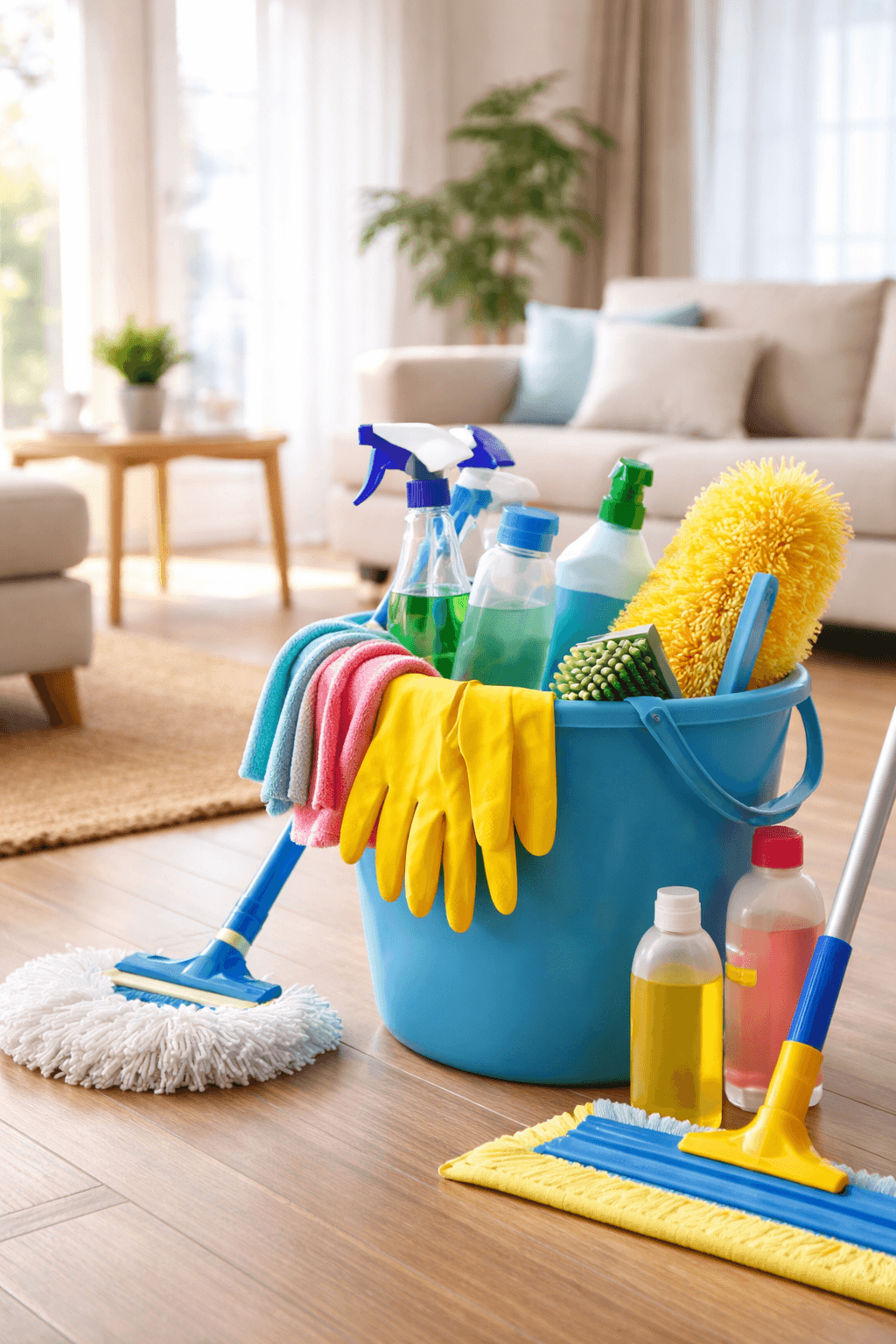
Home Cleaning tools

Quick Business Snapshot

Fast facts to help you grasp core traits quickly.

1

Startup Cost

Low to medium

A solo Home Cleaning Business can start fairly lean, but a more trustworthy setup quickly adds equipment, supplies, insurance, and presentation costs.

The cheapest version is not always the version customers trust most.

2

Skill Barrier

Low to medium

Basic cleaning is easy to understand, but fast, consistent, detail-oriented cleaning that earns repeat bookings takes real practice.

Knowing how to clean is not the same as cleaning well under time pressure.

3

Time to First Revenue

Fast

This is one of the easier service businesses to test quickly if you can get local visibility and make the offer feel safe and straightforward.

For most people, the hard part is not the service itself. It is getting trusted fast enough.

4

Repeat Potential

High

Regular cleaning fits naturally into weekly, biweekly, and monthly schedules, which makes recurring revenue a real part of the model.

A strong Home Cleaning Business is usually built on recurring cleaning clients, not one-off deep cleaning jobs alone.

5

Local Dependency

High

Demand depends heavily on local household density, income, commute patterns, and how normal it already is in that area to hire help.

The same offer can feel obvious in one neighborhood and weak in another.

6

Scalability

Medium

You can grow, but growth usually comes from standardization, recurring schedules, and team management rather than pure leverage.

This is not automatically a high-margin, high-leverage business just because demand exists.

7

Competition

Medium to high

Entry barriers are not extreme, so customers usually have options: independents, small teams, franchises, and platform-based cleaners.

You do not need no competition. You need a clearer reason to be chosen.

8

Operational Intensity

Medium to high

The work itself is physical, but the real pressure also comes from scheduling, travel, key handling, communication, complaints, and consistency.

A House Cleaning Business is simple on paper and much less simple in motion.

Market & Demand Signals

This section helps show where demand usually comes from and what signals are worth noticing.

Demand Type

Recurring household service + deep cleaning demand

Customer Pattern

Busy households, professionals, families, older homeowners, and clients comparing residential cleaning against DIY

Service Format

Local, booked, trust-based, often split between recurring cleaning and Deep Cleaning Service work

Demand

This is not a fringe service category

The broader cleaning-services market is already massive, and home-cleaning-specific research shows a large residential segment with steady projected growth. That matters because a Home Cleaning Business enters an established behavior rather than trying to invent one from scratch.

The category is real. The question is whether your local market is dense and trust-oriented enough for your Residential Cleaning Business.

Recurring

Recurring service is one of the strongest structural advantages in this business

Weekly, biweekly, and monthly service patterns are already built into how the market is described and sold. That is one reason a good Home Cleaning Business usually becomes more stable as it moves from one-off jobs to recurring cleaning schedules.

Look for neighborhoods and customer types where recurring cleaning is already normal, not where you need to teach the market from zero.

Fragmentation

The market is large, but it is also crowded and fragmented

There is real demand, but there are also many ways customers can buy it: independents, small teams, franchises, and platforms. In practice, customers often compare reliability, trust, and communication more than brand size.

This is usually not a winner-takes-all market. It is a trust-and-consistency market for any House Cleaning Business.

Pricing

There is already a clear willingness to pay for routine and one-off cleaning

Live pricing pages show a clear difference between standard recurring cleans and higher-scope work like deep cleaning or move-out cleans. That spread matters because many operators make stable money on repeat service and stronger margins on occasional higher-value jobs.

A lot of the business logic comes from turning a single clean into a repeat schedule and then adding Deep Cleaning Service work later.

Labor

This is still a labor business, not a pure lead-generation game

Labor size and wage data are useful reminders that cleaning remains an execution-heavy service. If you plan to grow beyond solo work, staffing quality, retention, and scheduling discipline become real business problems in any Residential Cleaning Business.

If you want to scale, hiring will matter more than branding sooner than you think.
Quick Reality Check

Before you take this idea seriously, check these real-world signals first.

01

Can you sell repeat cleaning, not just one-off help?

A few deep cleaning jobs can bring cash, but they do not automatically create a stable business.

Look at whether your likely customers would buy weekly, biweekly, or monthly recurring cleaning on an ongoing basis.

02

Can customers trust you in their home quickly enough to book?

Trust is not a side detail in a House Cleaning Business. It is part of the product.

Think about reviews, clear policies, messaging, arrival windows, insurance, and how professional the Home Cleaning Business feels before the first visit.

03

Can you standardize the scope before jobs start drifting?

Small service businesses often lose money through vague expectations more than bad demand.

Set a clear definition of standard clean, deep cleaning, move-out clean, and what is extra.

04

Can you actually live with the pace of repetitive service work?

This business sounds simple, but simple does not mean light.

Add together cleaning time, travel, laundry, supply restocking, rescheduling, late payments, and complaint handling.

What People Often Underestimate

Parts of this idea may look simple at first but become heavy in daily delivery.

Trust and access

People often underestimate how much trust work sits inside a Home Cleaning Business

Customers are not only buying clean surfaces. They are letting someone into their home, often repeatedly, which is why reliable service matters so much in a Residential Cleaning Business.

Scope creep

A lot of margin disappears in unclear expectations

Extra rooms, heavier mess, pet hair, dishes, linen changes, and 'just one more thing' requests can quietly wreck pricing, especially when deep cleaning is not clearly defined.

Consistency

The hard part is not doing a good clean once. It is doing a good clean every time

Repeat revenue depends more on consistency than on occasional standout performance.

Staffing

Once you try to grow, people management becomes part of the business whether you like it or not

Cleaner retention, training, and quality control are usually more important than a nicer logo or website.

Startup Cost

What you may need to spend before this idea becomes real.

Cost Pressure

Low to medium

Testability

Easy to test small

Cost Structure

Tools + supplies + transport + trust setup + insurance

Starter setup

You can begin lean, but a real starter setup is still more than a bottle of spray and a rag

A very basic starter setup can be anchored around a compact vacuum, mop and bucket system, spray bottles, microfiber cloths, a caddy, broom, and basic disinfecting supplies. It is inexpensive enough to test, but not yet a full professional setup for a Home Cleaning Business.

Cheap enough to test does not mean ready enough to scale.

Ongoing costs

The recurring expenses matter more than people think

Chemicals, cloth replacement, laundry, travel, gas, replacement heads, scheduling software, insurance, and payment processing keep showing up every month.

A Home Cleaning Business usually feels profitable fastest when routes are tight and repeat clients are nearby.

Trust costs

Looking reliable has a cost too

Insurance, a simple website, uniforms, printed cards, branded communication, and a review-building process all increase the odds of booking, even if they are not 'cleaning tools.'

In home services, presentation often affects conversion more than beginners expect.

What This Idea Really Asks of You

Done matters more than perfect in early stage execution.

A Home Cleaning Business can become a durable local service business, but it asks you to accept repetitive work, high standards, and the fact that trust and operations matter just as much as the cleaning itself.
1

You need to be okay with repeat service work

This is not a business powered by novelty. It is powered by showing up and doing the job well again and again through recurring cleaning.

If you hate repetition, this model will feel heavier over time.

2

You need to treat trust as part of the product

The customer is not just paying for a clean home. They are paying for safety, predictability, respect, and not having to worry.

Trust is not marketing decoration here. It is a core operating asset.

3

You need to get fast without getting sloppy

A strong House Cleaning Business is usually built on speed, consistency, and clear standards rather than perfectionism on every single corner.

You are running a service business, not staging a photoshoot.

4

You need to make the business legible

Clear packages, clear add-ons, clear arrival windows, and clear rules are part of making the business easier to buy from, especially when standard recurring cleaning and deep cleaning are priced separately.

Confused customers create slow sales and messy jobs.

How This Idea Usually Grows

Many ideas do not start at scale; they stabilize first.

1

Go from first clients to recurring households

Early growth usually comes from becoming a trusted regular cleaner for a small cluster of households, not from looking large.

Reminder: A few good repeat clients are usually worth more than many random one-offs.

2

Add clearer packages and higher-value cleaning types

Once the basics sell, many operators grow by separating standard cleaning, deep cleaning, move-in or move-out work, and specialty add-ons more clearly.

Reminder: Services that are easier to understand are usually easier to sell.

3

Turn personal effort into systems

When demand becomes more stable, growth usually comes from checklists, route planning, training, and quality control rather than pure hustle.

Reminder: More bookings without systems often creates more stress before more profit.

AI / Automation Angle

Where AI can assist and where human delivery still matters.

Can Be Assisted

quoting, scheduling, reminders, checklists, follow-ups

Still Needs Human

cleaning quality, trust, judgment, and customer experience

Overall Role

an efficiency layer around the service, not the service itself

Admin

AI can reduce repetitive admin work

Quote templates, booking confirmations, appointment reminders, and post-clean follow-ups can all be made faster and more consistent.

Useful for operations, not a replacement for delivery.

Standardization

AI can help turn a messy service into a clearer system

Checklists, room-by-room task lists, add-on menus, and customer prep instructions become easier to write and reuse across recurring cleaning and Deep Cleaning Service jobs.

That matters more once you start repeating the same jobs every week.

Retention

AI can help with repeat business more than with first-time cleaning itself

It can support recurring reminders, review requests, rebooking prompts, and service-history notes so the business feels more organized.

Retention systems are often more valuable than clever branding.

Sources & Verification

This page combines public market reports, labor data, live pricing pages, and editorial synthesis. Some sources describe the broader cleaning-services industry rather than residential cleaning alone, so they are used as structure signals rather than as a literal measure of every Home Cleaning Business.

Data Sources

market reports + labor data + consumer pricing

Use Case

demand validation + pricing anchors + startup framing

Nature of Judgment

public sources + editorial synthesis, not single-source transcription

global cleaning services market

Grand View Research

Supports: broad category size and growth

Key point: Grand View Research estimates the global cleaning services market at about USD 442.09 billion in 2025, with projected growth to about USD 770.76 billion by 2033.

View source →
home cleaning services market

Research and Markets

Supports: home-cleaning-specific market size and structure

Key point: Research and Markets values the global home cleaning services market at about USD 79.06 billion in 2026 and projects it to reach about USD 134.05 billion by 2032.

View source →
employment signal

BLS

Supports: labor intensity and workforce size

Key point: BLS featured data for May 2024 shows about 854,910 maids and housekeeping cleaners employed in the United States.

View source →
wage signal

BLS

Supports: wage anchor for the occupation

Key point: The BLS occupation page for maids and housekeeping cleaners shows a median hourly wage of about USD 16.08.

View source →
consumer pricing

Angi

Supports: live house-cleaning price range

Key point: Angi says professional house cleaning commonly runs about USD 75 to USD 200 per visit for weekly cleaning.

View source →
startup cost signal

Housecall Pro

Supports: startup-cost framing

Key point: Housecall Pro frames cleaning businesses as low-cost to start, but the specific 'under USD 2,500' claim should be treated cautiously unless you have a direct page capture for that exact wording.

View source →
Statements such as 'repeat purchase potential is high,' 'the best version of this business is built around recurring households,' 'trust is part of the product,' and 'route density matters more than beginners expect' are editorial synthesis. They are based on recurring-frequency segmentation in market reports, current customer price patterns, and the labor-heavy nature of the work, but they are not single-source quotes.
If what you really mean is a small, owner-operated Home Cleaning Business, the most relevant benchmarks are recurring residential cleaning, deep cleaning pricing, retention, and route efficiency. Broad cleaning-industry market sizes help validate demand, but they should not be mistaken for a direct picture of a solo House Cleaning Business.

Keep exploring at your own pace

You do not need to decide now. Save it, note it, and compare more ideas.

Explore more ideas

Share this idea