Guided Tours

A guided tours business sells interpretation, convenience, and access. Travelers are not paying only to be shown around. They are paying to understand a place faster, avoid friction, and have a better day than they would have had on their own. The strongest operators usually turn guided tours into clearer formats such as history tours, cultural tours, and premium custom tours.

Local ServiceLocal ServiceRepeat Demand

The best guided tours are not selling facts. They are selling a smoother, richer, more memorable version of the destination, whether that becomes history tours, cultural tours, or a higher-ticket custom tour.

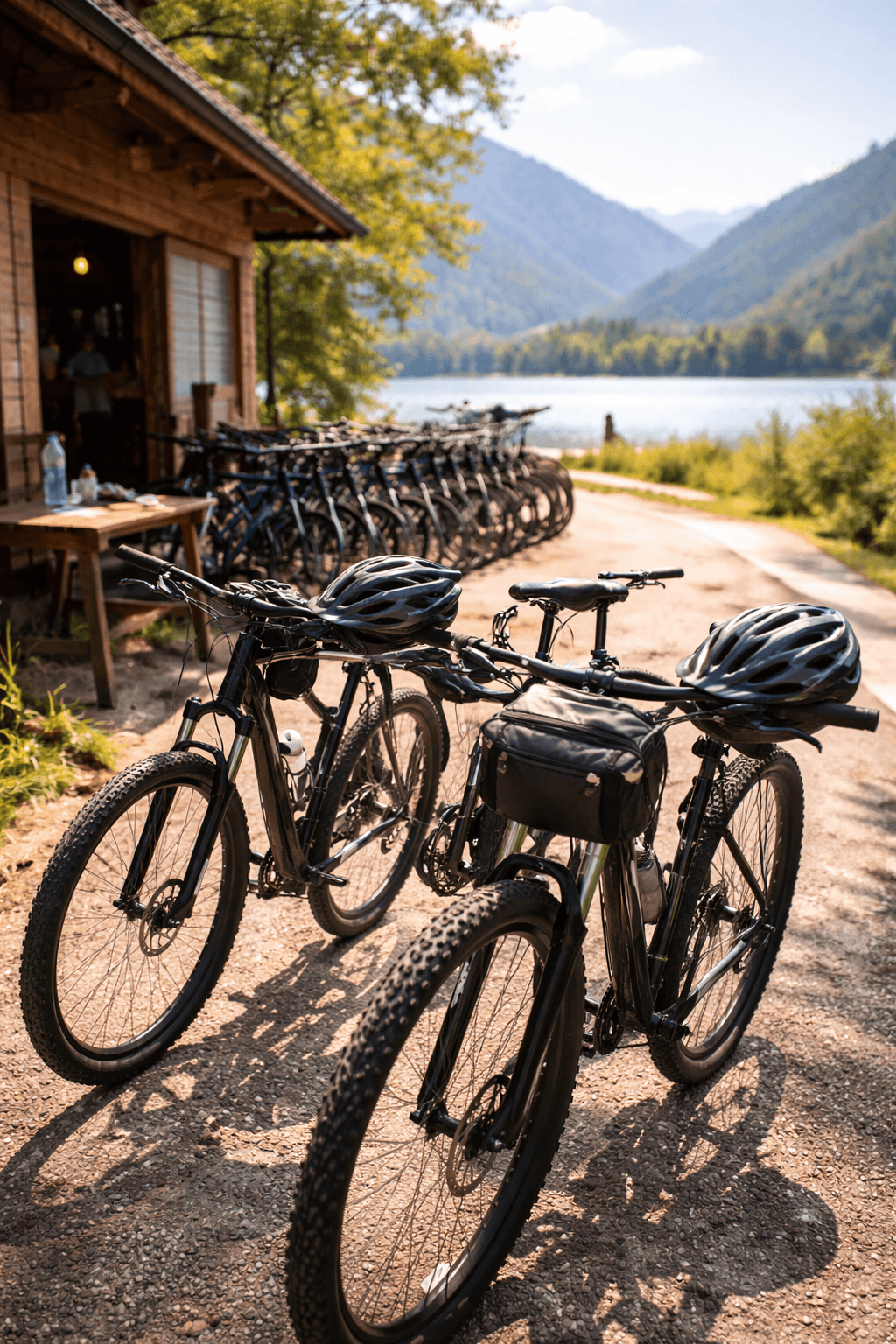
A local guide leading a small group through a historic city lane, pointing out details most visitors would miss.

Quick Business Snapshot

Fast facts to help you grasp core traits quickly.

1

Startup Cost

Low

Walking tours can start lean: insurance, basic business setup, a booking page, and a tested route. Costs rise once you add vehicles, staff, or specialist equipment.

The hard part is not gear. It is packaging your knowledge into something strangers will pay for.

2

Skill Barrier

High

Good guides need more than local knowledge. They need pacing, storytelling, group control, route logic, and calm customer handling.

Facts do not sell tours. Delivery does.

3

Time to First Revenue

Fast

A guide can get first bookings quickly through OTAs or local referrals. Consistent sales usually take longer because reviews and trust matter.

Your first 20 reviews matter more than your first 20 days.

4

Repeat Potential

Medium-High

Few travelers repeat the exact same tour, but repeat revenue comes through referrals, hotel partners, corporate groups, and multiple products in the same city.

The strongest repeat engine is partner referrals, not identical rebookings.

5

Local Dependency

Very High

This is a ground business. Route quality, destination demand, weather, foot traffic, and local rules matter more than generic online reach.

Sales may happen online, but the product still lives on the street.

6

Scalability

Medium

A solo guide hits a calendar limit fast. Growth usually comes from private pricing, specialist tours, subcontracted guides, or small-team operations.

It scales when the route and delivery stop depending on one person alone.

7

Competition

High

Travelers can choose self-guided exploration, audio apps, hotel advice, free tours, OTAs, and local specialists. Popular destinations are crowded markets.

You are competing with both other guides and the option of doing nothing.

8

Operational Intensity

Medium-High

The tour is the visible part. The hidden part is guest messaging, route changes, weather backup, platform management, and review handling.

A smooth tour usually sits on top of a lot of invisible work.

Market & Demand Signals

This section helps show where demand usually comes from and what signals are worth noticing.

Demand Type

Interpretation + convenience + local access

Core Client Profile

International visitors, domestic leisure travelers, couples, families, food and culture travelers, and private groups

Service Model

Walking tours / food tours / private city tours / themed tours / driver-guide tours / custom itineraries

Tourism Base

The traveler base is already back at global scale

UN Tourism reported about 1.4 billion international tourist arrivals in 2024, essentially back to pre-pandemic levels. For a guided tours business, that matters more than abstract tourism optimism because it means real visitors are back on the ground looking for things to do.

Demand starts with arrivals, not branding.

Experiences Economy

Tours and activities are now a core travel spend category

McKinsey estimates the broader market for tours, attractions, and activities at more than $3 trillion globally. Arival also found OTAs captured about one third of experience bookings in 2024, up from 24% in 2019. Travelers are not treating guided tours as an afterthought anymore, especially when the offer is specific enough to feel like a real product.

The market is bigger than city walking tours, but local guides sit inside a real and growing spend category.

Price Acceptance

Private-tour pricing is already commercially real

Current marketplace pricing shows short private city tours often in the low hundreds, and longer custom or transport-based tours in the several-hundred-dollar range. In Kyoto alone, current public listings show roughly $63 per person for a 2-hour private custom tour, $142 for 4 hours, and $643 per group for a luxury-vehicle private day option. ToursByLocals listings in Kyoto commonly sit around $228 to $500+ depending on depth and duration, which shows that a private tour business can be priced very differently from volume guided tours.

This is not a free-tour-only category. Travelers already accept premium private pricing.

Quick Reality Check

Before you take this idea seriously, check these real-world signals first.

01

Are you selling information, or a better day in the destination?

Travelers can get facts online for free. They pay guides when the day feels easier, richer, or more memorable than doing it alone.

If your guided tours read like a lecture, the product may be weaker than you think.

02

Do you know whether you are building a volume tour or a premium private service?

Shared tours and private tours are different businesses. One depends more on platform volume and review count. The other depends more on trust, clarity, and ticket size.

Mixed positioning usually creates confused pricing. A tour guide business that tries to be cheap, premium, and fully custom at the same time usually looks unclear.

03

Can your route survive the real world?

A tour that works on a perfect morning may fail in rain, heat, traffic, or heavy crowds.

Test the route under bad conditions, not only ideal ones. This matters even more if you want to sell history tours or cultural tours that depend on atmosphere and pacing.

What People Often Underestimate

Parts of this idea may look simple at first but become heavy in daily delivery.

Story Craft

Knowing a city is not the same as having a sellable tour

Many locals know the place well. Far fewer can turn that knowledge into paced guided tours that feel emotionally satisfying and worth recommending.

Review Dependence

A few weak reviews can hurt fast

Guide businesses run on trust. If guests feel rushed, bored, or misled about what is included, the ranking damage arrives quickly.

Seasonality

Peak months can hide a weak annual model

Summer and holiday demand can make the business look strong. Shoulder season shows whether the economics really work, especially for history tours and cultural tours that depend on destination traffic.

Startup Cost

What you may need to spend before this idea becomes real.

Cost Pressure

Low

Testability

Very High

Cost Structure

Insurance + business setup + booking tools + website/content + optional transport or gear

Lean Launch

A walking-tour model can be tested without heavy capital

Many guided tours businesses can start with almost no fixed asset burden. The real challenge is not money. It is whether the route, story, and customer handling are strong enough to earn reviews and referrals.

This is a low-capex service business, not an easy business.

OTA vs Direct

Start rented, then build owned demand

OTAs are useful for discovery, especially early. But long-term margin improves when operators add their own website, Google presence, email capture, and concierge relationships instead of leaving every repeat sale on a marketplace. That matters even more if you want to build custom tours or a true private tour business rather than stay dependent on generic volume listings.

The goal is not to leave platforms. It is to avoid being fully owned by them.

What This Idea Really Asks of You

Done matters more than perfect in early stage execution.

Running guided tours well means being more prepared than the traveler and more organized than the city itself.
1

Strong live communication

You need to hold attention, answer questions well, manage mixed personalities, and keep the energy steady even when people are tired or late. That is what turns generic walking routes into guided tours people actually review well.

A guide is part host, part performer, part problem-solver.

2

Calm real-time judgment

Closures, transport delays, rain, accessibility issues, and crowding all force live decisions.

Guests notice calm faster than they notice expertise.

3

Commercial discipline

This business works better when the owner understands route economics, premium pricing, seasonality, and channel mix. A private tour business, a custom tours offer, and a shared-tour model should not all be priced as if they are the same product.

A full calendar can still hide weak margin.

How This Idea Usually Grows

Many ideas do not start at scale; they stabilize first.

1

Own one clear angle first

Start with one sharper offer: hidden-neighborhood walks, dark history, family-friendly orientation, food tours, architecture, nightlife, or local craft. Clear history tours and cultural tours usually sell more easily than vague 'see the city' tours.

Reminder: Specific beats generic almost every time.

2

Turn one route into a repeatable product

The stronger business usually has a tested route, a clear narrative, and predictable timing before it tries to add more formats. Once the base route works, custom tours and premium private versions become easier to sell without confusion.

Reminder: One strong tour is worth more than five unfinished ones.

3

Grow through partners, not just marketplaces

Hotels, concierges, destination planners, hostels, schools, and corporate hosts can become warmer demand channels than endless OTA dependence.

Reminder: Better channels usually beat louder marketing.

AI / Automation Angle

Where AI can assist and where human delivery still matters.

Can Be Assisted

Route notes, itinerary drafts, guest messaging, translations, FAQ handling, listing optimization, and review-response drafts

Still Needs Human

Storytelling, group energy, live adaptation, local nuance, humor, judgment, and hospitality

Overall Role

A preparation layer, not the experience itself

Operations

AI-assisted prep and admin

AI can help organize route notes, draft pre-tour briefings, translate guest messages, and streamline repetitive admin. That matters because a lot of guided tours work is coordination before the tour even starts.

Useful for setup, not a substitute for the guide.

Product

AI-assisted niche tour development

AI can help spin one strong route into family, rainy-day, food, history tours, cultural tours, or premium-private versions. That is useful because one route often becomes more profitable once it can be sold in multiple formats.

One route, multiple products, better economics.

Sources & Verification

This profile is built around the strongest public anchors for the category: global tourism recovery, the scale of the experiences market, current guide pricing visible on major marketplaces, OTA economics, and labor outlook data. Exact small-guide market size figures vary heavily by definition and should be treated as third-party estimates rather than hard industry census data. The distinctions between guided tours, custom tours, cultural tours, history tours, and a true private tour business are editorial operating judgments rather than fixed official categories.

Core Sources

UN Tourism, McKinsey, Arival, BLS, Airbnb, GetYourGuide, Viator, ToursByLocals, Zion Market Research, Roots Analysis, DataIntelo

Data Nature

Mix of official tourism and labor data, OTA/platform documentation, live pricing examples, and third-party market estimates with wide scope differences

Demand Base

UN Tourism - World Tourism Barometer January 2025

Supports: About 1.4 billion international tourist arrivals in 2024 and near full recovery to pre-pandemic levels.

Key point: UN Tourism says international tourist arrivals reached about 1.4 billion in 2024, or roughly 99% of pre-pandemic levels.

View source →
Experiences Market

McKinsey - The evolving role of experiences in travel

Supports: The broader tours, attractions, and activities market could exceed $3 trillion globally.

Key point: McKinsey says the global tours, attractions, and activities market could be worth more than $3 trillion overall, with destination visitors accounting for about $1.1 trillion to $1.3 trillion of travel-experience spending.

View source →
Income and Labor Outlook

BLS - Tour and Travel Guides

Supports: Median annual wage of $36,660 in May 2024 and projected 8% employment growth from 2024 to 2034.

Key point: BLS says tour and travel guides had a median annual wage of about $36,660 in May 2024, with projected employment growth of 8% from 2024 to 2034.

View source →
Distribution Economics

Arival - OTAs capture one third of experiences bookings

Supports: OTAs captured about one third of bookings in 2024, up from 24% in 2019.

Key point: Arival says OTAs captured about one third of tours, activities, and attractions bookings in 2024, up from 24% in 2019.

View source →
Platform Fee

Airbnb Help - service fees for experiences

Supports: Experiences typically carry a 20% host service fee.

Key point: Airbnb says experiences typically carry a 20% host service fee, automatically deducted from the host payout.

View source →
Platform Fee / Supplier Terms

GetYourGuide partner information and supplier terms

Supports: Commission commonly falls in the 20% to 30% range depending on country, and supplier accounts store the exact agreed rate.

Key point: GetYourGuide's supplier terms say commission is set as a percentage of the retail price and stored in each supplier account; the public terms do not publish a single standard rate, so any 20% to 30% range should be treated as market reporting rather than an official universal platform rate.

View source →
OTA Margin Pressure

Arival - GetYourGuide commission increases for some operators

Supports: Some operators reported commission increases reaching or surpassing 30% in 2025.

Key point: Arival reported that some GetYourGuide suppliers received notices of commission increases from 20% to 30% effective in 2025.

View source →
Pricing Evidence

GetYourGuide / Viator / ToursByLocals live listings

Supports: Publicly visible current pricing for Kyoto and Tokyo private tours from short walking tours to full-day private formats.

Key point: Current platform listings show a wide live pricing range for private Kyoto and Tokyo tours, from shorter custom walking tours to longer full-day private guide formats, so local guide businesses operate in a market with visibly tiered consumer pricing rather than one fixed benchmark.

View source →
The strongest version of this business is not a generic city walk. It is a repeatable guided tours product with a clear point of view, clean logistics, and enough trust that people feel comfortable booking it in a city they do not know. The same logic applies whether the operator sells history tours, cultural tours, or a higher-ticket private tour business.
Keep exploring at your own pace

You do not need to decide now. Save it, note it, and compare more ideas.

Explore more ideas

Share this idea