Mobile Boutique

A mobile boutique business is a flexible retail format built on location strategy, product curation, and the ability to turn temporary foot traffic into repeat demand. The strongest versions usually behave like a pop-up shop, retail truck, or mobile retail business rather than a generic store on wheels.

Local ServiceLocal ServiceRepeat Demand

This page is here to help you see the structure of a mobile boutique business, not just the visual appeal of selling from a vehicle.

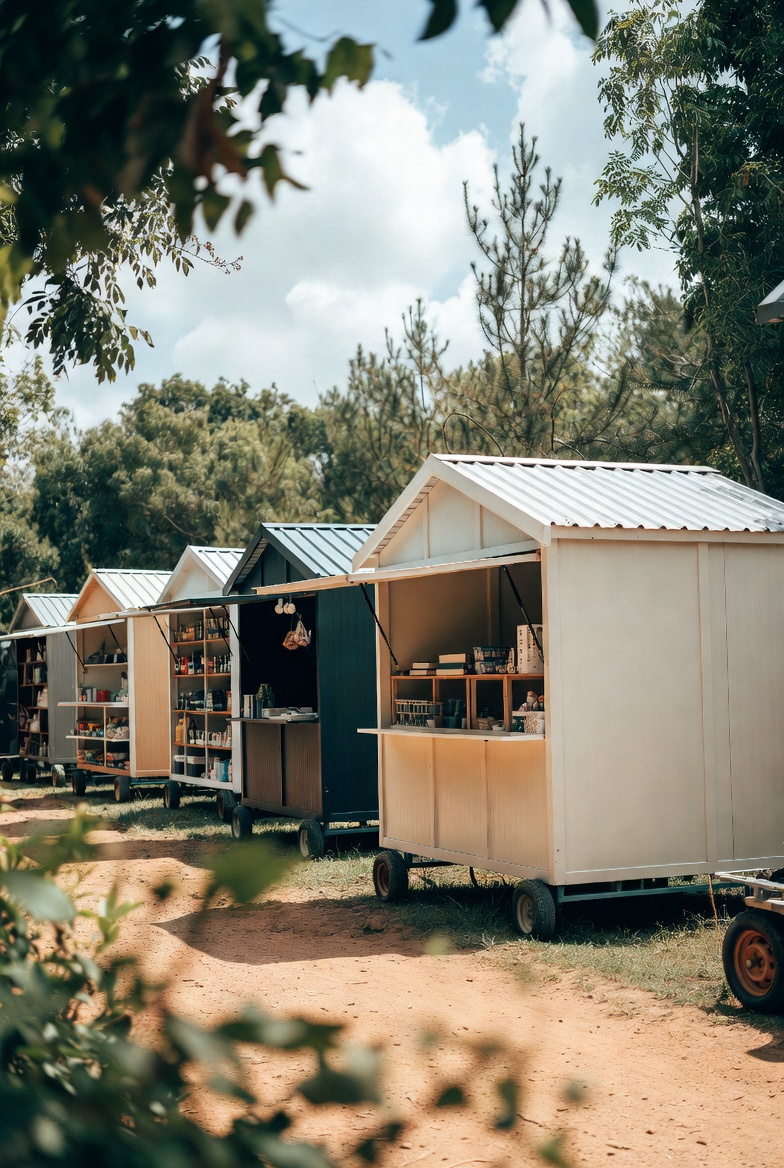
A branded mobile retail truck displaying curated products at an outdoor market

Quick Business Snapshot

Fast facts to help you grasp core traits quickly.

1

Startup Cost

Medium to High

A usable vehicle or trailer, fit-out, permits, insurance, POS setup, and opening inventory create a real upfront commitment before the first event.

You avoid full storefront rent, but you do not avoid capital cost.

2

Skill Barrier

Medium

This is not highly technical, but it does require product judgment, visual merchandising, event selection, inventory control, and live selling skill.

The business usually wins through discipline and taste more than through complexity.

3

Time to First Revenue

Moderate

You can start selling as soon as the unit is permitted, stocked, and booked into its first event or market, but stable weekly sales take longer.

One good launch weekend does not prove a healthy model.

4

Repeat Potential

Medium

Repeat demand depends on product category, schedule consistency, and whether customers can find you again easily through regular stops or social updates.

If buyers cannot track you, they usually cannot become regulars.

5

Local Dependency

Very High

Foot traffic, permit access, weather, parking, and local event calendars shape revenue more than almost anything else.

The vehicle moves, but the business is still deeply tied to local conditions.

6

Scalability

Medium

Growth can come through better route logic, more events, stronger online follow-up, or additional vehicles, but each step adds coordination load fast.

One vehicle is flexible. Several vehicles become a systems business.

7

Competition

High

You compete with market vendors, boutiques, ecommerce brands, pop-ups, and larger retailers depending on what you sell.

The format gets attention, but the product still has to convert.

8

Operational Intensity

High

Driving, setup, teardown, inventory movement, weather adaptation, payment handling, and event admin create a heavier workload than the selling window suggests.

The visible sales hours sit on top of a lot of invisible labor.
Market & Demand Signals

This section helps show where demand usually comes from and what signals are worth noticing.

Demand Type

Curated discovery + experiential retail + convenience + event-driven shopping

Customer Pattern

Market shoppers, festival visitors, office-district foot traffic, neighborhood buyers, and customers drawn to distinctive in-person retail

Service Format

Markets + festivals + corporate pop-ups + neighborhood stops + branded event retail

Category

This sits inside a real local vending economy, not just a novelty concept

IBISWorld expects the U.S. street vendors industry to reach about $4.1 billion in 2026. That is not a perfect one-to-one match for every product-based retail truck, but it does show that mobile local selling remains commercially real at scale. A mobile boutique sits inside that broader mobile retail world even if the exact product mix is more curated than a generic street-vendor format.

The format exists. The harder question is whether your product mix and locations can work inside it.

Format

Mobile retail works best when going to the customer is a real advantage

Shopify's current pop-up guidance stresses that pop-ups work when you go where your customers already spend time and use the format to test demand without signing a long lease. That is the core commercial logic behind a pop-up shop, pop up store, or mobile boutique.

Mobility only matters when it improves traffic, feedback, or brand reach.

Retail

Physical retail still matters even in an e-commerce-heavy market

The Census Bureau estimated U.S. e-commerce sales at about $1.2337 trillion in 2025, or 16.4% of total retail sales. That means most retail spending is still happening outside pure e-commerce, which helps explain why in-person formats can still work when positioned well. A mobile retail business still has room when the curation, event context, and visual presentation are strong enough.

Mobile retail is not competing against a dead channel. It is competing inside a still very large in-person market.

Maturity

The format is active enough that location quality matters more than novelty alone

IBISWorld says there were about 16,072 street-vendor businesses in the U.S. in 2026, which suggests mobile selling is established enough that strong locations, repeat schedules, and brand clarity matter more than just showing up with a truck, trailer, or retail trailer.

A mobile store can attract attention. It still needs a real commercial reason to win.

Quick Reality Check

Before you take this idea seriously, check these real-world signals first.

01

Do you have a clear product category instead of a broad 'something for everyone' approach?

Mobile retail usually performs better when the inventory feels intentional and recognizable rather than random.

A tighter product identity usually makes sourcing, pricing, and repeat recognition much easier. A mobile boutique usually works better than a vague 'we sell a little of everything' retail truck.

02

Have you researched actual permit access, event fees, and stop quality in your target area?

SBA guidance makes clear that most small businesses need a mix of licenses and permits, and mobile retail often adds local layers on top.

Do not model revenue around locations you have not confirmed you can legally and economically use. A pop-up shop only works when the venue rules, fees, and stop quality are real.

03

Have you modeled slow weeks, weak weather, and average events rather than only your best-case days?

Event businesses can look great on strong weekends and weak on ordinary ones.

Build your break-even around average conditions, not peak foot traffic.

04

Do you have a backup plan for vehicle downtime?

A vehicle issue is not just a repair problem. It can mean missed events, lost fees, and zero sales for the days it is down.

Vehicle reliability is a revenue reliability issue.

What People Often Underestimate

Parts of this idea may look simple at first but become heavy in daily delivery.

Permit Friction

Mobile retail rules are often more fragmented than beginners expect

Markets, cities, private venues, and event organizers can each impose separate fees, documents, time windows, and operating rules. That is true whether the format is a pop up store, retail truck, or retail trailer.

Inventory Movement

Restocking and moving product in a mobile setup adds more repeated labor than it appears

Packing, storage, security, weather protection, and between-event restocking all take ongoing effort.

Location Variance

Not all events with similar traffic produce similar sales

Demographic fit, event quality, competing vendors, and buyer mindset can create huge swings in conversion across seemingly similar locations.

Startup Cost

What you may need to spend before this idea becomes real.

Cost Pressure

Medium to High

Testability

Possible to test through stalls or pop-ups before vehicle investment

Cost Structure

Vehicle or trailer + fit-out + inventory + permits + insurance + POS + branding + storage

Lean Start

Testing with a market stall or smaller pop-up before a full vehicle build is genuinely useful

A stall or booth lets you test product category, pricing, event fit, and customer response without locking capital into a customized unit too early. That is often the smarter first move before building a full mobile retail business.

Prove demand before building the rolling storefront.

Ongoing Cost

The costs that shape margin most are usually inventory turnover, event fees, and vehicle upkeep

Fuel, maintenance, vendor fees, permit renewals, merchant fees, storage, and slow-moving stock keep affecting real profitability after launch.

Location quality and inventory discipline usually matter more than the launch spend.

Execution Readiness

Presentation quality has real commercial value in a mobile format

Brand wrap, lighting, display fixtures, signage, and checkout flow all affect whether people stop, browse, and buy within seconds. In a mobile boutique, the display has to do some of the work a normal storefront would normally do for you.

The vehicle is not just transport. It is the storefront.

What This Idea Really Asks of You

Done matters more than perfect in early stage execution.

A mobile boutique can become a strong flexible local business, but it asks you to accept location risk, operating friction, inventory discipline, and customer-recognition work as part of the real job.
1

You need a defined product identity before you invest heavily in the vehicle

The truck, display, route, and branding all work better when the product and target customer are already clear. That matters whether the format looks more like a mobile boutique, a pop-up shop, or a retail truck.

The vehicle should carry the concept, not try to invent it.

2

You need a predictable location schedule, not just random appearances

Customers who cannot predict where to find you rarely become repeat buyers.

Predictability is what turns a pop-up into a habit.

3

You need to treat inventory discipline as a financial skill from the first month

Overbuying, weak assortment logic, and slow-moving stock can hurt cash flow faster than many new operators expect.

Unsold inventory is not neutral. It is cash sitting still.

4

You need revenue paths beyond one truck at one public event

Private bookings, corporate visits, online follow-up, wholesale, and custom orders all reduce dependence on walk-up traffic alone. A pop up store that also captures repeat demand online is much less fragile than one that only survives on foot traffic.

A business that only earns when you are standing in the truck has a hard ceiling.

How This Idea Usually Grows

Many ideas do not start at scale; they stabilize first.

1

Move from one-off events to repeatable weekly location logic

Early growth usually comes from learning which markets, neighborhoods, and event types actually convert for your category. A mobile boutique usually grows faster from repeatable event logic than from random appearances.

Reminder: Stable location logic usually comes before healthy scale.

2

Move from ad hoc selling to clearer merchandising and inventory systems

Defined assortment rules, display layout, event criteria, restock logic, and pricing standards make the model easier to repeat and improve.

Reminder: The easier the model is to repeat, the easier it usually is to grow.

3

Move from one vehicle to a broader retail system

Online follow-up, private event revenue, wholesale relationships, or a second unit make the business less fragile than relying on one rolling storefront alone. This is often the point where a pop-up shop model starts turning into a fuller retail system.

Reminder: Expansion works best when it amplifies a model that already converts.

AI / Automation Angle

Where AI can assist and where human delivery still matters.

Can Be Assisted

Inventory notes, schedule planning, event admin, social content, and customer communication

Still Needs Human

Product curation, visual merchandising, live selling, and location judgment

Overall Role

An efficiency layer around the retail workflow

Inventory

AI can support more disciplined inventory planning

Product movement, reorder timing, slow-moving items, and event-specific assortment notes can be tracked more systematically as the business grows.

Better stock discipline directly protects margin.

Marketing

Location announcements and product content can be produced more consistently

Weekly route posts, event previews, new-product announcements, and follow-up email drafts can all be created faster to help customers keep track of the brand. That matters because a mobile boutique is much easier to revisit when the customer can actually find it again.

Customers who can follow the truck are much easier to retain.

Operations

Event applications, permit dates, and forward calendars can be organized more cleanly

Application deadlines, vendor paperwork, booking records, and setup checklists become easier to manage once they live inside a repeatable system.

Admin discipline matters more as the number of selling locations increases.

Sources & Verification

This page combines current U.S. mobile-vending market context, retail spending context, licensing guidance, labor data, and editorial judgment. Street-vendor category size and business-count context mainly draw from IBISWorld; broader retail and e-commerce context mainly draws from the U.S. Census Bureau; permit framing mainly draws from the SBA; retail labor context mainly draws from the BLS; pop-up location and testing logic mainly draws from Shopify's current retail guidance. The distinctions between a mobile boutique, pop-up shop, pop up store, retail truck, and retail trailer are practical operating distinctions rather than fixed official industry categories.

Data Sources

Public market data + retail spending data + permit guidance + labor data

Case Inputs

Mobile selling patterns + pop-up retail operating observations

Nature of Judgment

Editorial synthesis, not a single-source quotation

industry size

IBISWorld - Street Vendors in the US

Supports: Mobile-vending category size and growth context

Key point: IBISWorld says U.S. street-vendor industry revenue is expected to reach about $4.1 billion by 2026.

View source →
business count

IBISWorld - Street Vendors in the US Number of Businesses

Supports: Category maturity and business-count context

Key point: IBISWorld indicates there are about 16,072 street-vendor businesses in the U.S. in 2026.

View source →
retail context

U.S. Census Bureau - Quarterly Retail E-Commerce Sales

Supports: Broader U.S. retail and e-commerce spending context

Key point: The Census Bureau estimated U.S. e-commerce sales at about $1.2337 trillion in 2025, equal to 16.4% of total retail sales.

View source →
permit context

U.S. Small Business Administration - Apply for Licenses and Permits

Supports: General permit and licensing complexity for small businesses

Key point: The SBA states that most small businesses need a combination of licenses and permits, and that requirements and fees vary by activity, location, and government rules.

View source →
income context

BLS - Retail Sales Workers

Supports: Wage context for live retail selling work

Key point: Retail salespersons had a median hourly wage of about $16.62 in May 2024.

View source →
format context

Shopify Retail - Pop-Up Store Ideas That Grow Sales Without a Long Lease

Supports: Current pop-up and mobile-retail operating logic

Key point: Shopify's 2026 guidance emphasizes that pop-ups work best when they go where customers already spend time and when venue logistics, fees, and placement rules are confirmed before launch.

View source →
The parts of this page covering U.S. street-vendor market size, business-count context, retail and e-commerce context, licensing guidance, and wage context are grounded in public sources. The parts covering location risk, repeat-customer logic, vehicle-dependency risk, inventory friction, pop-up conversion logic, and growth structure are editorial conclusions built from those sources rather than direct single-source claims.
Whether this business is worth doing depends heavily on what you sell, where you can legally sell it, how strong your event access is, and whether your products convert well in short in-person shopping windows. Before launching, check the exact city, county, event, tax, and parking rules that apply to your route, because mobile retail usually picks up more local friction than it first appears to.

Keep exploring at your own pace

You do not need to decide now. Save it, note it, and compare more ideas.

Explore more ideas

Share this idea