1
Startup Cost
Very Low
A phone or laptop, internet access, and accounts on legitimate survey platforms are usually enough to begin.
Read As
Any platform that charges a fee to join should be treated carefully.
Online Paid Surveys are a platform-dependent side-income activity built on small payouts, user attention, and access to research demand rather than on building a durable business asset.
This page helps you see the real structure of Online Paid Surveys, from paid survey apps and user testing opportunities to low barrier to entry, legitimacy and scam risk, and weak long-term economics.
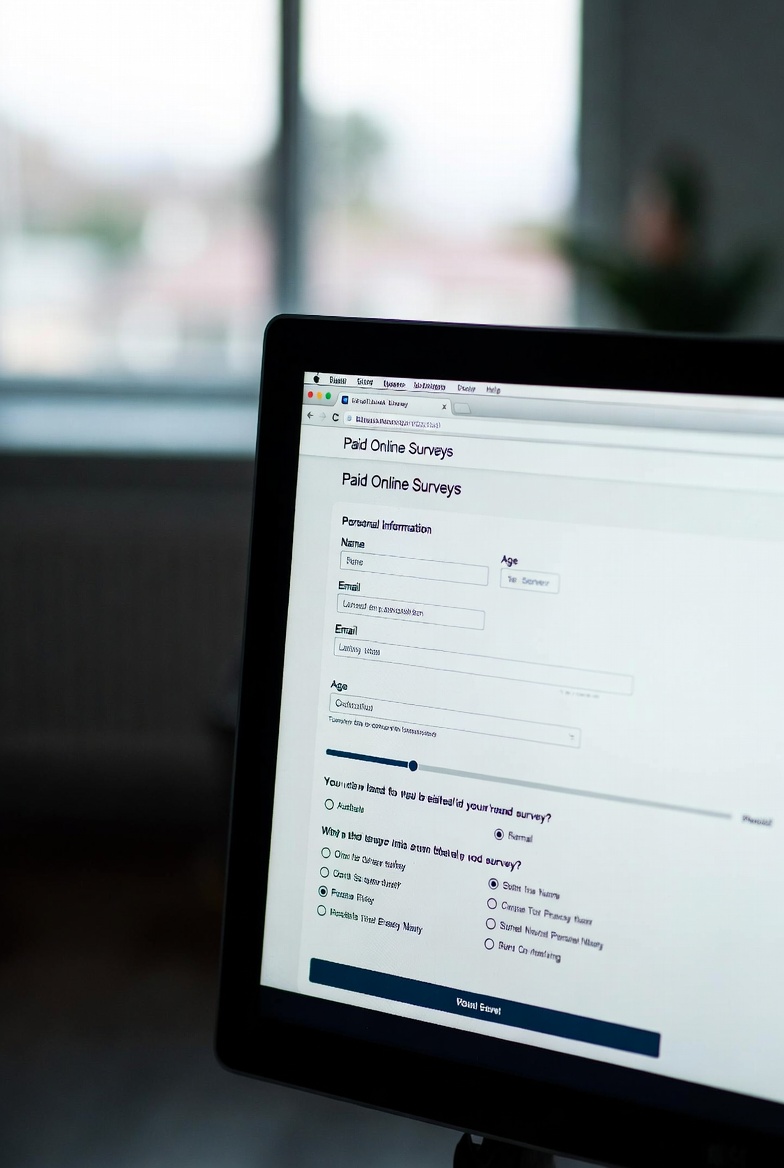
Fast facts to help you grasp core traits quickly.
Startup Cost
A phone or laptop, internet access, and accounts on legitimate survey platforms are usually enough to begin.
Read As
Any platform that charges a fee to join should be treated carefully.
Skill Barrier
You do not need advanced skill, but patience, honest responses, and scam awareness matter more than people expect.
Read As
This is easy to start, but much harder to turn into meaningful income.
Time to First Revenue
It is often possible to earn a small first payout quickly once you qualify for surveys on a legitimate platform.
Read As
Fast first earnings do not mean strong long-term economics.
Repeat Potential
There can be recurring survey availability, but volume, qualification rates, and payout levels are controlled by platforms and research demand.
Read As
The repeat pattern exists, but you do not control it.
Local Dependency
This is mostly digital and not strongly tied to physical location, although country eligibility and demographic targeting still matter.
Read As
Geography matters less than platform access and profile fit.
Scalability
This usually scales poorly because it depends on personal time, platform availability, and low per-task payouts.
Read As
You are selling attention and time, not building something that compounds.
Competition
Almost anyone can sign up, and many users are competing for the same limited flow of survey opportunities.
Read As
Low entry barriers usually mean weak earning power.
Operational Intensity
The workflow is simple, but disqualifications, payout thresholds, identity checks, and platform risk still affect the experience.
Read As
The work is light, but the frustration can be higher than expected.
This section helps show where demand usually comes from and what signals are worth noticing.
Demand Type
Customer Pattern
Service Format
The U.S. Bureau of Labor Statistics projects market research analysts and marketing specialists to grow 7% from 2024 to 2034, which supports the idea that demand for consumer insight is not disappearing. That helps explain why Online Paid Surveys, Paid Online Surveys, and paid research studies continue to exist.
Research demand is real. The harder question is how much of that value actually reaches survey participants.
Most opportunities come through third-party panels, paid survey apps, mobile survey apps, and survey platforms that control who qualifies, what gets shown, how much it pays, and when users can cash out.
You do not control pricing, lead flow, or client relationships.
Some research-focused platforms are more transparent about participant pay than general reward-point panels. For example, Prolific says researchers must pay at least $8 per hour and recommends about $12 per hour or more. User testing and paid research studies can also pay better than generic Online Paid Surveys.
If hourly return matters, platform quality matters more than platform count.
The FTC advises consumers to avoid quizzes or surveys unless they come from a trusted and well-known source that is transparent about data use. The FTC also reported that losses tied to job scams topped $220 million in the first half of 2024, with many reports linked to gamified online task scams. That is why legitimacy and scam risk are central to any Online Paid Surveys discussion.
The easier something sounds online, the more carefully trust and data use need to be checked.
Before you take this idea seriously, check these real-world signals first.
Those are not the same thing. Online Paid Surveys can generate small side income, but they usually do not build a defensible business asset.
Check: This fits much better as a low-stakes survey side hustle than as a serious business model.
You may spend time answering screening questions and still not be accepted into the survey.
Check: Platform dependence is one of the core realities here, whether you use general Paid Online Surveys apps or more selective research panels.
Many offers collect personal data, and not every survey opportunity is trustworthy.
Check: Use only transparent, established platforms and read payout and privacy terms carefully. Legitimacy and scam risk are part of the real economics here.
Very low-barrier online work often caps income quickly.
Check: This can be acceptable for spare-time cash, but it usually compares poorly with skill-based freelancing, user testing, or local services.
Parts of this idea may look simple at first but become heavy in daily delivery.
Screeners and demographic filters often remove users before they reach the actual paid portion, which is one reason Online Paid Surveys frequently disappoint people chasing extra income ideas.
If a platform changes rules, payout thresholds, or account status, your income can drop immediately. That makes this closer to platform labor than to a real online business.
Even when it works as described, it often remains a low-return activity rather than a scalable income stream. It can fit make money online content, but it rarely becomes meaningful remote side income.
What you may need to spend before this idea becomes real.
Cost Pressure
Very Low
Testability
Very easy to test
Cost Structure
Device + internet + time + privacy and verification risk
There is almost no setup cost beyond access to a device and legitimate survey platforms. The low barrier to entry is real, which is part of why so many people try Online Paid Surveys first.
The ease of starting is real, but it does not solve the weak economics.
Low payouts, screening friction, payout minimums, and scattered opportunities often make the time cost much higher than expected. That is why Get Paid to Take Surveys content often sounds better than the real hourly return feels.
It is cheap to start because most of the burden is shifted onto your attention.
Signing up across multiple platforms can mean sharing demographic details, usage information, and payment data with more parties than beginners realize. That cost is easy to ignore when paid survey apps market themselves as easy side hustles.
A low-cash startup model can still have a trust and privacy cost.
Done matters more than perfect in early stage execution.
You are not building brand equity, owning customers, or creating a system with pricing power. Online Survey Side Hustle content often skips that distinction.
Reminder: This is closer to spare-time monetization than to business ownership.
The model works by converting bits of attention and qualification into small payouts. That is why Online Paid Surveys, Paid Online Surveys, and Market Research Side Hustle offers rarely compound.
Reminder: If your available time is valuable elsewhere, this model becomes harder to justify.
Low-friction online earnings attract scam behavior, misleading offers, and questionable data practices.
Reminder: A legitimate payout is not the only thing to evaluate. Data handling matters too.
Very accessible online work often feels attractive because it starts fast, but it rarely compounds into something stronger. In many cases, user testing, paid research studies, or skill-based work beat survey side hustle economics.
Reminder: Easy entry and good opportunity are not the same thing.
Many ideas do not start at scale; they stabilize first.
The first improvement usually comes from reducing scam exposure and focusing on a few established platforms with clearer payout rules.
Reminder: Trust comes before volume.
If you continue, it helps to track qualification rates, average payout, and time spent so the activity is judged honestly.
Reminder: Without tracking, low-value work can feel more productive than it is.
For most people, the healthiest growth path is to treat surveys as temporary side cash and shift effort toward higher-value online or local services.
Reminder: The best growth move is often leaving this model behind.
Where AI can assist and where human delivery still matters.
Opportunity filtering, time tracking, comparison notes, and scam-check workflows
Judgment, account setup, trust decisions, and the actual survey participation
A small support layer rather than a core business engine
Basic summaries of payout rules, thresholds, restrictions, and common complaints can help reduce wasted signups across paid survey apps, mobile survey apps, and user testing platforms.
It can save evaluation time, but it cannot make a weak model strong.
Time logs, payout comparisons, and simple hourly-rate estimates can make the real economics easier to see.
Clarity matters because this type of work often feels better than it pays.
Privacy-policy summaries, suspicious claim review, and scam-pattern checks can add a layer of caution before signing up.
That helps, but trust still depends on the platform itself.
This page combines labor-market context for market research, scam and privacy guidance, limited platform-pay context, and editorial judgment. Research-demand context mainly draws from the U.S. Bureau of Labor Statistics; trust and scam guidance mainly draws from the Federal Trade Commission; transparent participant-pay context draws from Prolific. This page is more judgment-heavy than a normal local-service page because Online Paid Surveys are not a standard small-business category in the same way landscaping or catering is.
Data Sources
Labor-market context + consumer protection sources + limited platform-pay context
Case Inputs
Platform-work patterns + online survey participation dynamics
Nature of Judgment
Editorial synthesis with limited direct business-category data
Supports: Underlying demand for market research and consumer insight work
Key point: Employment of market research analysts and marketing specialists is projected to grow 7% from 2024 to 2034, with about 87,200 openings each year on average.
View source →Supports: Context around survey research as a formal occupation
Key point: Employment of survey researchers is projected to decline 5% from 2024 to 2034, with about 700 openings each year on average.
View source →Supports: Need for caution around quizzes and surveys from untrusted sources
Key point: The FTC advises consumers to use quizzes or surveys only when they come from a trusted and well-known source that is transparent about data use.
View source →Supports: Broader risk context around low-friction online earning schemes
Key point: FTC reported that losses to job scams topped $220 million in the first half of 2024, with many reports tied to gamified task scams.
View source →Supports: Transparent participant pay structure on a research-focused platform
Key point: Prolific says researchers must pay at least $8 per hour and recommends about $12 per hour or more.
View source →Supports: Opportunity-cost framing for low-return online activities
Key point: BLS time-use data shows people have a finite amount of discretionary time each day, which makes low-return activities worth comparing against other uses of time.
View source →Explore nearby directions with different workload and demand shape.

A marketplace-based ecommerce business where Amazon handles much of the fulfillment, but the real work still sits in product choice, margin discipline, inventory management, and competition.
Explore idea →
A technical service business built on software delivery, client communication, product judgment, and the ability to turn unclear requests into working apps.
Explore idea →
A blockchain consulting business is a B2B advisory model built on technical translation, domain credibility, and trust around digital-asset, tokenization, and enterprise blockchain decisions. The stronger operators do not sell buzzwords. They help clients decide whether a blockchain use case is real, workable, and worth the legal and operational burden.
Explore idea →You do not need to decide now. Save it, note it, and compare more ideas.