1
Startup Cost
Medium to High
You can start lean with small batches or a co-packer, but packaging, testing, and inventory push costs up fast in any packaged food business.
Read As
The product is only one part of the startup bill.
A packaged food business is a product business built on repeat buying, manufacturing discipline, and shelf-ready execution. The real business is not just making a good snack or sauce. It is turning a recipe into a compliant, manufacturable product that survives shipping, shelf time, and customer repurchase.
A packaged food business looks exciting because it can scale far beyond founder hours. That part is true. The hard part is that taste gets attention, but labeling, manufacturing, and repeat purchase decide whether the business survives.
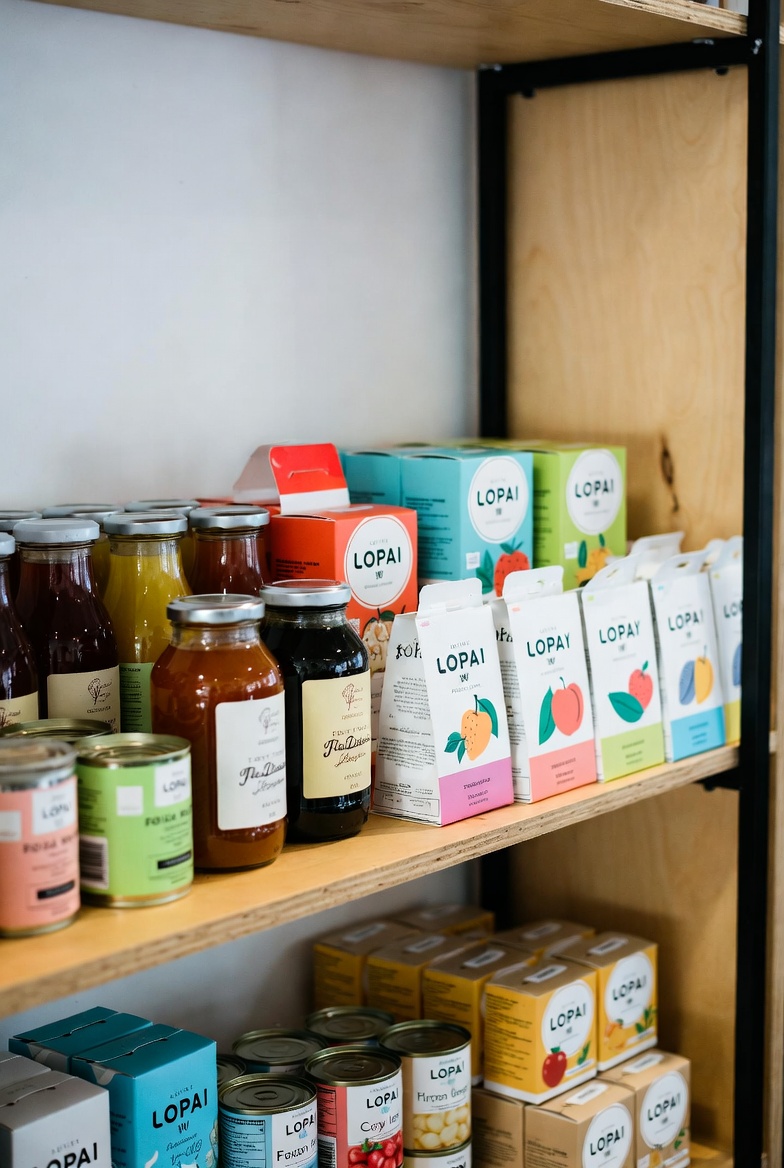
Fast facts to help you grasp core traits quickly.
Startup Cost
You can start lean with small batches or a co-packer, but packaging, testing, and inventory push costs up fast in any packaged food business.
Read As
The product is only one part of the startup bill.
Skill Barrier
Taste matters, but shelf life, sourcing, labeling, and margin control matter just as much.
Read As
A good recipe is not yet a real Food Product Business.
Time to First Revenue
DTC and markets can bring early sales. Stable retail reorders usually take much longer in a packaged food brand.
Read As
First sales come faster than repeat demand.
Repeat Potential
This works best when the product fits routine consumption, not one-time curiosity.
Read As
Habit is the real moat.
Local Dependency
The brand can scale past one city, but early proof often starts local.
Read As
Local traction can become retail proof later.
Scalability
Once production and reorders work, the business can grow through manufacturing and distribution instead of founder hours.
Read As
Scale comes with operational complexity.
Competition
You compete with legacy brands, specialty brands, and store brands at the same time.
Read As
Shelf space is never empty.
Operational Intensity
Packaging delays, inventory cash drag, and compliance make this heavier than it first looks.
Read As
Clean branding often hides messy operations.
This section helps show where demand usually comes from and what signals are worth noticing.
Demand Type
Customer Pattern
Service Format
IMARC estimated the global packaged food market at $2.793 trillion in 2025 and projects it to reach $4.969 trillion by 2034. That confirms that a packaged food business sits inside a huge consumer category, even if small-brand entry is hard.
The category is huge, even if entry is hard.
Grand View Research estimated the global private-label packaged food market at $415.53 billion in 2024, showing how often startups compete against cheaper retailer-owned options. That is a direct packaged food brand economics problem: margin pressure is real before a new brand is even established.
A new brand needs a reason to exist beyond 'good enough.'
FDA says food businesses face federal, state, and local requirements, and packaged labels must include required statements under food law. That means a packaged food business is partly a branding project and partly a regulated Food Product Business.
Packaging is part branding and part regulation.
Before you take this idea seriously, check these real-world signals first.
A product that feels interesting once is not enough.
Check: The packaged food business gets stronger when customers can imagine buying it again without persuasion.
Ingredient panels, allergens, and required statements are not optional details.
Check: Do not print serious inventory before professional label review.
Ingredients, packaging, and finished goods tie up cash long before profit shows up.
Check: A popular product can still strain cash badly, which is one of the core packaged food brand economics problems.
Parts of this idea may look simple at first but become heavy in daily delivery.
A product can taste great and still fail once time, shipping, and storage get involved.
Allergen mistakes and bad labeling are far more expensive than bad design.
Packaging, freight, production minimums, and wholesale cuts compress margin quickly. That is why packaged food brand economics can look much worse than top-line revenue suggests.
What you may need to spend before this idea becomes real.
Cost Pressure
Medium to High
Testability
Moderate
Cost Structure
Formulation + packaging + production + compliance + inventory + marketing
Shared kitchens, small-batch production, and co-packers can lower the early burden. That is often the most realistic answer to business plan food product questions from first-time founders.
This is lighter than owning production from day one.
The real work is moving from a kitchen idea to a stable formula, compliant label, and workable unit economics. That is where a packaged food business becomes a real packaged food brand instead of a promising sample.
A prototype is cheap. A system is not.
Done matters more than perfect in early stage execution.
You need to understand whether the product fits normal buying behavior, not just whether people like the sample.
Reminder: Taste creates interest. Habit creates the business.
Vendors, lead times, packaging, and inventory create friction that most first-time founders underestimate.
Reminder: This is not just a branding game.
Too many flavors or formats too early makes production and reorders harder.
Reminder: A narrow winner beats a wide mess.
Many ideas do not start at scale; they stabilize first.
Pick one strong category such as sauces, snacks, pantry staples, frozen items, or protein products.
Reminder: Clear shelf logic helps early buyers understand you.
Use DTC, markets, and small retail to test repeat demand before broader distribution. That is the healthiest way to test packaged food brand economics before scale.
Reminder: First orders can hide weak repeat behavior.
Add flavors, pack sizes, or adjacent products only after the first SKU is stable.
Reminder: Every new SKU adds complexity faster than expected.
Where AI can assist and where human delivery still matters.
Label draft support, SKU documentation, retailer outreach drafts, customer-feedback summaries, simple forecasting
Formulation, taste, shelf-life judgment, supplier decisions, compliance review, retail relationships
An operations and marketing helper
AI can help organize supplier notes, product specs, feedback patterns, and internal documentation.
Useful for workflow, not for final compliance judgment.
AI can help draft sell sheets, product pages, email campaigns, and retailer outreach materials.
Helpful for speed, but not a substitute for product-market fit.
This draft mixes direct-source facts with editorial synthesis. Packaged-food market scale, private-label competition, and FDA food-business and labeling guidance are source-backed. Startup-cost ranges, margin logic, and some operating advice are stitched from those facts plus common small CPG economics. The page is written around a packaged food business and packaged food brand lens, not just recipe development.
Core Sources
IMARC, Grand View Research, FDA
Data Nature
Direct-source market and regulatory data plus editorial synthesis for startup and operating assumptions
Supports: Global packaged food market valued at $2,793.0B in 2025 and projected to reach $4,968.6B by 2034.
Key point: IMARC Group estimates the global packaged food market at USD 2,793.0 billion in 2025 and projects it to reach USD 4,968.6 billion by 2034.
View source →Supports: Global private-label packaged food market estimated at $415.53B in 2024 and projected to reach $581.97B by 2030.
Key point: Grand View Research estimates the global private-label packaged food market at USD 415.53 billion in 2024 and projects it to reach USD 581.97 billion by 2030.
View source →Supports: Food businesses are subject to federal, state, and local requirements depending on product and facility type.
Key point: FDA says food businesses may face layered federal, state, and local requirements, with the exact rules depending on the product and the type of facility being operated.
View source →Supports: Required statements that must appear on food labels under food laws and regulations.
Key point: FDA says its Food Labeling Guide summarizes the required statements that must appear on food labels under applicable food laws and regulations.
View source →Supports: Current guidance around listing major food allergens on packaged food labels.
Key point: FDA says major food allergen labeling currently covers milk, egg, fish, Crustacean shellfish, tree nuts, wheat, peanuts, soybeans, and sesame, and the agency's current guidance also reflects updated interpretations for some milk, egg, and tree-nut cases.
View source →Supports: Alternative market estimate showing how research firms vary on packaged-food category scope.
Key point: Fortune Business Insights is useful here as a secondary market reference, but packaged-food market estimates can vary materially across research firms because category scope, segmentation, and methodology are not always identical.
View source →Explore nearby directions with different workload and demand shape.

A trust-based professional service business built on recurring client relationships, technical accuracy, and deadline-driven financial work.
Explore idea →
Auto repair is one of the most dependable local service businesses because the demand is not optional. Cars age, parts wear out, warning lights show up at inconvenient times, and most owners would rather pay someone they trust than guess wrong. The good version of an auto repair business is not just a shop that fixes cars. It is an auto repair shop that diagnoses accurately, explains clearly, and becomes the place customers stop shopping around on.
Explore idea →
This business usually looks simpler than it is. On one side, it is a fleet business built on utilization, maintenance, storage, downtime control, and bike rental business software that keeps bookings and fleet status from turning messy. On the other, it is a tour and local-experience business built on route quality, safety, trust, and local discovery.
Explore idea →You do not need to decide now. Save it, note it, and compare more ideas.