Barber Shop

A Barber Shop is a repeat-demand local service business built on booked chairs, neighborhood trust, and dependable grooming services. The strongest version is not just a room with clippers. It is a Barber Shop with clear pricing, good rebooking, solid local reputation, and a business model that fits your actual client base.

CreativeLocal ServiceTrust-BasedRepeat DemandExpertise-Led

This page helps you judge how a Barber Shop actually works as a business. It can overlap with a Hair Salon, but a Barber Shop usually wins through repeat grooming services, speed, local trust, and reliable booking behavior.

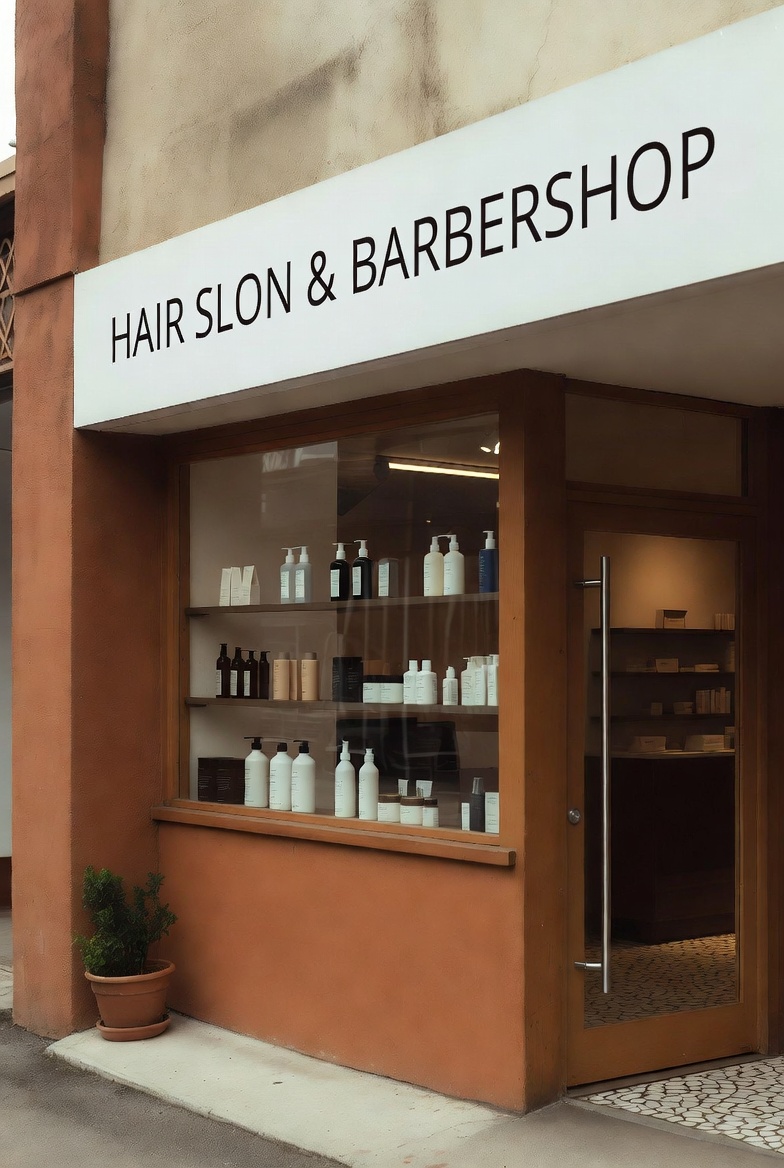
A clean, modern salon

Quick Business Snapshot

Fast facts to help you grasp core traits quickly.

1

Startup Cost

Low to High

A booth-rental start can be light. A suite usually needs a modest setup budget plus monthly rent. A full independent Barber Shop requires buildout, chairs, mirrors, tools, product inventory, signage, and enough runway to survive a slow first year.

The biggest startup mistake in this category is choosing a model that is too large for your current client base.

2

Skill Barrier

High

Licensing is only the floor. The real business asks for technical consistency, service speed, sanitation discipline, consultation skill, rebooking habits, and enough judgment to price and schedule well.

Craft skill gets the first compliment. Business skill turns compliments into a stable book.

3

Time to First Revenue

Fast to Moderate

A licensed barber or Hair Stylist with existing clients can generate revenue quickly. Building a genuinely full book takes much longer than opening the doors.

The first revenue event is easy. Productive chair utilization is the real milestone.

4

Repeat Potential

Very High

Haircuts, fades, beard work, trims, and recurring grooming services create strong repeat demand. A client who trusts the result usually returns again and again.

This is one of the clearest retention businesses in local services.

5

Local Dependency

Very High

Neighborhood demographics, parking, convenience, local reputation, and visibility in maps and reviews shape demand directly.

Your online profile matters, but your block still matters too.

6

Scalability

Medium

A solo Barber Shop scales mostly through pricing, retention, and revenue per visit. A multi-chair operation scales through people and systems, which raises both upside and complexity.

Adding chairs without strong utilization and retention systems usually creates stress before it creates profit.

7

Competition

High

Clients can choose among chain Hair Salon brands, local Barbershop operators, suites, booth renters, and independent Hair Stylist options with loyal followings.

The hardest competition is often for good staff, not just for clients.

8

Operational Intensity

High

Booking flow, no-shows, product use, rent or payroll, review management, rebooking, staff culture, and long hours on your feet all run at the same time.

The visible service is only one layer of the job.

Market & Demand Signals

This section helps show where demand usually comes from and what signals are worth noticing.

Demand Type

Recurring grooming services + appearance maintenance + local convenience

Customer Pattern

Repeat local clients, event-driven new clients, walk-ins in some formats, and loyal regulars built through rebooking

Service Format

Cuts + fades + beard work + grooming services + selected add-ons + retail products

Market Size

A Barber Shop sits inside a large, durable local personal-service category

IBISWorld places U.S. hair salon industry revenue at about $60.0 billion in 2025, while U.S. barber shops are estimated around $7.0 billion through the end of 2025. That matters because a Barber Shop does not need to invent demand. The real task is turning recurring visits into productive chair hours and repeat local spending.

The useful question is not whether demand exists. It is whether your Barber Shop can turn repeat demand into stable booked hours.

Labor

This is licensed trade work with steady labor demand

BLS reports median hourly wages in May 2024 of $18.73 for barbers and $16.95 for hairdressers, hairstylists, and cosmetologists, with 5% projected employment growth from 2024 to 2034 and about 84,200 openings per year on average. That reinforces that a Barber Shop is real skilled work, not casual side income.

The market supports the trade, but a stronger Barber Shop usually outperforms wage-level economics through retention, pricing, and service mix.

Client Behavior

Retention and booking behavior matter more than most owners expect

Boulevard reports that a large share of appointments are booked after hours, and clients whose first appointment is booked online are markedly more likely to return than walk-ins. For a Barbershop Business, booking infrastructure is not just convenience software. It affects retention, rebooking, and revenue directly.

The Barber Shop that makes the second booking easy usually has an advantage bigger than small pricing differences.

Reviews

Local reputation has become part of the revenue engine

Booksy reports that most beauty and barbershop clients check Google or Yelp before booking, and that negative reviews materially affect willingness to book. A Barber Shop now competes not just with another Barbershop, but with every Hair Salon and Hair Stylist option visible on a map.

A good Barber Shop experience now has to be visible, not just real.

Service Mix

Barber work and salon work overlap, but they are not the same business mix

A Barber Shop can stay tight around cuts, fades, beard work, and grooming services, while a Hair Salon often leans harder into hair salon services such as color, Hair Styling, and balayage. The wider the service menu gets, the more staffing, training, and cost structure start to change.

The clearer the service mix is, the easier the business usually is to price and run.

Quick Reality Check

Before you take this idea seriously, check these real-world signals first.

01

How many clients will truly follow you to a new location?

A regular feels loyal until convenience changes, parking changes, or habits break.

A safer Barber Shop launch assumes fewer clients follow you than you hope, not more.

02

Are you choosing the model based on your actual book, not your ambition?

Booth rental, suite rental, and a full shop are not just different sizes of the same business. They carry different risk, different control, and different break-even logic.

The model should follow the client reality you already have or can defend quickly, whether you open a full Barber Shop or start smaller.

03

Can you build a rebooking culture instead of depending on first-time traffic?

A good cut matters, but the business becomes durable only when the next appointment gets booked before the client leaves.

Retention systems usually matter more than extra marketing once the chair is busy enough, especially in a Barber Shop competing with walk-in Hair Salon traffic.

04

Do you understand the difference between being a strong technician and operating a strong shop?

A talented barber or Hair Stylist is not automatically a good manager, scheduler, recruiter, or operator.

Running the shop is a second craft layered on top of the first one, which is why many people asking how to start a salon business still struggle once the lease begins.

What People Often Underestimate

Parts of this idea may look simple at first but become heavy in daily delivery.

Empty Chair Time

Revenue disappears quietly when productive chair hours slip

No-shows, weak rebooking, bad spacing, and slow weekdays can do more damage to a Barber Shop than obvious one-time costs.

Staff Retention

Losing a good barber often means losing their book too

In many salon models, retention of good people is one of the most financially important management jobs. That is true in a Hair Salon and in a Barbershop Business.

Product and Supply Cost

Color, retail leakage, towels, sanitation supplies, and expanded menus add more pressure than beginners expect

These costs often feel manageable until they repeat every week and start eating margin, especially if the service menu drifts toward fuller hair salon services such as color or balayage.

Startup Cost

What you may need to spend before this idea becomes real.

Cost Pressure

Highly variable by model and market

Testability

Very testable at the booth or suite level

Cost Structure

Chair model-dependent: booth fee or suite rent vs. full lease + fit-out + equipment + inventory + runway

Three Practical Paths

Booth rental, salon suite, and a full Barber Shop are structurally different businesses

Booth rental keeps overhead low and lets the operator focus on their own book. Salon suites trade shared traffic for autonomy and private branding. A full Barber Shop offers the highest ceiling, but requires more capital, management ability, and runway.

Most financially healthy full-shop owners spent time building their client base before taking on the heaviest version of the model.

Buildout Reality

A full Barber Shop usually costs more to open than first-time owners expect

Leasehold improvements, chairs, mirrors, signage, retail fixtures, opening inventory, salon business insurance, and working capital add up quickly. If you want a broader Hair Salon service mix, wash stations and color setup raise the number even further.

Undercapitalized openings often fail because they funded the room, but not the first year of operations or a realistic salon business plan.

Compensation Model

Commission, booth rent, and salary shift the risk in different directions

Commission models centralize the client relationship more around the shop. Booth rental shifts more risk and autonomy to the operator. Salary creates clarity but requires enough volume to sustain it. This choice affects culture, retention, and whether the business really behaves like a Barber Business or a landlord model.

This decision shapes how much of the business belongs to the shop brand versus the individual operator.

What This Idea Really Asks of You

Done matters more than perfect in early stage execution.

A Barber Shop can become a durable local business, but it asks you to match the model to your real client base, keep chairs productively full, and treat retention of both clients and staff as the center of the business.
1

You need to choose the model honestly

A smaller Barber Shop model with the right client base is usually stronger than a bigger model opened too early.

The ambitious model is not always the smart model.

2

You need to build a rebooking habit into the shop culture

The second visit is the pivot from trial to relationship, and that is what separates a real Barber Business from a room that survives only on first-time traffic.

A busy shop is usually built on automatic repeat behavior.

3

You need to treat people retention as a core management job

When good people leave, a meaningful slice of revenue often leaves with them. That is true in a Hair Salon, but it is just as true in a Barber Shop where regulars follow trusted hands.

Client experience and staff experience are tied together more than most owners admit.

4

You need to see retail and add-ons as part of service, not as awkward extras

High-margin revenue usually comes from better revenue per visit, not just more visits. In some markets that means product sales, beard work, or grooming services rather than trying to offer every Hair Salon service.

A strong Barber Shop usually grows by deepening each visit before it grows by adding more chairs.

How This Idea Usually Grows

Many ideas do not start at scale; they stabilize first.

1

Move from opening to a stable, rebooking-heavy chair schedule

The first real milestone is not just being open. It is consistent productive chair hours with repeat clients coming back on rhythm, which is the real answer behind questions like how to start a salon business.

Reminder: A full calendar built on churn is weaker than a smaller calendar built on retention.

2

Move from service-only revenue to stronger revenue per visit

Retail, add-on treatments, premium packages, and a cleaner service mix often improve economics faster than simply adding more hours. That may include beard work and grooming services rather than trying to imitate every Hair Salon service nearby.

Reminder: The most capital-efficient growth usually comes from the clients you already have.

3

Move to multi-chair or multi-location only after the first system works without constant owner rescue

Expansion works better when the original operation already has reliable processes, lead people, and clean reporting. A second location does not fix a weak salon business plan.

Reminder: If location one only works because you personally hold everything together, location two usually magnifies the weakness.

AI / Automation Angle

Where AI can assist and where human delivery still matters.

Can Be Assisted

Booking, reminders, review replies, client follow-up, local SEO copy, and schedule support

Still Needs Human

Every service result, every consultation, style judgment, team culture, and live client handling inside a Barber Shop

Overall Role

A retention and admin-efficiency layer around the shop

Booking

AI-backed booking systems help capture demand outside business hours

A meaningful share of appointments are booked after hours, which means digital booking and reminders directly protect revenue. For a Barber Shop, that matters because convenience often decides whether a regular rebooks or drifts to another Barbershop.

The easier the booking process is, the less likely the client is to drift to a competitor.

Retention

Automated reminders and follow-up reduce preventable churn

Rebooking prompts, lapsed-client messages, and review follow-up make the client relationship more consistent without adding front-desk labor. That helps a Barber Shop hold repeat demand without needing constant discounting.

This matters most in businesses where the next appointment is the real engine.

Visibility

AI can reduce the work of staying visible in local search and social

Review responses, Google Business updates, captions, and local service-page drafts can be handled faster and more consistently. Local discovery now affects whether a client chooses your Barber Shop, another Hair Salon, or an independent Hair Stylist.

Local discovery is now partly an operations problem, not just a marketing problem.

Sources & Verification

This page combines current salon and barbershop market data, broader salon-services market data, labor statistics, booking and retention benchmarks, and operator-side financial benchmarks. Because Barber Shop economics change significantly by model - booth rental, suite, commission shop, or full independent location - this page also uses editorial judgment to connect the broader numbers to a practical small-business version of the idea.

Data Sources

Industry data + labor data + booking/retention benchmarks + operator-side financial benchmarks

Case Inputs

Barber Shop operations + barber services + local retention behavior + chair utilization + model choice

Nature of Judgment

Editorial synthesis built on current market and operating data

hair salon market size

IBISWorld

Supports: U.S. Hair Salon market size, business count, and growth context

Key point: U.S. hair salon industry revenue is estimated around $60.0 billion in 2025, with roughly 1.06 million businesses and a 5-year CAGR of 5.5%.

View source →
barbershop market size

IBISWorld

Supports: U.S. Barber Shop market size and recent growth context

Key point: U.S. Barber Shop revenue is estimated around $7.0 billion through the end of 2025, with strong recent growth and a highly fragmented market.

View source →
wage and licensing context

BLS

Supports: Median wages, employment growth, openings, and licensing expectations

Key point: BLS reports median hourly wages of $18.73 for barbers and $16.95 for hairdressers, hairstylists, and cosmetologists in May 2024, with 5% projected employment growth from 2024 to 2034 and about 84,200 annual openings.

View source →
global salon services market

Fortune Business Insights

Supports: Broader global salon services market size and growth

Key point: The global salon services market was valued at about $264.93 billion in 2025 and is projected to grow substantially through the next decade.

View source →
booking and retention benchmarks

Boulevard

Supports: After-hours booking behavior and first-to-second visit retention logic

Key point: A large share of bookings happen after hours, and clients whose first appointment is booked online are much more likely to return than walk-ins.

View source →
review and client behavior

Booksy

Supports: Review behavior, willingness to pay for experience, and owner work intensity

Key point: Most clients check reviews before booking, negative reviews materially reduce booking intent, and client experience strongly affects price tolerance and retention.

View source →
margin benchmark

The Salon Business

Supports: Average profit margin context and the gap between average and strong operators

Key point: Average salon net margin is around the high single digits, while stronger operators can materially outperform that through better execution.

View source →
suite and booth context

Vagaro

Supports: Practical operating context for smaller independent formats

Key point: Salon suite and booth-based models can be entered with much lighter startup requirements than a full independent shop, but economics vary widely by market.

View source →
The parts of this page covering market size, wages, employment outlook, licensing expectations, booking behavior, review impact, and average margin context are grounded in the sources above. The parts covering model choice, retention logic, staff-retention risk, grooming-services strategy, and the growth sequence are editorial conclusions built from those sources rather than direct single-source claims.
Whether a Barber Shop is worth doing still depends heavily on model choice, neighborhood economics, rent discipline, service mix, and whether you want to stay a strong personal operator or become a true shop operator. The broad market is durable, but repeat behavior, chair utilization, people retention, and honest startup planning usually decide whether the business actually works.

Keep exploring at your own pace

You do not need to decide now. Save it, note it, and compare more ideas.

Explore more ideas

Share this idea