Solar Panel Cleaning

A solar panel cleaning business is a local maintenance service built on roof safety, route density, and repeat work for solar owners who want cleaner panels and steadier system performance.

Local ServiceLocal ServiceCleaningRepeat DemandHouseholdExpertise-Led

This page is here to help you judge whether solar panel cleaning works in your climate and local market, not assume every roof needs the same schedule.

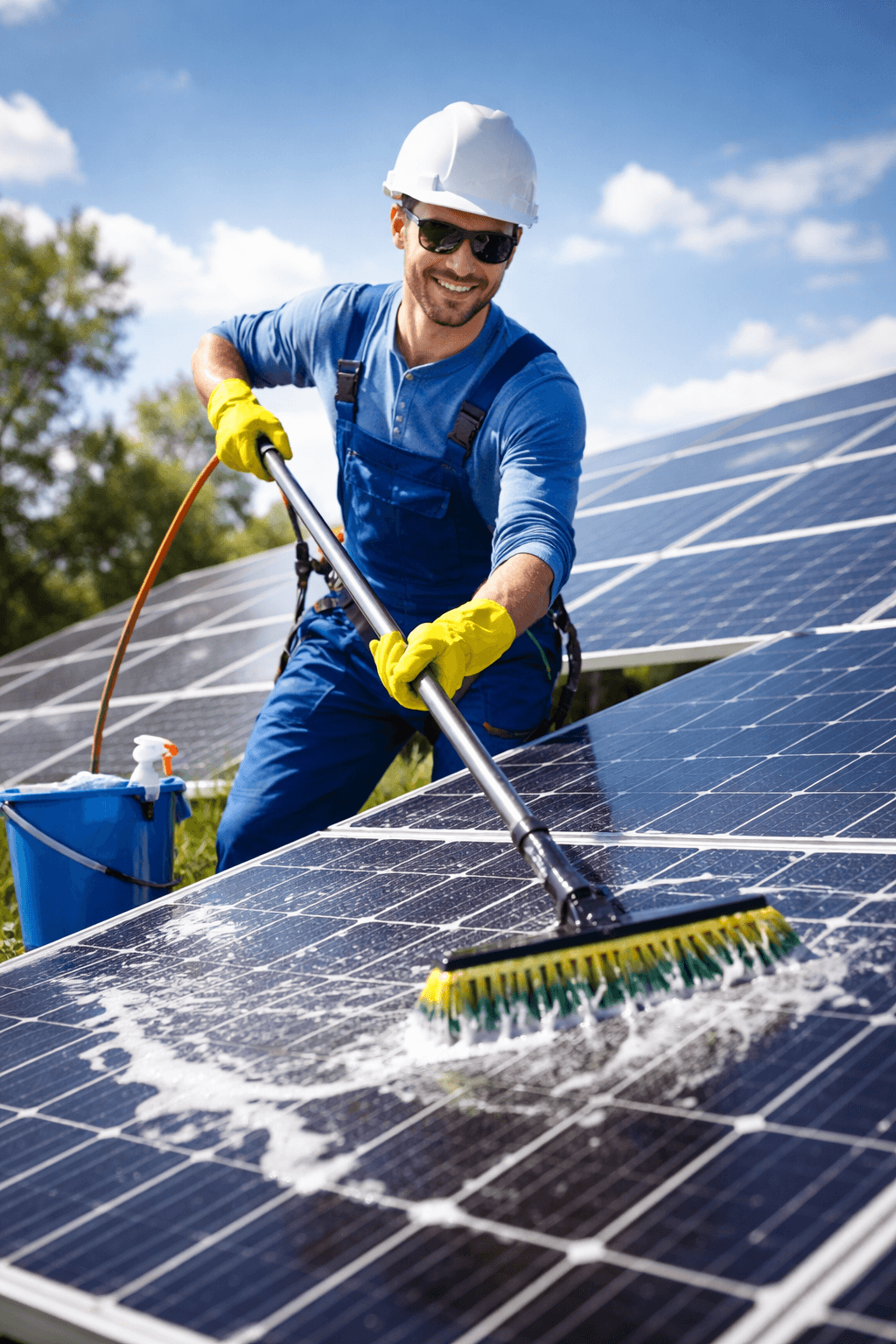
A solar panel cleaning technician in safety gear washing rooftop panels with a long brush on a sunny day

Quick Business Snapshot

Fast facts to help you grasp core traits quickly.

1

Startup Cost

Low to Medium

A solo operator can begin with panel-safe brushes, a water-fed pole setup, purified-water equipment, ladders, and a reliable vehicle. Costs rise once better roof-safety gear, insurance, storage, and a second technician enter the picture.

This is easier to start than many trade businesses, but not cheap enough to treat casually.

2

Skill Threshold

Medium

The washing itself is learnable. The harder part is safe roof access, panel-safe technique, weather judgment, and pricing jobs so travel time and setup do not quietly erase margin.

The real barrier is not soap and water. It is doing the work without damage, injury, or weak unit economics.

3

Time to First Revenue

Fast to Moderate

A first solar panel cleaning service job can come quickly through local outreach, installer referrals, or nearby homeowners with visible buildup. A stable recurring route takes longer.

First jobs are usually easier than building repeat behavior.

4

Repeat Potential

Medium

Some markets support repeat solar panel cleaning two or more times a year, especially where dust, pollen, ash, or bird activity stay high. In cleaner climates, repeat demand is weaker and more selective.

This is not automatic-subscription demand everywhere.

5

Local Dependence

Very High

Solar adoption, roof types, soiling rates, neighborhood density, and rainfall patterns all shape this business heavily. The same solar panel cleaning offer can be attractive in one area and weak in another.

Local conditions matter more than national solar headlines.

6

Scalability

Medium

Growth usually comes from route density, recurring plans, and a second technician or vehicle. Wide territory without density creates long days and weak profitability.

This scales through routing discipline more than raw lead volume.

7

Competition Intensity

Medium

Competition may come from window cleaners, exterior-cleaning companies, handymen, and some solar installers adding maintenance. Dedicated solar panel cleaning services still tend to compete mostly at the local level.

You are not just competing with solar specialists.

8

Operational Intensity

High

Travel, ladders, purified-water management, weather changes, roof screening, and careful client communication all sit around the actual wash time.

The cleaning is only part of the job.

Market & Demand Signals

This section helps show where demand usually comes from and what signals are worth noticing.

Demand Type

Performance maintenance + homeowner reassurance + asset upkeep

Customer Pattern

Residential solar owners, small commercial rooftops, and property managers with local systems to maintain

Service Format

One-time solar panel cleaning service + recurring maintenance visits + visual check add-ons

Installed Base

The addressable market exists because the installed solar base is already large

SEIA reported 5,289,576 U.S. solar installations in Q4 2024. That does not prove every market needs frequent solar panel cleaning, but it does confirm there is already a large installed base that can become a maintenance market where local conditions justify it.

The first question is not whether solar exists. It is whether enough systems are concentrated inside a route you can serve profitably.

Performance

Dirty panels can reduce output, but the severity depends heavily on location

NREL's soiling research shows some U.S. sites experience very low annualized losses while other locations see more meaningful output decline and stronger seasonal patterns. That makes solar panel cleaning a real value proposition in some climates and a lighter-need service in others.

The offer gets stronger where dust, pollen, smoke residue, bird droppings, or long dry periods are common.

Geography

Climate and density matter more than generic industry growth

A city with dense residential solar, limited rain, and visible buildup creates a better solar panel cleaning business than a region with scattered systems that are rinsed frequently by weather. Route density and soiling intensity matter more than broad solar enthusiasm.

A smart operator validates local need before trying to scale solar panel cleaning services across a wide map.

Safety

Roof safety is part of the value, not a back-room detail

OSHA says workers exposed to fall hazards of 4 feet or more need protection during solar-related maintenance work. In practice, that means clients hiring a solar panel cleaning service are also paying for safe access, controlled movement, and lower liability.

This is rooftop work with real consequences, not just exterior washing.

Quick Reality Check

Before you take this idea seriously, check these real-world signals first.

01

Is your local market dirty enough to support repeat solar panel cleaning at all?

Not every solar owner needs the same schedule, and not every market supports strong recurring demand.

Look at dust, pollen, smoke, bird activity, rainfall, and whether local owners already complain about visible buildup or output loss before building a solar panel cleaning business around repeat visits.

02

Can you work safely on roofs in heat, wind, slope, and changing weather?

The business can look simple until a steep roof, a hot afternoon, or a slick surface turns it into a safety problem.

Ladders, fall protection, footwear, weather judgment, and insurance are part of the core solar panel cleaning service model.

03

Do you know how to clean panels without creating warranty or damage problems?

Wrong brushes, harsh chemicals, pressure mistakes, or careless movement can create liability very quickly.

A good solar panel cleaning operator treats panel-safe methods, purified water, and careful handling as part of the product.

04

Can you price jobs around travel, setup, and water cost instead of wash time alone?

Underpricing is common because beginners count only the time on the panels, not the time around the job.

The stronger solar panel cleaning business prices for drive time, roof screening, water use, equipment wear, and the occasional weather-driven reschedule.

What People Often Underestimate

Parts of this idea may look simple at first but become heavy in daily delivery.

Demand Variability

People often assume every solar owner needs frequent cleaning

In reality, some locations have low annual soiling losses, which makes the market much weaker than broad solar-growth headlines suggest.

Water System Cost

Purified-water setup and replacement costs add up faster than beginners expect

Panel-safe cleaning usually relies on deionized or otherwise purified water to avoid leaving residue. Filters, tanks, pumps, hoses, and transport all belong in real pricing.

Route Friction

A full day can disappear into driving, setup, and access delays

Low route density, ladder setup, gate issues, roof-by-roof variation, and weather pauses can make a busy calendar feel much less profitable than it looked on paper.

Startup Cost

What you may need to spend before this idea becomes real.

Cost Pressure

Low to Medium

Testability

Possible to test small with a narrow route and basic equipment

Cost Structure

Vehicle + panel-safe tools + purified-water system + safety gear + insurance + marketing

Lean Start

The earliest workable version usually comes from a tight service area, not a big branded operation

A solo solar panel cleaning business can test demand with basic panel-safe tools, safety gear, and a narrow local route before taking on staff or bigger commercial accounts.

Validate local need first, then decide whether broader overhead is justified.

Ongoing Cost

The costs that hurt profit most are often recurring route and liability costs

Fuel, insurance, filter replacement, replacement brushes, weather cancellations, callback risk, and lost time between jobs usually matter more than the first equipment purchase.

This business gets stronger through route efficiency, not just more leads.

Execution Readiness

Looking ready is easier than being roof-ready

Quotes, roof screening, weather policies, safety procedures, cleaning standards, and post-job communication all need to be clear before the schedule gets busy.

Clients see clean panels. A solar panel cleaning service survives on process and safety.

What This Idea Really Asks of You

Done matters more than perfect in early stage execution.

A solar panel cleaning business can become a solid niche local service, but it asks you to accept roof safety, route efficiency, and demand validation as part of the real work.
1

You need to accept that this is a density business before it is a scale business

The economics improve when enough solar owners sit inside a tight service area that reduces drive time and makes repeat visits easy to stack.

Route density usually matters more than broad theoretical demand.

2

You need to treat safety as part of the product

Roof access, fall protection, weather judgment, and careful movement are not side details. They shape whether solar panel cleaning is actually professional.

In rooftop work, safety is part of what the client is buying.

3

You need to stay close to measurable customer value

Some owners care about production, some care about appearance, and some may not need regular service at all. A solar panel cleaning service sells best when it is tied to a real local need, not a generic solar story.

The more honest your value case is, the easier repeat business becomes.

4

You need clear boundaries around what you do and do not handle

A solar panel cleaning business can drift into inspections, bird-proofing, repair questions, or electrical troubleshooting very quickly.

A narrower promise is often safer and easier to deliver well.

How This Idea Usually Grows

Many ideas do not start at scale; they stabilize first.

1

Move from one-off jobs to repeat local customers

Early growth usually comes from becoming a reliable local option for a smaller cluster of solar owners, not from covering a huge territory immediately.

Reminder: Dense repeat work usually comes before real scale.

2

Move from custom quoting to a clearer service structure

Defined roof types, panel-count tiers, service zones, and repeat-visit options make solar panel cleaning services easier to price, sell, and operate.

Reminder: The easier the service is to understand and book, the easier it usually is to grow.

3

Move from solo cleaning to route systems and selected add-ons

Once demand becomes steadier, growth usually comes from tighter scheduling, recurring maintenance plans, route planning, and selective add-ons such as visual checks or debris removal around the array.

Reminder: More jobs without better routing usually creates exhaustion, not growth.

AI / Automation Angle

Where AI can assist and where human delivery still matters.

Can Be Assisted

Scheduling, route planning, reminders, quoting, and follow-up

Still Needs Human

Roof judgment, safe execution, weather decisions, and client trust

Overall Role

An efficiency layer around operations

Admin

AI can reduce repetitive admin work around quotes and reminders

Quote drafts, booking confirmations, repeat-service reminders, weather reschedule messages, and post-visit summaries can be produced more quickly through templates and automation.

It saves desk time, but it does not replace field judgment.

Communication

Customer communication can become more consistent

Appointment reminders, service checklists, access instructions, and after-visit notes can be standardized more clearly for a solar panel cleaning business as the client base grows.

Consistency reduces friction, but customers still judge whether the operator feels reliable and safe.

Operations

AI can help organize repeat service patterns

Route grouping, client history, seasonal reminder timing, and follow-up prompts can be reused more efficiently once solar panel cleaning services start depending on local repeat work.

The more recurring routes you manage, the more useful this support becomes.

Sources & Verification

This page combines public solar-market data, photovoltaic soiling research, rooftop safety guidance, labor data, and editorial judgment. Installed-base context mainly draws from SEIA; solar panel cleaning demand variability mainly draws from NREL; rooftop safety framing mainly draws from OSHA; labor context mainly draws from the BLS; licensing and permit framing mainly draws from the SBA.

Data Sources

Public solar-market data + safety and labor sources

Case Inputs

Local service patterns + route and liability observations

Nature of Judgment

Editorial synthesis, not a single-source quotation

installed base

SEIA

Supports: U.S. solar installation base and overall addressable market context

Key point: SEIA's Q4 2024 cheat sheet reported 5,289,576 U.S. solar installations.

View source →
soiling variability

NREL

Supports: Why solar panel cleaning demand varies by location

Key point: NREL field data show some sites have annualized soiling losses of 1% or less, while others show stronger seasonal patterns and more meaningful losses.

View source →
performance context

NREL

Supports: Why soiling can matter operationally and financially

Key point: NREL notes that natural soiling has reduced PV energy output since the technology was first used and that even small annual losses can matter at scale.

View source →
safety context

OSHA

Supports: Rooftop maintenance and fall-protection requirements

Key point: OSHA says workers exposed to fall hazards of 4 feet or more must be protected during solar maintenance work.

View source →
labor context

BLS

Supports: Wage context for cleaning-style labor

Key point: Janitors and building cleaners had a median hourly wage of about $17.27 in May 2024.

View source →
licensing context

SBA

Supports: General U.S. licensing and permit framework for small businesses

Key point: The SBA says most small businesses need a combination of licenses and permits from federal and state agencies, depending on activity and location.

View source →
The parts of this page covering U.S. solar installed base, soiling variability, rooftop safety, and labor context are grounded in public sources. The parts covering repeat logic, route-density economics, competition shape, customer psychology, margin pressure, and growth structure are editorial conclusions built from those sources rather than direct single-source claims.
This business varies a lot by climate, dust, pollen, drought patterns, bird activity, roof type, local solar concentration, and homeowner behavior. To judge whether solar panel cleaning is worth doing, you still need to look at your local installed base, actual soiling complaints, route density, insurance costs, and whether you can operate safely on roofs.

Keep exploring at your own pace

You do not need to decide now. Save it, note it, and compare more ideas.

Explore more ideas

Share this idea