Laundromat

A laundromat is a location-based laundry business built on equipment uptime, utility efficiency, and recurring neighborhood demand rather than on heavy daily customer acquisition. The strongest laundromat business models often combine self-service coin laundry with selective wash and fold or laundry services only after the base store already works.

Local ServiceLocal ServiceRepeat DemandCleaning

This page is here to help you see how a laundromat business actually works: location fit, machine turns, utilities, coin laundry economics, and whether wash and fold or broader laundry services should be layered in later.

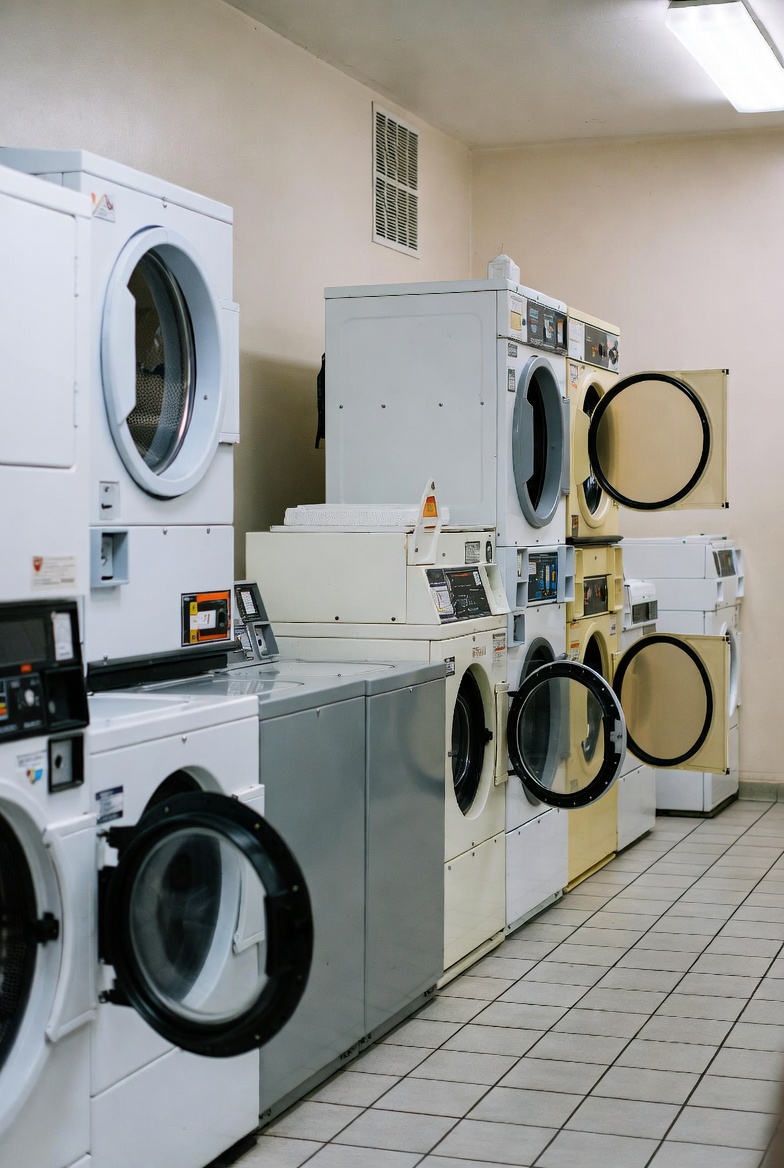
A modern self-service laundromat with rows of commercial washers and dryers, folding tables, and bright clean interiors

Quick Business Snapshot

Fast facts to help you grasp core traits quickly.

1

Startup Cost

High

A laundromat usually needs expensive commercial machines, buildout, plumbing, electrical work, and enough capital to survive the early months.

This is often marketed as passive, but the entry cost is usually much heavier than people expect.

2

Skill Barrier

Medium

You do not need advanced technical skill to start, but location judgment, equipment decisions, utility awareness, and maintenance discipline matter a lot.

The business looks simple from the customer side. It is much more technical from the owner side.

3

Time to First Revenue

Moderate

A good store can begin earning as soon as it opens, but finding the right site, finishing buildout, and stabilizing machine uptime usually take time.

The machines can start generating cash quickly. Getting to a healthy store takes longer.

4

Repeat Potential

High

Laundry is a recurring need, so a well-located store can build steady repeat demand without constant re-selling.

The strongest repeat pattern comes from neighborhood necessity, not from brand loyalty alone.

5

Local Dependency

Very High

Population density, renter mix, car ownership, local housing stock, and nearby competition all shape whether a laundromat works.

A modern store in the wrong neighborhood is still a weak business.

6

Scalability

Medium

It can grow through multiple stores, wash-and-fold, or pickup and delivery, but each step increases maintenance, labor, and route complexity.

Scale usually comes store by store, not through easy automation.

7

Competition

Medium

Not every market is crowded, but laundromats do compete heavily at the local trade-area level, especially where equipment quality and pricing are similar.

The real competition is usually nearby, not national.

8

Operational Intensity

Medium to High

The day-to-day labor can be lighter than many service businesses, but equipment failures, vandalism, cleaning, and utility costs still demand close attention.

It becomes low-touch only after the store is already running well.

Market & Demand Signals

This section helps show where demand usually comes from and what signals are worth noticing.

Demand Type

Recurring household necessity + self-service convenience + neighborhood utility access

Customer Pattern

Renters, multifamily residents, travelers, students, and households without reliable in-home laundry capacity

Service Format

Self-service washers and dryers + optional wash-and-fold + optional pickup and delivery

Market

This is a real, durable service category, but it is not a fast-growth fantasy business

The U.S. laundromats industry is about $7.2 billion in 2026, and public market data points to a slow-growth category rather than a breakout market. That is exactly why a laundromat tends to reward disciplined operators more than people chasing a trendy passive-income story.

The market is real, but your store still lives or dies on site quality and machine economics.

Category Definition

Laundromats serve a very specific need, not a broad retail desire

At the industry-classification level, laundromats are defined around self-service laundry and drycleaning equipment used by customers on the premises, which helps explain why neighborhood need matters more than branding alone. In practical customer language, that usually means a coin laundry, card-operated laundry room, or self-service laundromat that solves a basic weekly need.

This is a use-driven business more than an identity-driven one.

Utilities

Utility efficiency is a core profit driver, not a side detail

ENERGY STAR says certified commercial clothes washers are on average 9% more efficient and use about 45% less water than standard models. That makes equipment choice central to store economics.

A laundromat often wins or loses through water, sewer, gas, and electricity more than through décor.

Store Economics

The business can produce real cash flow, but the range is wide

Trade-association guidance shows coin laundries can range widely in market value and annual cash flow, which supports the idea that location, equipment quality, and execution create huge differences between weak and strong operators. That is why questions like how to start a laundromat business or what a laundromat business plan should include only become useful when tied to a real trade area and machine mix.

The spread is wide enough that calling laundromats easy passive income is usually misleading.

Quick Reality Check

Before you take this idea seriously, check these real-world signals first.

01

Can you secure a genuinely strong location instead of just buying machines?

The store usually succeeds because the neighborhood needs it, not because the machines are shiny.

Renter density, household laundry access, parking, and nearby competitors matter more than branding at the start. A laundromat business plan that ignores the trade area is usually just expensive guesswork.

02

Do you understand that utilities and equipment uptime are part of the product?

A broken machine, weak dryer performance, or high utility burden can quietly destroy profitability.

You are not only buying washers and dryers. You are buying a utility-heavy operating system.

03

Are you treating this as passive income before proving the store actually works?

Cleaning, machine repairs, coin or payment issues, vandalism, and customer complaints still have to be handled.

Laundromats can become lower-touch, but they are rarely passive at the beginning.

04

Do you know whether you want pure self-service or a broader laundry operation?

Wash-and-fold, pickup and delivery, and attendant service can raise revenue, but they also add labor and complexity.

A narrower laundromat is easier to stabilize, but wash and fold, drop-off laundry services, or pickup and delivery may create stronger economics in the right market.

What People Often Underestimate

Parts of this idea may look simple at first but become heavy in daily delivery.

Utility Pressure

The biggest financial leak is often not obvious from the storefront

Water, sewer, gas, electric, and inefficient machines can quietly eat far more profit than beginners expect.

Maintenance Risk

A few broken machines can change the whole store experience

When equipment is down, revenue falls immediately and customer trust drops quickly. In a laundromat, the machine is part of the service promise, not just the equipment list.

Location Sensitivity

A laundromat does not work just because laundry is universal

The local mix of renters, in-unit washers, multifamily housing, and nearby competitors changes the business dramatically.

Startup Cost

What you may need to spend before this idea becomes real.

Cost Pressure

High

Testability

Harder to test small

Cost Structure

Machines + buildout + plumbing/electrical + utilities + lease + maintenance

Lean Start

The lightest entry is often buying an existing store rather than building from scratch

An existing laundromat may already have utility hookups, lease history, and customer demand, which can lower some startup uncertainty compared with a greenfield build. That is often why experienced buyers spend more time reviewing the laundromat business plan, lease, and machine condition than dreaming about a brand-new store.

The cheaper-looking path is not always the lower-risk path, but existing stores can reduce some unknowns.

Equipment Cost

The visible cost is the machines, but the real cost is the full store system

Commercial washers and dryers, payment systems, plumbing, drains, ventilation, water heating, and electrical capacity all shape whether the store works economically.

A laundromat is really a utility-and-equipment business wearing a retail face.

Ongoing Cost

Recurring costs often matter more than the original purchase price

Utility bills, repairs, lease terms, cleaning, vandalism, attendant coverage, machine replacement reserves, and what insurance cover for the laundromat all shape real profitability after launch.

A store can look stable on the surface while quietly losing money underneath.

What This Idea Really Asks of You

Done matters more than perfect in early stage execution.

A laundromat can become a durable neighborhood business, but it asks you to manage equipment, utilities, site quality, and real store economics rather than chase the fantasy of effortless passive income.
1

You need to accept that this is an infrastructure business first

Customers experience it as a simple service, but ownership depends on machines, plumbing, payment systems, lease terms, and utilities all working together.

The visible storefront is only the front layer of the business.

2

You need to build reliability before chasing scale

A store with frequent downtime, weak cleanliness, or inconsistent machine performance becomes hard to trust and hard to multiply.

Stable store quality usually comes before adding a second location.

3

You need to treat efficiency as part of your competitive advantage

Faster cycles, cleaner space, working payment systems, and more efficient machines can make a major difference even when prices look similar.

Customers may not say utility efficiency, but they do feel the result.

4

You need to stay honest about what makes the store valuable

The business is usually worth much more when location need, machine turns, uptime, and the choice between self-service, coin laundry, and wash and fold economics are real, not when the idea simply sounds passive and attractive.

In laundromats, the numbers matter more than the story.

How This Idea Usually Grows

Many ideas do not start at scale; they stabilize first.

1

Move from working store to dependable neighborhood habit

Early growth usually comes from proving that the store is clean, functional, and worth returning to for a specific local customer base.

Reminder: Repeat necessity usually comes before scale.

2

Move from basic self-service to clearer revenue layers

Wash and fold, vending, drop-off service, pickup and delivery, or premium machine mix can make the laundromat more valuable when the base self-service operation is already stable.

Reminder: Extra services help most when the core store already works.

3

Move from one location to systems and portfolio discipline

As the business grows, the next layer usually comes from maintenance systems, remote monitoring, route planning for service calls, stronger financing discipline, and tighter site selection.

Reminder: More stores without better systems usually multiply headaches faster than profit.

AI / Automation Angle

Where AI can assist and where human delivery still matters.

Can Be Assisted

Maintenance logs, vendor comparison, pricing notes, customer communication, and simple performance tracking

Still Needs Human

Site selection, repair decisions, lease judgment, equipment choices, and on-the-ground operations

Overall Role

An efficiency layer around store management

Admin

AI can reduce repetitive communication and vendor comparison work

Vendor summaries, lease-question checklists, signage drafts, customer notices, and basic laundromat business plan outlines can be prepared faster through structured templates.

It saves time, but it does not replace real store judgment.

Operations

AI can help organize machine and utility information

Maintenance logs, downtime patterns, service notes, and utility comparisons can be structured more clearly over time.

The more repeatable the store operation becomes, the more useful this support gets.

Growth

AI can help compare expansion options more consistently

Store checklist templates, acquisition review notes, and trade-area comparison summaries can make second-store decisions more disciplined.

That helps with structure, but site quality still has to be judged in the real world.

Sources & Verification

This page combines public industry data, industry-association investor guidance, federal industry classification, energy and water efficiency guidance, and editorial judgment. U.S. laundromat industry size and business count mainly draw from IBISWorld; category definition mainly draws from NAICS and Census context; equipment-efficiency and utility context mainly draw from ENERGY STAR; store-value and cash-flow range mainly draw from The Laundry Association. The parts comparing a laundromat, coin laundry, wash and fold, and broader laundry services are editorial operating judgments built around how these models actually differ in labor and margin.

Data Sources

Industry data + classification + utility-efficiency and trade sources

Case Inputs

Store-operation patterns + location and equipment observations

Nature of Judgment

Editorial synthesis, not a single-source quotation

industry size

IBISWorld

Supports: U.S. laundromat market size and business count

Key point: The U.S. laundromats industry is about $7.2 billion in 2026, with about 17,461 businesses.

View source →
industry definition

U.S. Census / NAICS context

Supports: What a laundromat business includes at the classification level

Key point: The category centers on self-service laundry and drycleaning equipment for customer use on the premises.

View source →
equipment efficiency

ENERGY STAR

Supports: Why washer efficiency materially affects laundromat economics

Key point: ENERGY STAR commercial clothes washers are on average 9% more efficient and use about 45% less water than standard models.

View source →
store economics range

The Laundry Association

Supports: How wide laundromat business value and cash flow can vary

Key point: Coin laundries can range in market value from about $50,000 to more than $1 million and can generate annual cash flow from about $15,000 to $300,000.

View source →
The parts of this page covering U.S. market size, business count, industry definition, equipment-efficiency benefits, and broad store-value ranges are grounded in public sources. The parts covering passive-income myths, location sensitivity, utility pressure, maintenance risk, insurance questions, and the tradeoffs between a laundromat, coin laundry, wash and fold, and broader laundry services are editorial conclusions built from those sources rather than direct single-source claims.
A laundromat can be a durable business in the right trade area, but it is usually heavier and more infrastructure-dependent than it first looks. To judge whether it is worth doing, you still need to look at renter density, local in-unit laundry access, utility rates, lease terms, machine condition, insurance needs, and whether your store has enough real neighborhood demand to support the capital required.

Keep exploring at your own pace

You do not need to decide now. Save it, note it, and compare more ideas.

Explore more ideas

Share this idea