Pet Grooming Business

A pet grooming business is a local pet-care service built on handling skill, grooming quality, and repeat client trust. The strongest operators do not win by clipping faster. They win by making owners feel their pet is safe, well handled, and worth bringing back on a regular schedule.

PetPetTrust-BasedRepeat DemandLocal ServiceExpertise-Led

This page is here to help you see how a pet grooming business actually works, not make the decision for you. Behind a polished dog grooming result is a local service built on handling judgment, safe workflow, repeat bookings, and the kind of trust that turns a first-time owner into a regular client.

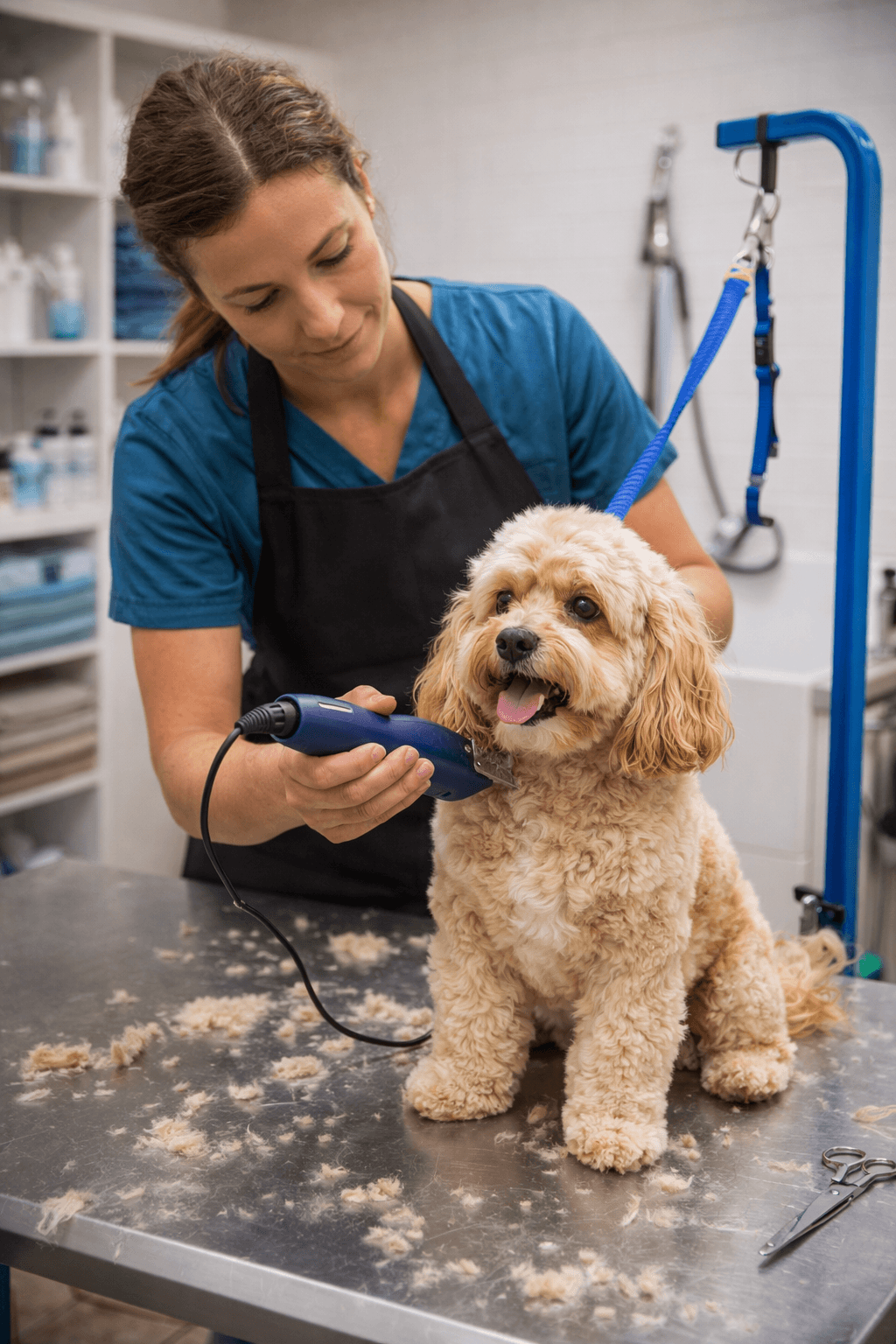
A professional pet groomer trimming and brushing a small dog on a grooming table in a clean salon

Quick Business Snapshot

Fast facts to help you grasp core traits quickly.

1

Startup Cost

Low to Medium

A pet grooming business can start with a grooming table, tub access, dryer, clippers, blades, shampoos, and pet grooming business insurance, but costs rise quickly with a full grooming salon lease or a mobile pet grooming van.

A small focused setup is very different from opening a polished retail salon on day one.

2

Skill Threshold

High

This is not just about liking animals. A dog groomer needs coat knowledge, safe restraint, clipper control, drying technique, and the judgment to handle anxious or difficult pets without rushing.

The work looks gentle from the outside, but visible mistakes show up quickly.

3

Time to First Revenue

Moderate

Early dog grooming bookings can come through local pet owners and referrals, but repeat revenue depends on trust, grooming quality, and whether owners feel your pet grooming service is worth rebooking.

The first client is easier than becoming someone's regular groomer.

4

Repeat Potential

High

Many dogs need recurring pet grooming, bathing, coat maintenance, or nail trimming for dogs, which makes this more repeatable than many one-off local services.

Retention usually matters more than constant new-customer chasing.

5

Local Dependence

High

This business depends heavily on local pet density, travel convenience, neighborhood trust, and how easy it is for owners to return on a regular schedule.

Convenience is often part of the value, not just the grooming result.

6

Scalability

Medium

It can grow through better scheduling, staff support, add-on services, and repeat cycles, but the business remains tied to skilled labor and time per animal.

Growth usually comes from systems and retention, not infinite volume.

7

Competition Intensity

High

Many cities already have independent dog grooming operators, grooming salon chains, pet stores, mobile dog grooming services, and home-based providers competing for the same owners.

The market is not empty. The real gap is usually reliability, safety, and consistency.

8

Operational Intensity

High

Bathing, drying, brushing, clipping, cleanup, rebooking, and owner communication create a physically repetitive business with little room for sloppy pet grooming safety habits.

Even a small daily schedule becomes demanding when difficult dogs or delays stack up.

Market & Demand Signals

This section helps show where demand usually comes from and what signals are worth noticing.

Demand Type

Recurring pet maintenance + hygiene + owner convenience

Customer Pattern

Dog owners first, then cat owners, repeat clients, and higher-maintenance breeds

Service Format

Full pet grooming + bath-only + nail trimming for dogs + cat grooming + mobile pet grooming or salon-based service

Market

This is a real service category, not a niche side demand

Grand View Research estimates the U.S. pet grooming services market at about $2.16 billion in 2025, which shows that pet grooming is already a defined consumer service category rather than a fringe offer.

Do not start by asking whether the industry exists. Start by asking how strong repeat grooming demand is in your local area.

Ownership

The demand base is large because pet ownership is large

APPA says 94 million U.S. households own a pet, including about 68 million dog-owning households and about 49 million cat-owning households. That creates a broad underlying customer base for pet grooming, dog grooming, and maintenance services.

Dog-heavy neighborhoods, apartment density, and breed mix matter more than broad national enthusiasm alone.

Spending

Pet owners already spend real money on service categories around care and convenience

APPA reports $13.0 billion in U.S. spending on 'other services' in 2024 and projects $13.5 billion in 2025. That category includes grooming, boarding, training, walking, and related services.

This helps confirm that service spending is already normal behavior for many pet owners.

Structure

This is a fragmented local market, which creates room for trusted operators

IBISWorld reports about 185,051 U.S. businesses in the broader pet grooming and boarding category in 2025. That suggests a crowded but highly local market where trust, convenience, retention, and service quality matter more than national brand power alone.

You usually do not win by being first. You win by becoming the easiest reliable choice nearby.

Quick Reality Check

Before you take this idea seriously, check these real-world signals first.

01

Can you handle anxious, reactive, or difficult pets safely and calmly?

Pet grooming is not just cosmetic work. Animal behavior is part of the job every day.

A groomer needs physical control, emotional steadiness, and the judgment to stop when safety is at risk.

02

Do you have a realistic setup for sanitation, workflow, insurance, and local compliance?

A pet grooming business still has real operating requirements even if it looks lighter than a medical or food business.

Confirm your local licenses, business permits, pet grooming business insurance, vaccination policies, sanitation process, and workspace rules before expanding.

03

Do you have a defined lane instead of promising every pet and every style?

Trying to take every breed, every coat condition, every cat grooming request, and every service type too early can quietly damage quality.

A narrower service scope often makes timing, pricing, and safety easier to control.

04

Can you actually sustain the physical and repetitive nature of the work?

Standing for long periods, lifting pets, bathing, drying, brushing, and cleanup add up quickly.

Count the physical strain, difficult clients, no-shows, and schedule compression before deciding whether this fits you.

What People Often Underestimate

Parts of this idea may look simple at first but become heavy in daily delivery.

Handling Risk

People imagine cute dogs. They forget that fear, movement, and resistance are part of the work

A difficult pet can turn a simple booking into a pet grooming safety, timing, and stress problem very quickly.

Time Drift

One late or heavily matted pet can distort the rest of the day

Beginners often underestimate drying time, dematting time, cleanup time, and owner handoff delays.

Client Friction

A grooming result is judged by both the pet and the owner

Haircut expectations, matting disputes, late pickups, and pricing sensitivity can create more friction than the grooming itself.

Startup Cost

What you may need to spend before this idea becomes real.

Cost Pressure

Low to Medium

Testability

Possible to test small

Cost Structure

Equipment + products + space + insurance + utilities + labor

Lean Start

The earliest workable version usually comes from a tighter setup, not a polished salon buildout

A solo groomer can start much smaller through a modest workspace, limited service menu, or a lower-overhead arrangement instead of immediately carrying full retail rent and staff costs. In practice, pet grooming business startup cost stays more manageable when the first version is operationally narrow.

Validate repeat demand first, then decide whether heavier fixed costs are justified.

Ongoing Cost

The costs that hurt margin are often the ones that repeat every week

Shampoos, blades, clipper maintenance, dryer wear, towels, cleaning supplies, insurance, utilities, and rework all affect real profit over time.

Recurring operating friction often matters more than the first equipment purchase.

Execution Readiness

Looking ready is different from actually being ready

Client intake forms, breed notes, vaccination requirements, appointment buffers, drying capacity, and safe handling process all create real setup work before a pet grooming calendar becomes stable.

Clients notice the result, but reliability is built behind the scenes.

What This Idea Really Asks of You

Done matters more than perfect in early stage execution.

Pet grooming can become a strong repeat-driven local business, but it asks you to accept animal handling, physical repetition, and consistency pressure as part of the real work.
1

You need to accept that safety is part of the service itself

The business is not just about making pets look better. It is also about keeping them calm, safe, and manageable during stressful moments.

A beautiful groom is not a win if the process felt unsafe.

2

You need to build trust before chasing premium pricing

Owners return because they feel their pet is handled well and comes back in good condition, not because your branding sounds expensive.

In grooming, trust is part of the product.

3

You need to turn repeat work into a stable rhythm

This business gets stronger when clients return on a regular cycle rather than treating every booking like a one-time sale.

Retention usually matters more than constant new lead hunting.

4

You need to treat boundaries as a real business tool

Breed limits, matting policies, behavior policies, late fees, pickup rules, and service scope all protect quality and schedule control, whether you run a small grooming salon or a mobile pet grooming setup.

Clear boundaries usually protect both margin and sanity.

How This Idea Usually Grows

Many ideas do not start at scale; they stabilize first.

1

Move from first bookings to dependable repeat clients

Early growth usually comes from becoming a trusted regular option for a smaller client base, not from trying to look like a large salon immediately.

Reminder: Stable rebooking usually comes before real growth.

2

Move from custom chaos to clearer service structure

Defined size tiers, coat-condition policies, service bundles, and booking rules make the business easier to price, schedule, and operate. This matters whether you offer full pet grooming, bath-only visits, cat grooming, or mobile dog grooming.

Reminder: The easier the service is to understand, the easier it is to sell and repeat.

3

Move from founder-only effort to systems and support

Once demand becomes steadier, growth usually comes from better intake, stronger scheduling, assistant support, cleaner SOPs, and more reliable client retention systems.

Reminder: More bookings without better systems usually creates fatigue, not scale.

AI / Automation Angle

Where AI can assist and where human delivery still matters.

Can Be Assisted

Scheduling, reminders, intake notes, and follow-up

Still Needs Human

Animal handling, grooming judgment, coat work, and safety decisions

Overall Role

An efficiency layer around operations and communication

Admin

AI can reduce repetitive scheduling and admin work

Booking confirmations, reminder texts, intake summaries, pricing explanations, and aftercare notes can be created faster through templates and automation.

It saves admin time, but it does not replace hands-on skill.

Communication

Basic client communication can become more consistent

Vaccination reminders, matting-policy explanations, pickup notices, and rebooking prompts can be standardized more clearly.

Consistency lowers friction, but owners still judge whether you are genuinely trustworthy.

Operations

AI can help organize repeated service patterns

Breed notes, grooming history, owner preferences, before-and-after records, and recurring appointment prompts can be summarized and reused more efficiently.

The more repeat clients you manage, the more useful this support becomes.

Sources & Verification

This page combines public pet-industry data, pet-services market research, labor data, pet-care safety context, and editorial judgment. U.S. pet grooming services market size mainly draws from Grand View Research; broader U.S. pet ownership and service-spending context mainly draws from APPA; broader industry structure and business-count context mainly draws from IBISWorld; wage context mainly draws from the BLS; licensing context mainly draws from the SBA; vaccination and salon-safety framing mainly draw from AVMA and AKC.

Data Sources

Public market data + industry research

Case Inputs

Recurring service logic + local operating pattern observations

Nature of Judgment

Editorial synthesis, not a single-source quotation

market size

Grand View Research

Supports: U.S. pet grooming services market size and growth

Key point: The U.S. pet grooming services market was estimated at about $2.06 billion in 2024 and about $2.16 billion in 2025, with projected growth toward $2.99 billion by 2030.

View source →
pet ownership

APPA

Supports: U.S. household pet ownership base

Key point: APPA reports 94 million U.S. households own a pet, including about 68 million dog-owning households and about 49 million cat-owning households.

View source →
service spending

APPA

Supports: U.S. service spending context around grooming and related pet services

Key point: APPA reports $13.0 billion in U.S. spending on 'other services' in 2024 and projects $13.5 billion in 2025 for categories that include grooming, boarding, training, and walking.

View source →
industry size

IBISWorld

Supports: Broader U.S. pet grooming and boarding industry size

Key point: IBISWorld estimates the U.S. pet grooming and boarding industry at about $15.4 billion in 2026.

View source →
business count

IBISWorld

Supports: Broader U.S. market structure and competition context

Key point: IBISWorld reports about 185,051 U.S. businesses in the broader pet grooming and boarding category in 2025.

View source →
income context

BLS

Supports: Wage context for animal-care work

Key point: Animal caretakers in the U.S. had a median annual wage of about $33,470 in May 2024.

View source →
licensing context

SBA

Supports: General U.S. small-business licensing and permit framing

Key point: The SBA notes that most small businesses need a combination of licenses and permits from federal, state, and local agencies, depending on their activity and location.

View source →
vaccination context

AVMA

Supports: Vaccination expectations and operating safety context

Key point: AVMA notes that reputable boarding, daycare, grooming, and training services commonly require up-to-date vaccinations to help keep pets safe.

View source →
safety context

AKC

Supports: Salon safety and sanitation context

Key point: AKC's grooming safety material highlights grooming-salon safety protocols, accident avoidance, sanitation, and handling of special cases as core operating concerns.

View source →
The parts of this page covering U.S. pet grooming market size, pet ownership, broader pet-service spending, business-count context, and wage framing are grounded in public sources. The parts covering repeat logic, retention dynamics, handling difficulty, client friction, matting risk, time drift, and growth structure are editorial conclusions built from those sources rather than direct single-source claims.
Local demand varies a lot by dog density, breed mix, housing type, traffic convenience, neighborhood income, climate, and competition from salon, mobile, and big-box operators. To judge whether this business is worth doing, you still need to look at your local client base, pet-owner habits, service gap, and your own ability to handle repetitive physical work safely.
Keep exploring at your own pace

You do not need to decide now. Save it, note it, and compare more ideas.

Explore more ideas

Share this idea