Themed Cafe

A small hospitality business built less on coffee alone and more on atmosphere, novelty, and a reason for people to visit in person. A themed cafe can take the form of a board game cafe business, anime cafe business, book cafe business, pop culture cafe, or another niche cafe concept, but the real product is still the in-person experience.

PetPetRepeat Demand

This page helps you see the structure of a themed cafe clearly, not make the decision for you. The concept may be a board game cafe, anime cafe, book cafe, or another niche cafe, but the business only works if the visit feels worth leaving home for.

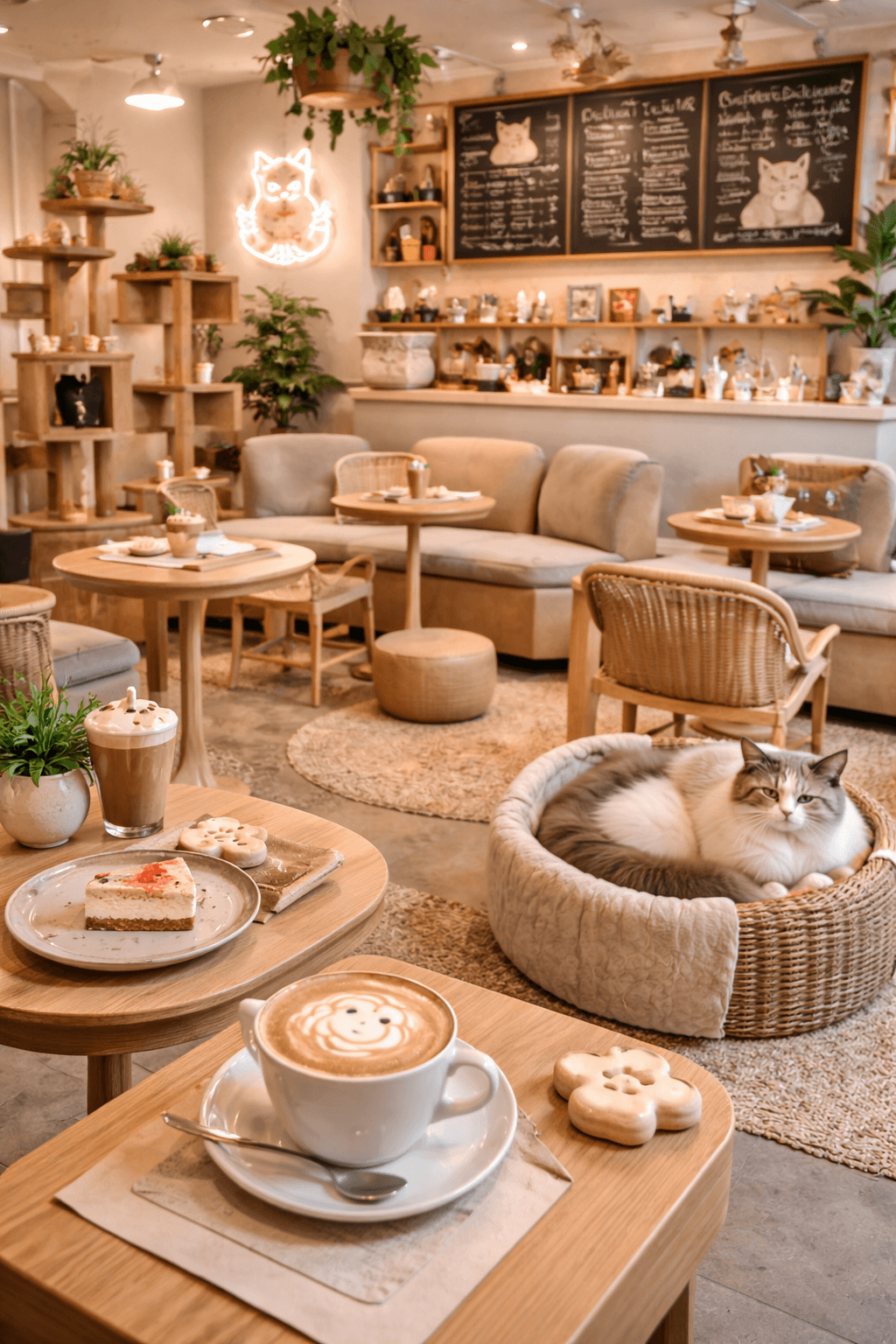
Guests relaxing in a themed cafe with specialty drinks, designed interiors, and a separate animal interaction space

Quick Business Snapshot

Fast facts to help you grasp core traits quickly.

1

Startup Cost

Medium to high

A plain cafe is already equipment-heavy. A themed cafe usually adds extra fit-out, stronger design requirements, booking flow, and sometimes a second compliance layer on top.

The theme can raise pricing power, but it also raises the cost of getting the space right.

2

Skill Barrier

Medium

You do not need to reinvent hospitality, but you do need to run coffee, service, and the theme layer well enough that people feel it was worth leaving home for.

The concept is easy to like. Running it well is much harder.

3

Time to First Revenue

Medium

Slower than a simple local service, faster than building a new digital product from zero. You still need a real space, a real setup, and enough curiosity to get people through the door.

The opening can feel exciting quickly. The build-up usually does not.

4

Repeat Potential

Medium

Better than a one-off novelty pop-up if the space is genuinely pleasant, bookable, and worth revisiting. Weaker if people feel they have already 'done it once.'

The first visit is often sold by curiosity. The later visits are sold by comfort and habit.

5

Local Dependency

Very high

This model depends heavily on foot traffic, dense neighborhoods, tourism, social sharing, and customers willing to pay for an in-person experience.

A strong concept in the wrong area usually stays weak.

6

Scalability

Medium

You can scale, but it is usually harder than it looks because the concept has to survive beyond the first impression and work without depending on founder energy alone.

A themed cafe that feels personal is harder to replicate cleanly.

7

Competition

Medium to high

You are not only competing with other themed cafes. You are competing with staying home, regular cafes, dessert spots, bars, and any other place people could spend the same social hour.

The real competition is often broader leisure spending, not direct category rivals.

8

Operational Intensity

High

Even without animals, this is a detail-heavy business. With animals, it becomes meaningfully harder because welfare, rules, and customer handling become part of the operation itself.

The theme is not decoration. It creates work.

Market & Demand Signals

This section helps show where demand usually comes from and what signals are worth noticing.

Demand Type

Experience-led food and beverage

Customer Pattern

Leisure visit + social sharing + occasional repeat visit

Service Format

In-person, place-based, theme-driven

Base market

The floor under this idea is the cafe market, not the gimmick

Themed cafes still sit inside a real coffee-shop economy. That matters because the theme is not replacing the cafe business. It is sitting on top of it, whether the concept is a board game cafe, anime cafe, book cafe, or broader pop culture cafe.

If the base coffee-and-footfall logic is weak, the theme usually does not save it.

Pricing

Cat-cafe-style venues often sell time, not just drinks

This is one of the clearest differences between a themed cafe and a normal one. In cat-cafe-style models, the product can be admission plus food and drink, not food only.

That changes ticket structure, margin logic, and customer expectations.

Model proof

The better themed cafes usually behave like hybrid businesses

The stronger examples tend to combine cafe sales with reservations, events, retail, private bookings, or some other layer that gives the concept more than one way to earn. That is especially true for a niche cafe where the theme has to justify the trip, not just decorate it.

A themed cafe often works better when it is more than just a pretty place to buy a drink.

Niche signal

There is real niche demand, but the niche data is softer than the cafe data

You can find secondary market estimates for cat cafes and other experience-led cafe niches, but they are not as solid as the broader coffee-shop industry numbers.

Use niche estimates as support, not as your entire case.

Welfare

If the theme involves live animals, welfare is not a side issue

If animals are central to the concept, the business has a second operating system inside it. Layout, occupancy, staff oversight, guest behavior, and quiet spaces all matter.

This is where an animal cafe stops behaving like a normal cafe.

Quick Reality Check

Before you take this idea seriously, check these real-world signals first.

01

Is this really a coffee business, or is it an experience business with drinks attached?

A themed cafe often wins or loses on booking value, atmosphere, and shareability, not on coffee alone.

Be clear about what people are actually paying for: drinks, time, access, photos, events, or emotional novelty.

02

Will people come back, or just come once?

A lot of themed venues get attention faster than they earn repeat business.

Ask whether the space is comfortable and useful enough to revisit, not just visually interesting enough to post once. That question matters in every themed cafe, from a book cafe business to an anime cafe business.

03

Can the concept carry a real ticket or cover charge?

If your theme is the product, it has to justify more than a standard cafe spend.

Think in terms of timed sessions, bundles, events, or add-ons, not only latte sales.

04

If animals are part of the concept, can the operation still work on the animals' terms?

In this category, good intentions are not enough.

You need a setup that protects welfare on busy days, not just a concept that looks attractive on paper.

What People Often Underestimate

Parts of this idea may look simple at first but become heavy in daily delivery.

One-time curiosity

A lot of themed cafes are easier to try than to revisit

The first visit may be sold by curiosity. The second visit has to be earned by comfort, atmosphere, and value.

Revenue mix

Themed cafes often make more sense when they monetize beyond drinks

Admission, timed slots, events, merch, branded items, and private bookings can matter more than beginners expect.

Throughput

A charming concept can still be a low-capacity business

The more carefully managed the experience is, the more likely you are to hit capacity limits early.

Animal-side complexity

If it is cat-cafe-style, the animal layer is operationally heavy

Layout, rules, cleaning, staff oversight, and customer handling are not decorative extras. They are part of the business model.

Startup Cost

What you may need to spend before this idea becomes real.

Cost Pressure

Medium to high

Testability

Harder than a plain local service

Cost Structure

Equipment + fit-out + theme + staffing + compliance

Cafe equipment

The coffee side alone is not especially cheap

Commercial coffee equipment creates a real baseline cost before rent, fit-out, POS, refrigeration, seating, and labor are even added.

A themed cafe still has to clear the normal cafe setup hurdle first.

Theme build-out

The theme is where a lot of the capital quietly appears

Custom interiors, lighting, props, signage, acoustics, photo-friendly areas, booking flow, and stronger brand presentation often become a larger part of the spend than new owners expect.

A themed cafe that looks ordinary usually prices like an ordinary cafe.

Animal-side fit-out

In cat-cafe-style models, animal space is infrastructure, not decoration

Cat-only rooms, hiding places, vertical space, air management, and customer-density control are real design needs, not optional extras.

Part of the floor plan is there to protect the experience, not to maximize beverage throughput.

What This Idea Really Asks of You

Done matters more than perfect in early stage execution.

A themed cafe can work, but it asks you to build something people feel is worth visiting in person, and then run it well enough that the concept does not collapse into a plain cafe with extra maintenance.
1

You need to know what the theme is doing commercially

The theme should either raise ticket value, raise shareability, raise booking demand, or deepen loyalty. If it does none of those, it is mostly extra cost.

A good concept is not just likable. It has to improve the economics.

2

You need to be good at atmosphere, not just service

This kind of business sells mood, memory, and story as much as food and drink.

People are often paying for how the place feels, not just what is on the tray.

3

You need to make the experience work in real time

Bookings, queueing, rules, cleanliness, customer flow, and staffing all shape whether the concept feels magical or awkward.

A themed cafe is judged moment by moment, not just by menu quality.

4

If animals are involved, you need to accept operational limits

You cannot push the venue as hard as a normal cafe if doing so harms the core experience or the animals' welfare.

An animal-led concept always carries a second set of limits.

How This Idea Usually Grows

Many ideas do not start at scale; they stabilize first.

1

Start with one clear theme and one clear booking format

Get the first version legible. A fuzzy 'cute cafe with a concept' is harder to sell than a strong, simple promise.

Reminder: If the idea takes too long to explain, the market usually feels it too.

2

Add revenue layers around the visit

Timed sessions, events, themed menu items, merch, workshops, and private bookings usually make more sense than trying to win on coffee volume alone. A board game cafe business, for example, often gets stronger when table time and group bookings matter as much as beverage sales.

Reminder: Themed cafes often get stronger when they stop relying on drinks as the only engine.

3

Expand only after the operation works without strain

A second location or a broader theme line only makes sense when the first site is genuinely repeatable, not just popular during its novelty phase.

Reminder: Repeatability matters more than buzz.

AI / Automation Angle

Where AI can assist and where human delivery still matters.

Can Be Assisted

bookings, reminders, event copy, menus, review handling, and content planning

Still Needs Human

hospitality, atmosphere, in-person service, animal handling, and concept judgment

Overall Role

an operating layer around the venue, not the experience itself

Bookings

AI can help smooth the admin side

Reservations, waitlists, confirmation messages, and event reminders are easy places to save time.

This matters most when the experience depends on timing and capacity control.

Content

AI can help keep the concept visible online

A themed cafe lives partly on social sharing, so AI can help with captions, promos, event copy, and seasonal menu language for a book cafe, anime cafe, pop culture cafe, or other niche cafe concept.

Visibility matters more here than in a plain neighborhood cafe.

Operations

AI can help standardize the boring parts

FAQs, house rules, staff checklists, and guest follow-up usually improve once they stop depending on memory.

That is useful because a themed venue tends to create more edge-case questions than a normal one.

Sources & Verification

This page uses coffee-shop industry data as the strongest base-demand layer, then uses cat-cafe pricing, reservations, welfare research, and charity guidance to explain what makes a themed cafe different from a normal cafe. The same structural logic also helps when thinking about a board game cafe business, anime cafe business, book cafe business, or another niche cafe concept. Where those inputs are turned into business judgment, they are treated as editorial synthesis.

Data Sources

industry reports + official venue pages + welfare research + charity guidance

Use Case

base market validation + niche pricing + operational reality + risk framing

Judgment Type

public sources + editorial synthesis, not single-source transcription

base market

IBISWorld / coffee-shop market anchors

Supports: US coffee & snack shops, UK cafes & coffee shops, and Europe-level cafe context

Key point: IBISWorld is useful here as a category anchor showing that coffee shops and café-style retail are established, trackable markets, but this source set is better used for structural context than for a single cat-café-specific number.

View source →
coffee demand context

CBI Europe coffee demand

Supports: Europe's role in global coffee consumption

Key point: CBI says Europe accounted for 30.7% of global coffee consumption in 2023/2024, making it the world's largest coffee consumption market.

View source →
official pricing

Cat Cafe MOCHA

Supports: timed pricing and capped session structure

Key point: Cat Café MOCHA's Shinjuku location uses timed pricing of ¥270 per 10 minutes on weekdays and ¥350 on holidays, with maximum charges of ¥3,600 on weekdays and ¥4,200 on holidays.

View source →
official booking structure

Lady Dinah's Cat Emporium

Supports: one-hour ticketing, extension pricing, and bundled visit logic

Key point: Lady Dinah's Cat Emporium sells one-hour cat-visit tickets at £12 per person, with extensions priced at £5 per additional 30 minutes.

View source →
official operating model

Koneko Cat Cafe

Supports: separate cafe and cattery hours, reservations, events, surcharge structure, and adoption model

Key point: Koneko is best used as an operating-model reference for a cat café that combines café service with a separate cat space and adoption-oriented positioning, though the accessible public page content was limited during verification.

View source →
welfare research

MDPI 2025 cat-cafe welfare study

Supports: occupancy, cat behavior, design needs, and welfare implications

Key point: The 2025 MDPI study explicitly examines cat behavior under different customer-occupancy levels, including low, mid, and high occupancy bands, showing that crowding and layout are real welfare-management variables in cat cafés.

View source →
welfare and policy signal

RSPCA + Cats Protection statement

Supports: licence growth and the welfare-based argument against the model

Key point: In March 2025, the RSPCA and Cats Protection called for a phase-out of cat cafés after reporting a 44% increase in licences granted during the previous financial year, arguing that the model can negatively affect cat welfare.

View source →
equipment cost anchor

WebstaurantStore

Supports: baseline espresso and coffee equipment pricing

Key point: WebstaurantStore listings show commercial espresso machines commonly starting in the low thousands of dollars, with visible examples around $2,859 to $3,069 for entry commercial units and much higher pricing for larger multi-group machines.

View source →
Statements such as 'this works better as a hybrid admission plus F&B business,' 'the theme has to justify the trip,' 'a lot of these venues are low-capacity even when popular,' and 'animal-based themed cafes carry a second operating system inside the business' are editorial synthesis. They are grounded in the pricing, booking, welfare, and market materials above, but they are not copied from one single source.
If what you actually mean is a practical small-business version of a themed cafe, the most useful benchmarks are not just cafe market size. They are ticket structure, repeat-visit logic, booking control, space efficiency, and whether the theme still works once the novelty fades. That applies whether you are thinking about a board game cafe business, anime cafe business, book cafe business, pop culture cafe, or any other niche cafe.
Keep exploring at your own pace

You do not need to decide now. Save it, note it, and compare more ideas.

Explore more ideas

Share this idea