Upcycling Business

Upcycling is a small product business built on turning discarded or low-value materials into goods people actually want to buy. The opportunity is real, but the business only works when the final product feels desirable on its own, not just environmentally responsible. In practice, an upcycling business may show up as upcycled furniture, upcycled clothing, a handmade product business, or a more focused furniture flipping business with a sustainability angle.

Home-BasedRepeat DemandCleaning

Upcycling sounds easy because the raw material can be cheap or free. The hard part is everything that happens after that: cleaning, sorting, redesigning, making, photographing, and selling at a price that still leaves room for profit. That challenge shows up whether you are making upcycled furniture, upcycled clothing, or another handmade business rooted in reclaimed materials.

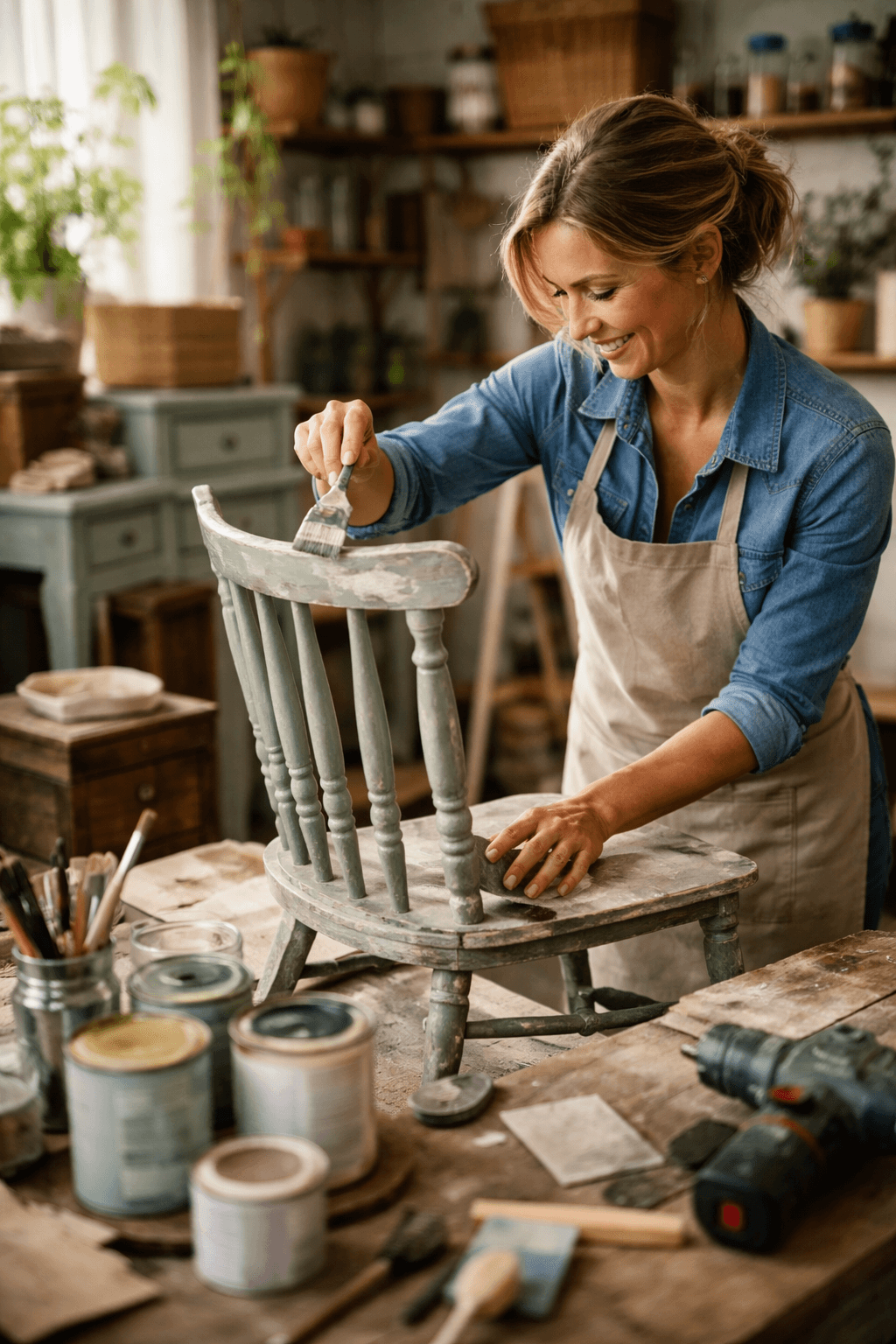
A small workshop with reclaimed fabric, wood offcuts, tools, sketches, and finished upcycled products arranged on a worktable.

Quick Business Snapshot

Fast facts to help you grasp core traits quickly.

1

Startup Cost

Low to Medium

Many upcycling businesses can start lean with reclaimed materials, basic tools, and direct-to-consumer selling. Costs rise once you add better equipment, storage, or more consistent production.

The materials can be cheap. The labor usually is not.

2

Skill Barrier

Medium

You need some mix of design sense, light manufacturing or craft ability, sourcing judgment, and enough business discipline to turn creative work into repeatable products.

This is part craft business, part product business.

3

Time to First Revenue

Moderate

Revenue can come relatively early through Etsy, markets, local pop-ups, or social selling, but stable demand usually takes longer because buyers need to trust both quality and presentation.

A first sale often comes from novelty. Repeat sales come from product quality.

4

Repeat Potential

Medium

Repeat demand depends heavily on the product category. Accessories, gifts, home decor, and small-batch fashion usually repeat better than large one-off pieces.

The best version of this business behaves like a brand, not a one-piece art project.

5

Local Dependency

Low to Medium

Sales can be digital, but sourcing often benefits from local relationships, thrift channels, donation streams, salvage yards, or maker communities.

You can sell widely, but you often source locally.

6

Scalability

Medium

A strong upcycling brand can scale through more standardized product lines and better sourcing agreements, but growth is usually limited by material inconsistency and labor time.

Scaling reclaimed-material products is harder than scaling normal manufacturing.

7

Competition

Medium

You may face less direct competition than in mass retail, but you still compete with cheap new products, resale, handmade brands, and sustainability-first labels.

Your biggest rival is often a cleaner, cheaper alternative.

8

Operational Intensity

Medium to High

Sourcing, cleaning, sorting, repairing, redesigning, photographing, listing, and packaging all take time. The work is usually messier than it first appears.

The transformation step is where margin often gets lost.
Market & Demand Signals

This section helps show where demand usually comes from and what signals are worth noticing.

Demand Type

Sustainability appeal + uniqueness + story-driven buying

Customer Pattern

Eco-conscious shoppers, gift buyers, design-led buyers, younger consumers

Business Model

Ecommerce brand + small-batch drops + markets + custom commissions

System Signal

The waste problem is large enough to support real businesses

The Circularity Gap Report 2025 said the global economy is only 6.9% circular. That means a huge amount of material still exits the system instead of being kept in productive use.

This does not guarantee your product will sell, but it does support the commercial logic behind reuse and transformation.

Material Opportunity

Textile waste alone leaves room for value recovery

The U.S. EPA says the textile recycling rate was 14.7% in 2018, with 2.5 million tons recycled. Most textile waste still does not return to high-value use, which is one reason upcycled clothing and other handmade product business models keep appearing.

That is one reason fashion, accessories, and home textiles are common starting points for upcycling brands.

Pricing Signal

Some buyers will pay more for sustainability, but not infinitely more

PwC's 2024 Voice of the Consumer Survey found consumers are willing to spend an average 9.7% more on sustainably produced or sourced goods. That supports a sustainable business angle, but not enough to rescue weak design or weak function.

That supports premium positioning, but it also warns against assuming buyers will ignore price.

Quick Reality Check

Before you take this idea seriously, check these real-world signals first.

01

Do you have a real product, or only a good story?

Many upcycled products get early attention because the concept sounds good, but attention does not equal product-market fit.

The item should still feel desirable before the customer hears the backstory. This is especially important in upcycled furniture, upcycled clothing, and other handmade business categories where buyers can easily compare you to cleaner alternatives.

02

Can you source materials consistently enough to fulfill demand?

The biggest hidden risk is inconsistency. Sizes, colors, quality levels, and usable quantities can change constantly.

If the business only works when the perfect material appears, it may stay small by default.

03

Can you price labor honestly without losing the buyer?

Cheap raw materials make this business look more profitable than it often is. Labor is usually the real cost center.

Track time per unit, not just material cost.

What People Often Underestimate

Parts of this idea may look simple at first but become heavy in daily delivery.

Labor Load

Transformation work eats more time than expected

Cleaning, sorting, cutting, repairing, redesigning, and quality-checking reclaimed materials can consume far more time than beginners expect.

Standardization

Uniqueness becomes an operations problem

One-of-one products feel special, but they also make pricing, photography, fulfillment, and scaling much harder.

Customer Education

Not every buyer understands reclaimed value immediately

Some people still read 'upcycled' as second-rate unless the design, packaging, and branding make the product feel intentional and premium.

Startup Cost

What you may need to spend before this idea becomes real.

Cost Pressure

Low to Moderate

Testability

High

Cost Structure

Materials sourcing + tools + workspace + branding/photos + packaging + selling fees

Lean Entry

This can start smaller than many product businesses

Because inputs can come from waste streams, deadstock, thrifted goods, leftovers, or donations, an upcycling business can often begin with limited cash compared with a conventional manufacturing brand. That is part of why it overlaps with craft business, handmade business, and small furniture flipping business models.

This is editorial synthesis, not a single benchmark study.

Hidden Cost

The real cost is time, not trash

The hidden startup cost is usually the time needed to experiment, standardize, and make products that look intentional rather than improvised.

Cheap materials do not automatically create good margins.

What This Idea Really Asks of You

Done matters more than perfect in early stage execution.

Running an upcycling business means combining creative transformation with small-brand discipline.
1

A strong eye for value transformation

You need to see what a low-value or discarded material could become before most people would recognize its potential.

This is one of the few businesses where taste can literally create margin.

2

Patience with imperfect inputs

Upcycling rarely starts with clean, uniform factory materials. You need tolerance for irregularity without letting quality slip.

Messy inputs need calm systems.

3

Commercial restraint

The business gets stronger when you standardize enough to sell repeatedly without removing the uniqueness that made the product interesting in the first place.

Too much art can kill the business. Too much standardization can kill the charm.

How This Idea Usually Grows

Many ideas do not start at scale; they stabilize first.

1

Start with one material stream

Pick one reliable input source first, such as denim scraps, furniture offcuts, banners, vintage textiles, or industrial leftovers, instead of trying to rescue everything at once. That is how an upcycling business becomes a real operating lane rather than a loose sustainable business idea.

Reminder: Narrow sourcing usually creates better products.

2

Build one repeatable product family

Focus on one line that can be repeated with variation, such as bags, home goods, upcycled furniture, jewelry, upcycled clothing, or pet products, before expanding the catalog.

Reminder: Repeatability matters more than cleverness early on.

3

Sell the product first, the mission second

Use sustainability as an amplifier, not the whole pitch. The design, function, and quality should carry the sale even before the customer reads the origin story.

Reminder: Mission helps. Product closes.

AI / Automation Angle

Where AI can assist and where human delivery still matters.

Can Be Assisted

Product naming, listing copy, collection concepts, SKU organization, sourcing notes, marketing drafts, image planning

Still Needs Human

Material judgment, craftsmanship, product taste, quality control, supplier relationships, brand feel

Overall Role

A creative and workflow helper, not the moat

Branding

Faster storytelling and catalog building

AI can help draft product descriptions, collection names, sustainability messaging, and marketplace listings for an upcycling brand.

Useful for speed, but weak taste still shows immediately.

Operations

Cleaner product and sourcing workflows

AI can help organize material sources, batch notes, one-of-one product records, and customer FAQs around care, variation, and origin.

Helpful for structure, but it cannot solve weak product design or unstable supply.

Sources and verification (2026)

This draft mixes direct-source facts with editorial synthesis. Circularity data, textile waste data, consumer willingness to pay, and adjacent market size estimates are source-backed. Startup-cost ranges, category suggestions, and operating advice are stitched from those facts plus common small product-brand economics. The goal is to judge whether an upcycling business can work as a handmade business, craft business, furniture flipping business, or other sustainable business built around reclaimed materials.

Core Sources

Circularity Gap Report, U.S. EPA, PwC, McKinsey, Precedence Research

Data Nature

Direct-source circular-economy and consumer data plus editorial synthesis for startup and operating assumptions

System Context

Circularity Gap Report 2025

Supports: The global economy was estimated to be 6.9% circular.

Key point: The Circularity Gap Report 2025 says the global economy is now about 6.9% circular, underscoring how much material use still remains outside circular loops.

View source →
Waste Stream

U.S. EPA Textiles: Material-Specific Data

Supports: Textile recycling rate of 14.7% in 2018 and 2.5 million tons recycled.

Key point: EPA says the recycling rate for all textiles in the U.S. was 14.7% in 2018, with about 2.5 million tons recycled.

View source →
Consumer Willingness to Pay

PwC 2024 Voice of the Consumer Survey

Supports: Consumers willing to spend an average 9.7% more on sustainably produced or sourced goods.

Key point: PwC says consumers are willing to spend an average of 9.7% more on sustainably produced or sourced goods.

View source →
Consumer Demand Signal

McKinsey Sustainable Packaging: 2025 Global Consumer Views

Supports: Products making sustainability-related claims averaged stronger five-year growth than products without such claims.

Key point: McKinsey says products making sustainability-related claims averaged 28% cumulative growth over the previous five years, versus 20% for products without such claims.

View source →
Adjacent Market Size

Precedence Research Upcycled Fashion Market

Supports: Global upcycled fashion market estimated at $8.54B in 2024 and projected to grow further.

Key point: Precedence Research estimates the global upcycled fashion market at about $8.54 billion in 2024, with projected growth to about $20.65 billion by 2034.

View source →
Adjacent Market Size

The Business Research Company Circular Economy Market Report 2026

Supports: Circular economy market estimated at $517.79B in 2025, offering broader commercial context.

Key point: The Business Research Company estimates the global circular economy market at about $517.79 billion in 2025, rising to about $578.09 billion in 2026 and about $888.22 billion by 2030.

View source →
Upcycling is a believable business idea because it sits where sustainability, uniqueness, and material recovery overlap. The opportunity is real, but it is not automatically easy just because the inputs are cheap. The hardest part is turning irregular materials into products that feel desirable enough to stand on their own. The startup-cost ranges and several operating comments in this draft are editorial estimates stitched from public source data plus common small-brand economics, not single-study benchmarks.
If you are evaluating this idea seriously, the useful question is not just whether buyers like sustainability. It is whether the product is strong enough to compete as a handmade business, craft business, or even a furniture flipping business once the reclaimed-material story becomes only one part of the pitch.

Keep exploring at your own pace

You do not need to decide now. Save it, note it, and compare more ideas.

Explore more ideas

Share this idea