Artisan Bakery

An artisan bakery looks warm and simple from the customer side, but the real business runs on timing, consistency, waste control, and whether enough people decide that your version is worth making part of their routine.

Home-BasedTrust-BasedRepeat Demand

A handmade bakery does not really sell bread alone. It sells freshness, routine, and the feeling that this loaf or pastry was made by people who care more than the average food business does.

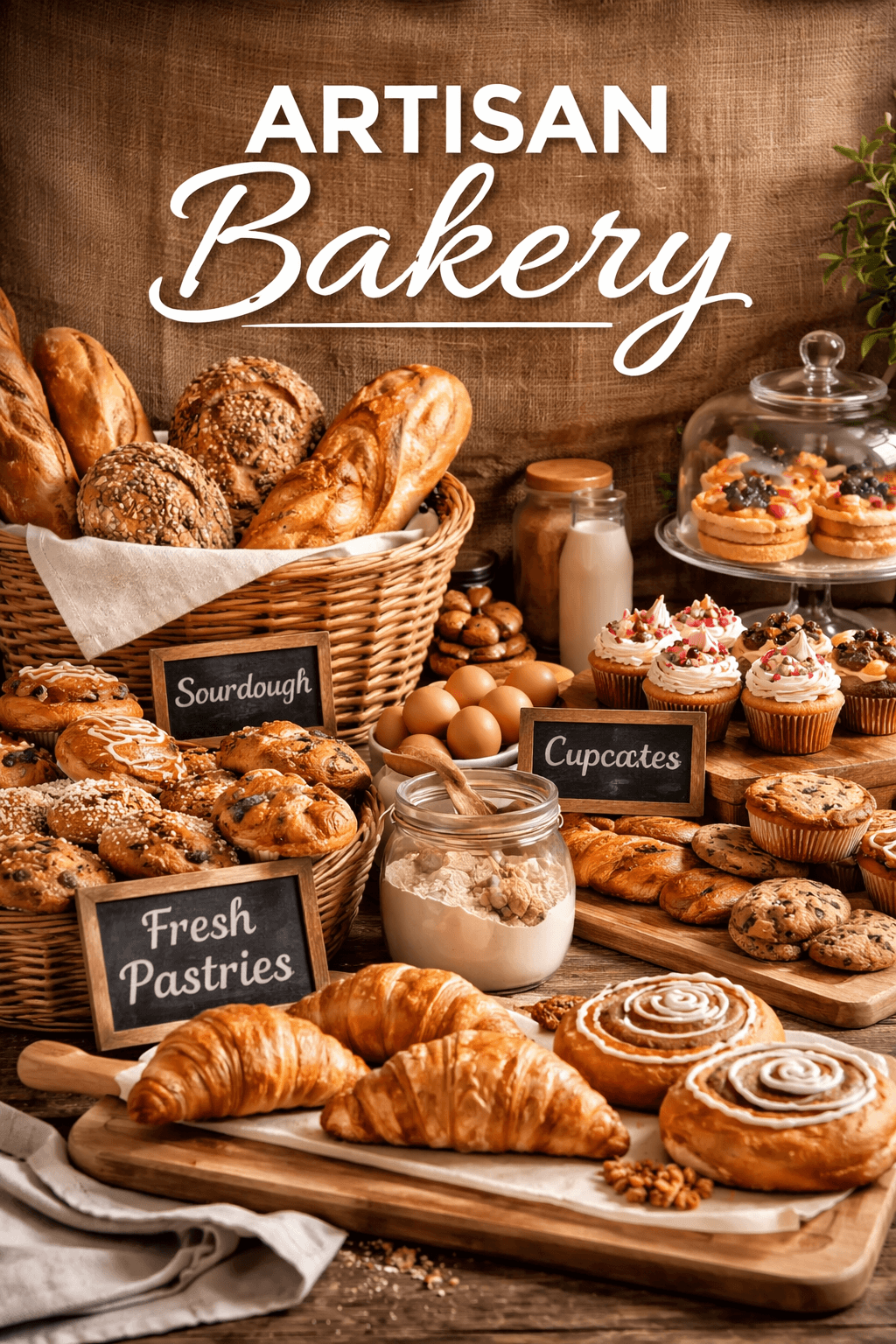
A small artisan bakery with fresh laminated pastries

Quick Business Snapshot

Fast facts to help you grasp core traits quickly.

1

Startup Cost

Medium-High

A real artisan bakery needs ovens, mixers, refrigeration, proofing, ventilation, display, packaging, permits, and enough working capital to survive slow mornings and wasted product.

The fantasy version is flour and talent. The real version is equipment, rent, labor, and every unsold tray at the end of the day.

2

Skill Barrier

High

The hard part is not baking something great once. It is producing it consistently, at volume, under time pressure, with clean presentation and usable margins.

A strong bakery needs craftsmanship and factory-like discipline at the same time.

3

Time to First Revenue

Medium

A bakery can start selling quickly once it opens, but stability usually takes longer because repeat behavior matters more than opening-week curiosity.

People may try you because you are new. The business works when they return because you are good.

4

Repeat Potential

High

Bread, pastries, coffee, seasonal items, weekend treats, and preorders all create natural reasons to come back.

The strongest bakeries become part of someone's weekly rhythm, not just an occasional indulgence.

5

Local Dependency

Very High

Even with delivery and social media, this is still a neighborhood business shaped by foot traffic, commute habits, parking, and local food routines.

A beautiful brand cannot rescue a weak location for long.

6

Scalability

Medium

A bakery can scale through wholesale, subscriptions, larger production runs, a café model, or more locations, but fresh product and labor intensity limit easy growth.

The business scales better when the process is stronger than the founder's hands alone.

7

Competition

High

You are competing with supermarkets, chain cafés, boutique bakeries, home bakers, and premium grocery grab-and-go products.

You are not just competing with other bakeries. You are competing with convenience.

8

Operational Intensity

Very High

The visible part is selling bread and pastries. The hidden part is prep, proof timing, bake windows, waste, staff fatigue, stock-outs, and constant small decisions.

A calm pastry case usually sits on top of a stressful production schedule.

Market & Demand Signals

This section helps show where demand usually comes from and what signals are worth noticing.

Demand Type

Freshness + indulgence + routine-driven food buying

Customer Pattern

Local residents, weekend treat buyers, coffee-and-pastry customers, premium bread buyers, and consumers who value craft, taste, and ritual

Service Format

Bread and pastry counter, bakery café, preorder bakery, specialty cakes, seasonal items, subscriptions, and light wholesale

Artisan Demand

Craft bakery is already a real premium category

Grand View Research sizes the global artisanal bakery products market at $95.13 billion in 2022, with a path to $148.38 billion by 2030. That does not mean every small bakery wins, but it does confirm that consumers already pay for products framed as handmade, authentic, and more premium than mass-market bread. So if someone is asking how to open a bakery, the demand side is not imaginary; the harder part is operational execution.

The question is not whether demand exists. The question is whether your bakery captures enough of it in one neighborhood.

U.S. Industry Depth

The bakery café lane is commercially meaningful

IBISWorld puts U.S. bakery cafés at $17.8 billion in 2026, with 9,112 businesses in 2025. That confirms the category is established, but it also means the customer usually has alternatives already. For anyone learning how to start a bakery, that means the market can support demand while still punishing weak positioning.

This is a real market, not a blank one.

Price Acceptance

Premium bakery pricing is already normal

Current public menus show premium bakery buyers already accept serious pricing. A plain croissant at Dominique Ansel is $5.50, while current artisan sourdough examples sit around C$8 to C$9.50 in one Canadian case and £4.10 to £6.45 in a UK case. That matters because how to establish a bakery is partly a pricing question, not only a product question.

That does not mean you can copy those numbers blindly. It does mean the market already understands that good bakery products cost more than mass retail bread.

Quick Reality Check

Before you take this idea seriously, check these real-world signals first.

01

Can you sell through enough product without training customers to only come at peak time?

A bakery can look full for one hour and still lose money if the rest of the day leaves too much unsold stock behind.

Watch what happens after the morning rush, not just during it. A lot of people asking how to open a bakery imagine demand in snapshots, not across a full day.

02

Is your menu built for production reality, not just craft pride?

A lot of bakeries weaken themselves with too many SKUs, too many fragile items, or too much variety for the size of the team.

If the menu feels exciting but the back room feels chaotic, the product mix may be wrong. This is one of the first things people miss when thinking about how to start a bakery.

03

Can your pricing survive labor, waste, and ingredient swings?

Butter, flour, eggs, labor, packaging, and energy all move. A bakery that prices emotionally instead of operationally gets punished quickly.

Run the numbers on every batch, not only on your best-selling day. How to establish a bakery becomes much clearer once batch economics are real, not romantic.

What People Often Underestimate

Parts of this idea may look simple at first but become heavy in daily delivery.

Waste

Unsold freshness is one of the biggest hidden bills

Fresh bakery product creates demand, but it also creates daily risk. Every tray that misses demand is not just lost food, it is lost labor and lost shelf space. That is one reason how to open a bakery and how to keep one healthy are not the same question.

Labor Timing

The schedule is harder than the customer sees

Handmade bakery work often starts when most customers are asleep. The business rewards people who can tolerate repetition, early hours, and extremely consistent timing. This reality gets skipped in a lot of how to start a bakery guides.

False Busyness

A popular weekend can hide a weak business model

Many artisan bakeries feel successful because they are visibly busy at the counter. The real test is whether the slow hours, weekday volume, and waste profile still make sense.

Startup Cost

What you may need to spend before this idea becomes real.

Cost Pressure

Moderate to high

Testability

Medium

Cost Structure

Equipment + fit-out + labor + ingredients + packaging + utilities + working capital

Equipment Reality

Production makes the storefront expensive

A true artisan bakery needs meaningful production infrastructure before it can serve consistently well: ovens, mixers, refrigeration, proofing control, storage, display, and a layout that supports speed without sacrificing quality. Anyone learning how to open a bakery needs to price the back-of-house reality, not only the front counter.

This cost framing is editorial synthesis built around current startup guides, not one universal benchmark number.

Margin Pressure

Warm product does not automatically mean warm margins

Current operator guidance is blunt that bakery profits can stay thin when labor, waste, and pricing discipline are weak. The category can work well, but it is not naturally forgiving. That is why how to start a bakery is partly a margin-management problem from day one.

Beautiful product and weak controls often make a bakery admired before it becomes profitable.

What This Idea Really Asks of You

Done matters more than perfect in early stage execution.

Running a handmade bakery well means liking repetition, precision, and commercial restraint more than the romantic version of baking suggests.
1

Consistency under pressure

A bakery customer does not forgive quality drift easily. One weak loaf or stale pastry can make the whole place feel less trustworthy. How to establish a bakery in a customer's mind often comes down to whether quality feels stable week after week.

2

Early-hour discipline

This is one of those businesses where your workday often starts before the customer's day begins. The physical and schedule reality matters more than many first-time founders expect, even when they have already read how to start a bakery advice.

3

Taste plus editing

The strongest bakeries usually have a point of view and enough restraint to avoid becoming a cluttered pastry museum. How to open a bakery well is often less about adding more items and more about choosing the right ones to repeat.

How This Idea Usually Grows

Many ideas do not start at scale; they stabilize first.

1

Own one anchor product first

Do not start as a bakery for everything. Start with one clear magnet: sourdough, laminated pastries, celebration cakes, cookies, Japanese-style breads, or a strong bread-and-coffee routine. This is one of the clearest answers to how to start a bakery without spreading yourself too thin.

Reminder:

2

Turn walk-ins into rituals

The healthier bakery usually wins by making the customer return automatically - same Saturday loaf, same morning pastry, same preorder habit - not by relying only on novelty. How to establish a bakery as a real neighborhood habit is a repeat-behavior problem as much as a branding problem.

Reminder:

3

Add secondary revenue only after daily production works

Coffee, sandwiches, classes, subscriptions, catering, and wholesale can all help, but they work best after the core production rhythm is already stable. A lot of people asking how to open a bakery want all the add-ons too early.

Reminder:

AI / Automation Angle

Where AI can assist and where human delivery still matters.

Can Be Assisted

preorder forecasting, production planning, ingredient purchasing, customer messaging, and simple menu/content updates

Still Needs Human

baking quality, fermentation judgment, finishing, presentation, customer trust, and the bakery's actual taste standard

Overall Role

An operations helper, not the craft itself

Operations

AI-assisted production forecasting

AI can help estimate batch sizes, preorder patterns, and likely sell-through by weekday or season. That matters because waste and stock-outs are two of the fastest ways to weaken a bakery. It is not the answer to how to start a bakery, but it can make an existing operation more disciplined.

Retention

AI-assisted preorder and routine building

AI can help structure preorder reminders, weekly bread subscriptions, pickup messaging, and seasonal launch communication. That is useful because artisan bakeries often get stronger when demand becomes more predictable. It helps more after you establish a bakery than before you open one.

Sources & Verification

This profile combines current artisan-bakery market data, U.S. bakery café industry data, labor data, live public menu pricing, and current operator guides. Startup-cost framing, growth logic, and some of the operator economics are editor-synthesized rather than single-source facts. That matters because search intent in this category often clusters around how to open a bakery, how to start a bakery, and how to establish a bakery, while the real operating questions are more specific than those phrases suggest.

Core Sources

Grand View Research, IBISWorld, U.S. Bureau of Labor Statistics, Dominique Ansel Bakery, Artisan Bakery London, The Artisan Baker, Toast, Wolters Kluwer

Data Nature

Mix of market-size reporting, labor outlook, live menu pricing, and bakery operator guides; startup-cost framing and some business logic are editor-synthesized

Global Market Size

Grand View Research - Artisanal Bakery Products Market Report

Supports: Global artisanal bakery products market at $95.13B in 2022 with projected growth to $148.38B by 2030.

Key point: Grand View Research estimates the global artisanal bakery products market at about $95.13 billion in 2022 and projects it to reach about $148.38 billion by 2030.

View source →
U.S. Industry Size

IBISWorld - Bakery Cafes in the US

Supports: U.S. bakery cafés market size of $17.8B in 2026 and 9,112 businesses in 2025.

Key point: IBISWorld is useful as a category anchor for the U.S. bakery café market, but the exact market-size and business-count figures should be treated carefully unless you have a direct captured page view for those specific numbers.

View source →
Labor / Wages

U.S. Bureau of Labor Statistics - Bakers

Supports: Median annual wage of $36,650 for bakers in May 2024.

Key point: BLS says the median annual wage for bakers was about $36,650 in May 2024.

View source →
Live Premium Pricing Example

Dominique Ansel Bakery NYC Menu PDF

Supports: Croissant at $5.50, pain au chocolat at $7.50, and other premium pastry menu benchmarks.

Key point: Dominique Ansel Bakery is useful as a live premium pricing example for artisan pastries, but the exact menu prices should be treated as current-location menu references rather than fixed category benchmarks.

View source →
Live Bread Pricing Example

Artisan Bakery London - Sourdough Bread Collection

Supports: Current artisan loaf pricing such as classic sourdough at C$8.00, seeded sourdough at C$9.00, and 8 grain sourdough at C$9.50.

Key point: Artisan Bakery London is useful as a live artisan-bread pricing reference, showing that premium sourdough loaves commonly sell in the high single-digit local-currency range.

View source →
Live Bread Pricing Example

The Artisan Baker UK - Shop Menu

Supports: Current UK artisan bread examples such as small sourdough at £4.10 and large sourdough at £6.45.

Key point: The Artisan Baker UK provides a live artisan bread pricing example, showing UK sourdough loaves priced at several pounds rather than commodity-bread levels.

View source →
Profitability Context

Toast - How Much Do Bakeries Make?

Supports: Operator guidance that many bakeries run on thin margins unless pricing, waste, and labor are tightly managed.

Key point: Toast says bakeries often operate on thin profit margins, commonly around 3% to 5%, unless pricing, labor, and waste are tightly controlled.

View source →
Startup Cost Reference

Toast - How Much Does It Cost to Open a Bakery?

Supports: Current bakery startup-cost guidance and cost-category framing for bakery operators.

Key point: Toast says the average startup cost to open a bakery is about $10,000 to $50,000, with major cost buckets including space, equipment, permits, labor, and inventory.

View source →
Startup Cost Reference

Wolters Kluwer - How to Start a Bakery Business

Supports: Current small-bakery startup guidance including common cost buckets and the note that costs vary heavily by model and location.

Key point: Wolters Kluwer says starting a bakery typically costs about $10,000 to $50,000, with costs varying heavily by bakery model, location, equipment needs, staffing, and menu scope.

View source →
The strong version of this business is not 'I bake beautiful things.' It is 'I produce craveable, repeatable products on a schedule and sell through them before freshness turns into waste.' The weak version is a lovely product line with weak volume planning and too much emotional pricing. The strong version understands that the bakery counter is only the front stage; the real business is timing, labor, and discipline. That is also why generic how to start a bakery advice rarely captures the hard part of the model.

Keep exploring at your own pace

You do not need to decide now. Save it, note it, and compare more ideas.

Explore more ideas

Share this idea