1
Startup Cost
Low
A solo operator can start lean with a laptop, scheduling tools, simple design software, and a portfolio site.
Read As
The money barrier is low. The proof barrier is not.
A niche service business for pet brands and pet businesses that need regular content, stronger trust, and better visibility online. The real value is not posting cute animal videos. It is turning attention into bookings, product sales, and repeat customer interest through the kind of structured work a pet marketing agency or focused pet brand marketing operator can deliver.
Pet content gets attention easily. That does not mean clients pay for it easily. They pay when the content feels organized, consistent, and useful to the business, which is why this works better as a focused pet marketing agency or pet brand marketing service than as generic posting help.

Fast facts to help you grasp core traits quickly.
Startup Cost
A solo operator can start lean with a laptop, scheduling tools, simple design software, and a portfolio site.
Read As
The money barrier is low. The proof barrier is not.
Skill Barrier
You need content planning, short-form video sense, copywriting, reporting, and enough pet-industry fluency to avoid sounding generic.
Read As
This is social media plus niche judgment.
Time to First Revenue
A first client can come quickly through outreach, but stable monthly retainers usually take longer to build.
Read As
One project is easy. A dependable client book is harder.
Repeat Potential
This works best as monthly retainer work because most clients need ongoing posting, planning, and community support.
Read As
Recurring work is the real model here.
Local Dependency
The service can be delivered remotely, but local pet businesses are often easier first clients because trust and content capture are simpler.
Read As
Remote scales. Local closes faster.
Scalability
A solo manager can grow through retainers, templates, niche systems, and subcontractors, but custom content work still creates a ceiling.
Read As
Systems scale better than endless custom posting.
Competition
General social media management is crowded. The edge comes from understanding pet buyers and pet-business content better than a generic freelancer does.
Read As
Niche language helps you price higher.
Operational Intensity
The work is not physically heavy, but it is deadline-heavy. Calendars, approvals, reporting, and content collection add up every week.
Read As
Cute niche, real workload.
This section helps show where demand usually comes from and what signals are worth noticing.
Demand Type
Customer Pattern
Service Format
The global pet care market was estimated at $181.91 billion in 2025 and is projected to reach $283.67 billion by 2033. That matters because a focused pet marketing agency or pet brand marketing service can survive well inside a large category without needing every type of client.
The market is big enough to support specialists.
APPA says 94 million U.S. households own at least one pet in 2025. More pet households usually means more pet businesses trying to win attention, trust, and repeat spending.
More pet owners usually means more marketing demand.
The global pet care e-commerce market was estimated at $94.89 billion in 2024 and is projected to reach $147.59 billion by 2030. That supports the idea that digital visibility matters more, not less, for pet businesses, which gives a niche digital marketing business a real reason to exist in this category.
If more buying happens online, content and trust matter more.
Before you take this idea seriously, check these real-world signals first.
Many clients say they want social media, but what they really want is more bookings, product sales, or better visibility.
Check: Your offer gets stronger when you connect posting to inquiries, conversions, or repeat traffic. That is the difference between a hobbyist social media helper and a real pet marketing agency.
The bottleneck is often not captions. It is getting enough good photos, clips, and proof from busy pet businesses.
Check: Figure out who captures content, how often, and in what format before you sign the account.
Pet content gets attention easily, but easy attention does not automatically create a durable retainer business.
Check: The business becomes real when clients stay for process and results, not just because they like the idea. Pet brand marketing has to feel commercially useful, not just charming.
Parts of this idea may look simple at first but become heavy in daily delivery.
The real bottleneck is usually collecting enough usable pet photos, clips, and testimonials from clients who are busy running the business. A niche digital marketing business in the pet category often wins or loses on asset flow.
Some expect instant sales from every post. Others delay approvals for days. Expectation management is part of the service.
Clients stay longer when they feel informed, handled, and calm. Posting skill alone is rarely enough.
What you may need to spend before this idea becomes real.
Cost Pressure
Low
Testability
High
Cost Structure
Software + website/portfolio + content tools + outreach + admin
Compared with product businesses or local services that need vehicles or equipment, this business can begin with a lightweight software stack, sample work, and outbound outreach. That is one reason a pet marketing agency can start leaner than many local pet service models.
Low cash startup does not mean low effort startup.
The early expense is often unpaid work used to build case studies, niche credibility, and sample content strong enough to win the first retainers. Pet brand marketing is hard to sell without proof that you understand the category better than a generic freelancer.
Proof usually matters more than credentials here.
Done matters more than perfect in early stage execution.
You do not need to be a veterinarian, but you do need to understand how pet owners talk, buy, worry, and share.
Reminder: The niche has its own emotional language.
Most of the job is planning, reviewing, posting, revising, and reporting every week without letting quality slip.
Reminder: Reliable beats flashy in service work.
A strong manager knows the difference between content that gets likes and content that helps the client's business. That distinction matters in pet brand marketing because cute content is easy to produce and hard to monetize well.
Reminder: Attention is nice. Useful attention gets retained.
Many ideas do not start at scale; they stabilize first.
Start with one lane such as groomers, trainers, pet boutiques, pet sitters, or pet product brands. It makes your pitch and portfolio easier to trust, and it gives a pet marketing agency a clearer reason to exist.
Reminder: Niche first usually closes faster.
Templates, intake forms, asset folders, monthly calendars, short-form frameworks, and reporting rhythm make the service easier to sell and easier to keep.
Reminder: The system is part of the product.
UGC coordination, email support, local SEO content, influencer outreach, and launch campaigns can raise account value before you jump into a full agency structure. That is how a niche pet brand marketing operator can grow into a broader digital marketing business without losing focus.
Reminder: Increase revenue per client before adding team complexity.
Where AI can assist and where human delivery still matters.
Caption drafts, content calendars, idea generation, reporting summaries, repurposing, first-pass video hooks, and inbox triage
Brand taste, pet-industry nuance, client handling, visual judgment, final messaging, and relationship trust
A workflow multiplier, not the moat
AI can speed up calendars, captions, short-form variations, reports, and repurposing workflows for pet social media management. That helps a small pet marketing agency keep delivery consistent without adding headcount too early.
Useful for speed, weak if it replaces real niche judgment.
AI can help organize campaign angles, recurring series, FAQ content, and audience questions into a more usable monthly plan.
Good for structure. Not enough by itself to create authority.
This draft mixes direct-source facts with editorial synthesis. Pet market size, pet ownership growth, pet e-commerce size, and social media management market growth are source-backed. Startup-cost ranges, package logic, and some operating advice are stitched from those facts plus common small service-business economics relevant to a pet marketing agency, pet brand marketing service, or niche digital marketing business.
Core Sources
Grand View Research, APPA, U.S. Census NAICS
Data Nature
Direct-source pet industry and service-category data plus editorial synthesis for startup and operating assumptions in pet brand marketing
Supports: Global pet care market estimated at $181.91B in 2025 and projected to reach $283.67B by 2033.
Key point: Grand View Research estimates the global pet care market at about USD 181.91 billion in 2025 and projects it to reach about USD 283.67 billion by 2033.
View source →Supports: Global pet care e-commerce market estimated at $94.89B in 2024 and projected to reach $147.59B by 2030.
Key point: Grand View Research estimates the global pet care e-commerce market at about USD 94.89 billion in 2024 and projects it to reach about USD 147.59 billion by 2030.
View source →Supports: Global social media management market estimated at $29.93B in 2025 with strong projected growth.
Key point: Grand View Research estimates the global social media management market at about USD 29.93 billion in 2025 and projects it to reach about USD 171.62 billion by 2033.
View source →Supports: 94 million U.S. households own at least one pet in 2025.
Key point: APPA says 94 million U.S. households owned at least one pet in 2025, up from 82 million in 2023.
View source →Supports: Marketing consulting services are a recognized business category, which supports the positioning of niche social media services as a real service business.
Key point: NAICS 541613 classifies marketing consulting services as a recognized business category, which supports framing niche social media management as a legitimate service business rather than an informal side activity.
View source →Explore nearby directions with different workload and demand shape.

A dog treat business can start with small-batch gourmet dog treats or natural dog treats, but the real business is built on ingredient trust, repeatable production, compliant labeling, and enough reorder behavior to support a low-ticket consumable product.
Explore idea →
A hyperlocal pet-care service built on trust, repeat weekday demand, and route efficiency. It may look simple from the outside, but the real business is in reliability, density, and keeping travel time from eating the margin. A dependable dog walker is usually selling consistency and peace of mind more than the walk itself.
Explore idea →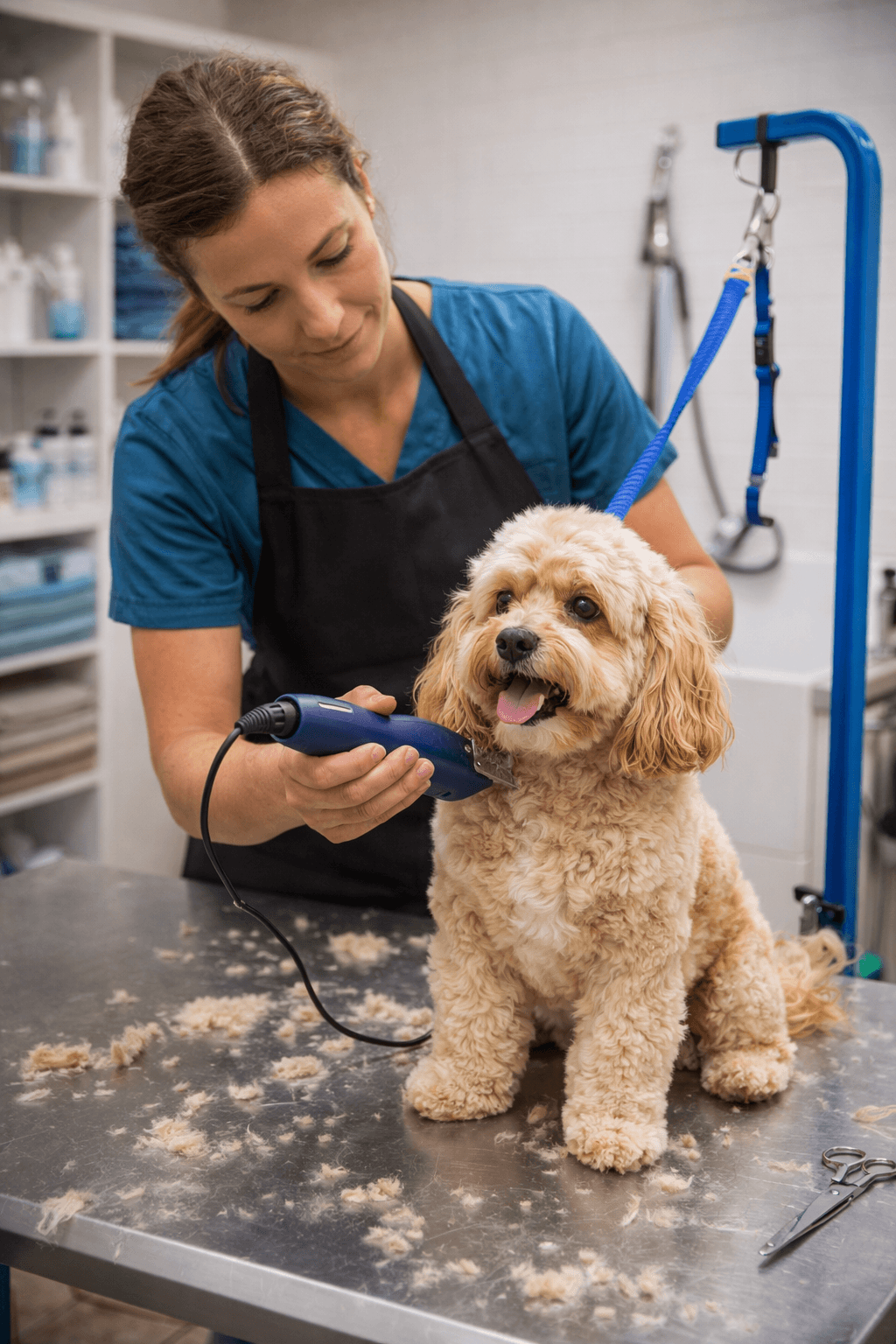
A pet grooming business is a local pet-care service built on handling skill, grooming quality, and repeat client trust. The strongest operators do not win by clipping faster. They win by making owners feel their pet is safe, well handled, and worth bringing back on a regular schedule.
Explore idea →You do not need to decide now. Save it, note it, and compare more ideas.